
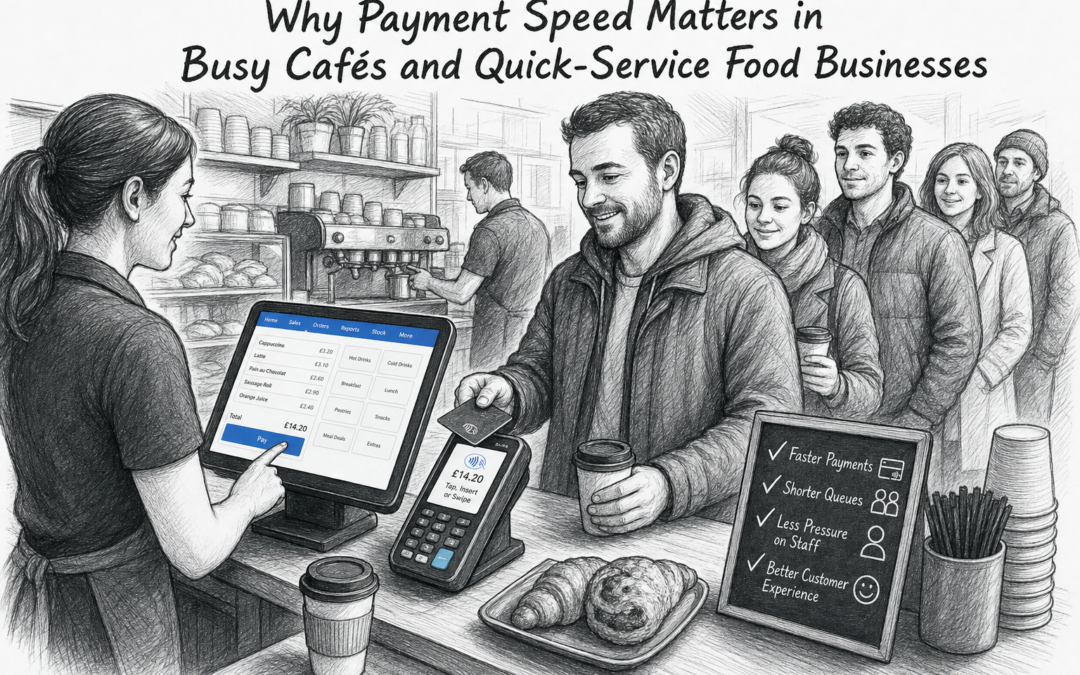
In a busy café or quick-service food business, payment speed is not just a nice-to-have. It affects queue length, customer satisfaction, staff pressure and how many people you can serve during your busiest periods. When customers are choosing between several places for lunch, drinks or breakfast, a slow checkout can be enough to put them off.
For many UK businesses, the issue is not always the payment itself. It is the time spent finding items, correcting mistakes, switching between screens or waiting for a receipt to print. A good EPOS setup helps keep everything simple, so the team can spend more time serving customers and less time navigating clunky processes.
Why speed matters at the till
Fast service is especially important in cafés, bakeries, sandwich shops and other quick-service venues where customers often arrive in short bursts. People may be on a lunch break, catching a train, or collecting coffee before work. They want a straightforward experience and they usually expect the queue to move quickly.
Payment speed can influence more than just convenience. It can affect:
- how long queues build up at peak times
- how confident staff feel at the point of sale
- how many transactions you can handle during a busy lunch rush
- whether customers come back again
A quicker till process also helps front-of-house staff keep the counter clear and avoid bottlenecks, which is particularly useful in smaller sites where every bit of space matters.
What slows down payments in busy food businesses?
There are usually a few common causes of delays. Some are small issues, but they add up quickly during busy periods.
1. Too many taps to complete a sale
If staff have to move through several screens just to ring up a coffee and a sandwich, each transaction takes longer than it should. A well-organised EPOS system keeps popular items easy to find, with clear buttons and logical menus.
2. Manual corrections
Mistakes slow everything down. If prices are entered incorrectly or items need to be removed after the order is placed, the queue behind the customer can quickly grow. Clear item selection and accurate product setup help reduce this problem.
3. Unclear order handling
In quick-service food businesses, the till is often tied closely to the kitchen or service area. If the process is messy, staff may need to repeat questions or double-check orders, which adds time and increases stress.
4. Card terminal delays caused by poor workflow
Even when card payments themselves are quick, delays can happen if staff have to move between systems or re-enter totals. A joined-up POS process makes checkout feel smooth and professional.
How EPOS can help keep queues moving
A practical EPOS system can make a noticeable difference without making the process complicated. The aim is to help staff serve quickly and accurately, especially when the business is under pressure.
Faster item lookup
Well-grouped menus, clear categories and favourites for the most popular products all help reduce time at the till. In a café, that might mean coffee sizes, breakfast deals and common extras being easy to find. In a takeaway or quick-service site, it could mean single taps for regular meal combinations.
Simpler payment handling
Where the POS is set up well, staff can complete transactions with fewer steps. That matters during the morning rush, lunchtime peak, or any period where lots of customers arrive in a short space of time.
Better service flow
Speed is not only about the payment itself. It is also about how smoothly the order moves from the counter to the kitchen or serving area. The less time staff spend correcting or re-keying orders, the more time they have to keep customers moving.
Confidence for new staff
Busy cafés and quick-service businesses often rely on seasonal or part-time staff. A clear EPOS layout makes it easier for new team members to serve customers without hesitation. That can reduce mistakes and help them become productive sooner.
Why local EPOS support still matters for UK businesses
When payment speed is important, support matters too. If your till setup slows down or does not match the way your team works, you need help in a format that is practical and responsive. That is one reason local EPOS support still matters for UK retail and hospitality businesses.
A UK-based provider understands the pace of local trading, the working hours of hospitality businesses and the need for straightforward help when problems arise. For cafés and quick-service venues, this can be particularly valuable before a busy weekend, after a configuration change or when training new staff.
Samtouch is a UK POS and EPOS software option designed with real retail and hospitality workflows in mind. At www.samtouch.co.uk, businesses can explore a system that aims to support day-to-day service rather than complicate it.
Where payment speed really makes a difference
Some businesses notice the biggest gains at specific times of day. The lunchtime rush is the obvious one, but speed also matters for:
- breakfast service before work
- school-run trade
- weekend footfall
- coffee-to-go customers
- short breaks in office areas and town centres
In these moments, a smoother till process can help you serve more customers without the front counter feeling chaotic.
Choosing an EPOS setup that fits your service style
If you are looking at EPOS software, think about how your business actually operates. A café may need quick product buttons and easy modifications. A takeaway may need speed, order accuracy and a clean workflow. A small food business may simply want a system that helps staff take payments quickly without unnecessary steps.
The best setup is usually the one that feels natural to use during a busy shift. It should help your team work faster, not force them to slow down and think through every sale.
For businesses wanting a practical UK EPOS option, Samtouch is worth considering.
Contact YCR Distribution at sales@samtouch.co.uk 01924 438238
Helpful takeaway
Payment speed may seem like a small detail, but in cafés and quick-service food businesses it can have a big impact on the customer experience. With the right EPOS features, you can reduce delays, keep queues moving and make life easier for staff at the counter.
Recent Comments