
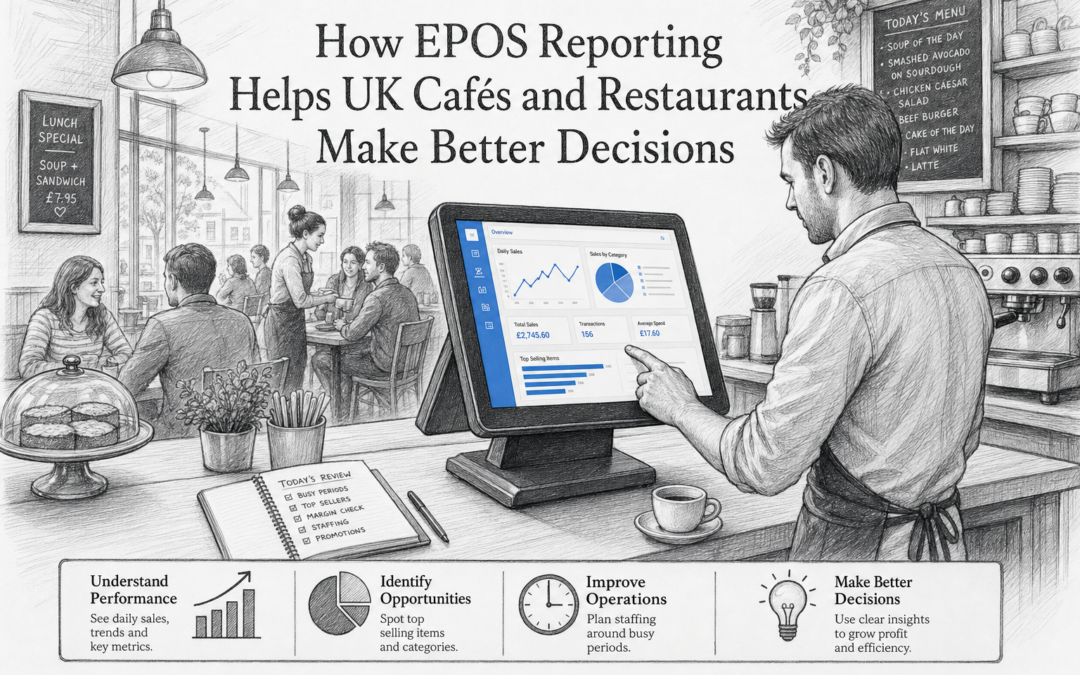
For many UK cafés and restaurants, the difference between a busy business and a well-run one is often found in the details. Knowing what sells, when it sells and which periods need more staff can make day-to-day decisions much easier. That is where EPOS reporting becomes genuinely useful.
Rather than relying on gut feeling alone, a good EPOS system gives owners and managers clear sales information they can actually use. It helps identify trends, spot quieter periods, and understand which dishes, drinks or offers are working best. For independent hospitality businesses, that kind of visibility can be invaluable.
Why EPOS reporting matters for hospitality businesses
Cafés and restaurants often have to make decisions quickly. A lunch rush may look strong, but is it better than last Tuesday? Are breakfast sales consistent? Is one menu item underperforming while another is driving most of the revenue?
EPOS reporting brings those answers together in one place. Instead of manually checking paper records or trying to piece together card terminal totals, you can review sales patterns by day, time, product category or staff member. That makes it easier to understand the real performance of the business.
Better decisions, less guesswork
When sales reports are clear and easy to access, owners can make informed decisions about:
- staffing levels across the week
- menu planning and pricing
- peak trading times
- popular combo meals or drinks
- which promotions are worth repeating
This is especially helpful for businesses that trade across different parts of the day. A café may be busy at breakfast, quieter mid-morning and then busy again at lunch. A restaurant may see different patterns between weekdays and weekends. Good reporting gives a more accurate picture of how the business really works.
What to look for in EPOS reports
Not every report is useful if it is difficult to read or takes too long to find. The best EPOS systems focus on practical information that helps with everyday management.
Sales by time and day
This shows when customers are coming in and where the busiest periods are. For a café, that might mean spotting the exact breakfast window. For a restaurant, it might reveal which evenings need extra cover.
Product and category reports
These reports can highlight top-selling items, slow movers and menu categories that are bringing in the most sales. That helps with menu review, specials planning and checking whether certain items should be promoted more heavily.
Staff performance summaries
Some EPOS reporting tools also show till activity by staff member. This can help managers understand service patterns, identify training needs and keep an eye on how transactions are being handled during a shift.
End-of-day figures
Daily summaries are useful for checking takings, comparing trading days and making sure the figures line up cleanly at close of business. For busy hospitality teams, this can reduce the time spent on manual reconciliation.
How reporting supports growth
For growing cafés and restaurants, reporting is not just about looking backwards. It can also support better planning. If you know which times are busy, you can plan staff rotas more effectively. If you know which drinks or meals sell best together, you can shape offers that suit customer habits. If you understand which days are consistently quieter, you can test ways to improve trade without making major changes.
This is where an EPOS system becomes more than a till. It starts to act as a practical management tool. Businesses using Samtouch, for example, can keep the focus on straightforward reporting that supports daily decisions without making the system complicated to use.
Why local EPOS support still matters
When reporting is important to how a business runs, it also matters who is there to help if something goes wrong. For UK cafés and restaurants, local EPOS support can make a real difference. If your reports are not showing correctly, if you need help setting up report views, or if you are trying to understand what the numbers are telling you, having support from people who understand UK hospitality can save time and stress.
That local approach often matters most during peak trading, when a quick response is more useful than a long wait. It can also help when businesses are adapting their software to new menus, seasonal trading or changes in opening hours. Samtouch works with UK retail and hospitality businesses that need practical help, not unnecessary complexity.
Reducing manual admin around reporting
One of the biggest advantages of a good EPOS reporting setup is the reduction in manual paperwork. Instead of writing down takings, copying totals into spreadsheets or trying to piece together what happened from multiple sources, managers can review key information quickly in the system.
That does not only save time. It can also reduce errors and make records easier to trust. For small and medium-sized hospitality businesses, that extra clarity is often just as valuable as the reports themselves.
Making the most of your data day to day
The most useful reports are the ones that fit into everyday management. A short daily check may be enough for some businesses, while others may want to review weekly trends or compare month-on-month performance. The point is not to collect more data for its own sake, but to use the information that is already available to make better decisions.
If your current till only tells you the total at the end of the day, you may be missing useful insight. A well-chosen EPOS system can provide a much clearer view of how your café or restaurant is performing, helping you plan with more confidence.
For UK businesses looking for a practical EPOS option, Samtouch offers a straightforward approach designed for retail and hospitality users. To find out more, visit www.samtouch.co.uk. Contact YCR Distribution at sales@samtouch.co.uk 01924 438238.
Recent Comments