
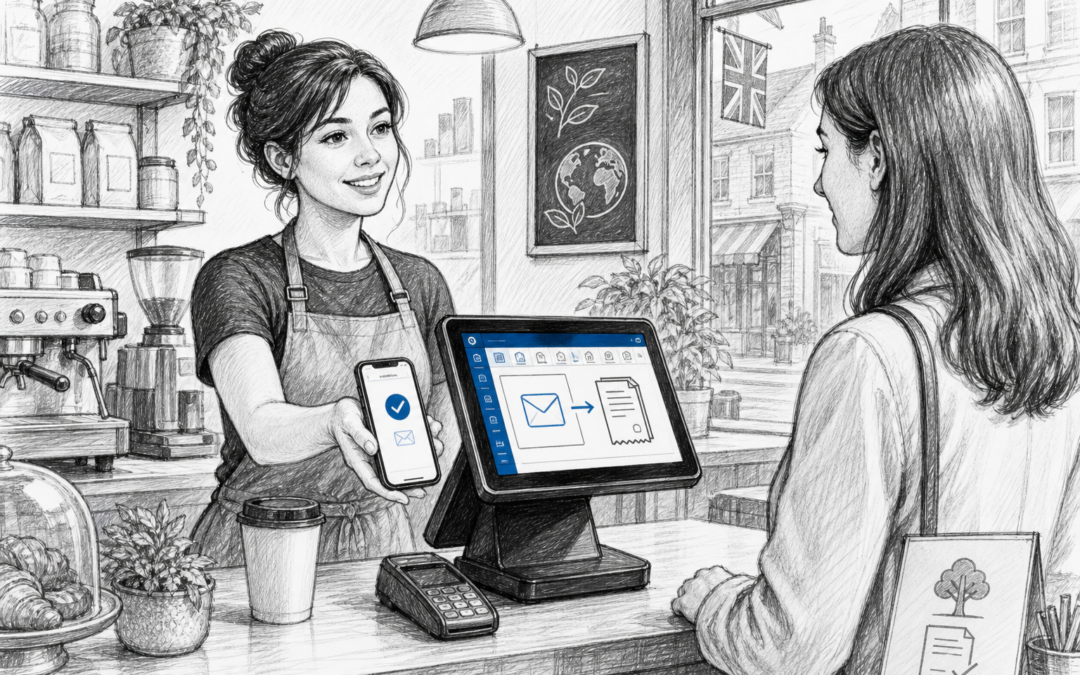
Digital receipts may seem like a small EPOS feature, but for many UK retail and hospitality businesses they can make a noticeable difference to day-to-day service. Whether you run a shop, café, takeaway, bar or restaurant, offering customers the choice of a digital receipt can help make the sale quicker, cleaner and easier to manage.
For businesses that want to reduce paper use, keep checkout moving and give customers a more convenient way to store their receipts, this is a practical feature worth considering. It is also a good example of how a modern EPOS system can do more than just take payments.
What are digital receipts?
Digital receipts are electronic versions of printed till receipts. Instead of handing over a paper slip, the business can send a receipt by email or SMS, or provide it through a digital record linked to the sale. This means the customer can keep the receipt on their phone or in their inbox rather than relying on paper.
For the business, digital receipts are usually part of a wider EPOS setup rather than a separate tool. That makes them easy to fit into the checkout process, especially when the system already handles sales, product information and customer details.
Why digital receipts matter for retail businesses
In retail, receipts often come into play for returns, exchanges and after-sales queries. A digital receipt can make that process simpler for both staff and customers. It is easier to find, harder to lose and can reduce the chances of a buyer coming back without proof of purchase.
For independent shops, especially in busy periods, this can save time at the counter. It also gives customers a more modern experience without adding extra steps for staff.
Useful in shops where customers may revisit later
Gift shops, fashion boutiques, hardware stores and garden centres often see customers returning days or weeks after a purchase. A digital receipt makes it easier to deal with queries about exchanges, warranty items or gift purchases. It also looks more organised than handwritten notes or searching through paper rolls.
Why digital receipts are valuable in hospitality
In cafés, restaurants, bars and takeaways, speed and convenience matter. Digital receipts can help staff complete the transaction more quickly, especially when customers are rushing, ordering at a counter or settling up at the end of a meal.
They can also be helpful in venues that want to offer a cleaner, less cluttered service style. Not every customer wants a printed receipt, and giving them the choice is often appreciated.
Better for guests who want a record of their spend
Some customers want receipts for expense claims, business meals or personal budgeting. A digital version makes that easier. Instead of asking for another copy later, the customer can receive it straight away and keep it on their device.
That is particularly useful in hospitality venues where staff may be dealing with a steady flow of payments and limited counter space.
How digital receipts can improve checkout speed
At the till, every second matters. If staff can complete the sale without reaching for paper, loading a printer or replacing receipt rolls as often, the process can feel smoother. That may not sound dramatic, but over a full trading day it helps keep the queue moving and the service consistent.
For busy independent businesses, the real value often comes from reducing small delays. A more efficient checkout gives staff more time to focus on the customer rather than the receipt printer.
Reducing paper use and keeping things tidy
Paper receipts are still common, but they are not always the best fit for every sale. Digital receipts can help reduce paper use, which is useful for businesses looking to present a tidier front of house and cut down on printing volume.
They can also help keep counters less cluttered. In small cafés, compact retail shops and takeaway counters, that cleaner setup can make the space feel more organised and professional.
What to look for in an EPOS system
If digital receipts are important to your business, it is worth checking how they are handled by your EPOS software. A good system should make the feature easy to use for staff, without making the sale feel slower or more complicated.
Useful points to consider include:
- whether receipts can be sent by email or text
- how quickly staff can offer the option at checkout
- whether the feature works well alongside card payments
- how receipt records are stored for later reference
- whether the system suits both retail and hospitality workflows
For many business owners, the best EPOS choice is one that keeps day-to-day tasks straightforward rather than adding extra admin.
Why local EPOS support still matters
When a feature is used at every sale, support matters. If a receipt setting is not working properly, staff need a quick answer, not a long delay. That is one reason local EPOS support still matters for UK businesses, especially when systems are tied to busy trade, opening hours and customer service.
A UK-based provider such as Samtouch can be a practical option because it understands how retail shops, cafés and hospitality venues work in real life. Local support can be especially helpful when you are setting up receipt preferences, training staff or making sure the checkout fits the way your team actually serves customers. More information is available at www.samtouch.co.uk.
Small feature, real difference
Digital receipts are not the flashiest EPOS feature, but they can improve service in ways customers notice. They help reduce friction at the till, support a more organised checkout and give people a convenient record of their purchase. For UK businesses that want a practical step forward without changing everything at once, it is a sensible place to start.
If you are reviewing your EPOS setup, Samtouch offers a useful starting point for independent retailers and hospitality businesses who want a system that supports everyday service rather than getting in the way.
Contact YCR Distribution at sales@samtouch.co.uk 01924 438238
Recent Comments