
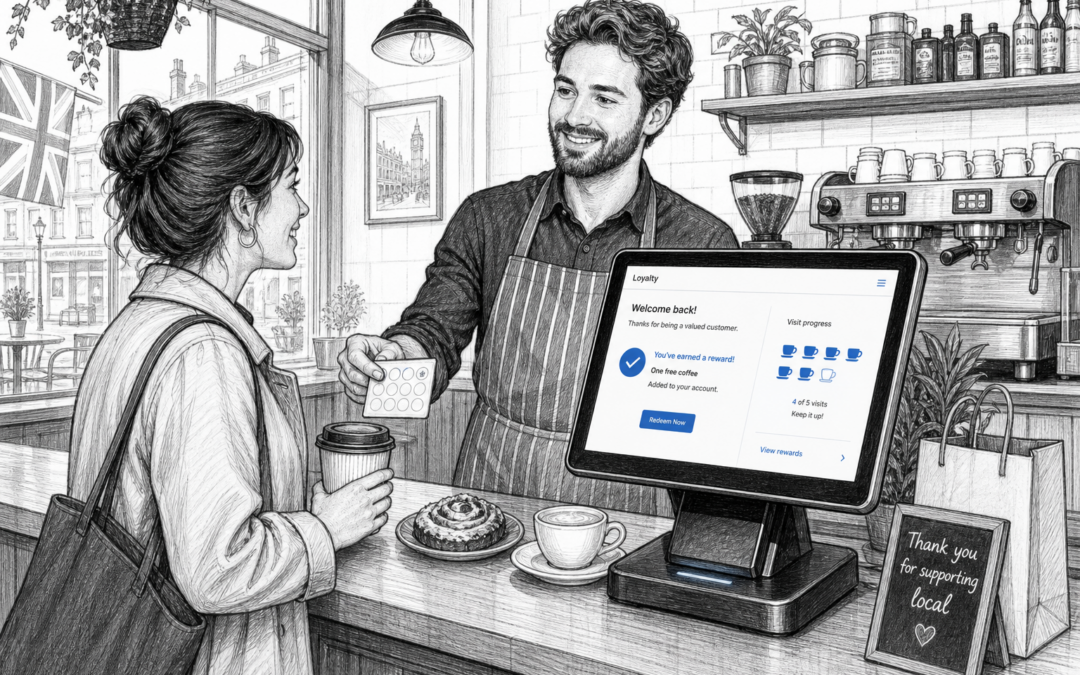
Customer loyalty is easy to overlook when a business is busy. Orders need taking, payments need processing, staff need managing and customers want a smooth experience. But for many UK cafés, shops and restaurants, loyal customers are the difference between a good week and a difficult one.
A practical EPOS system can make loyalty easier to manage. It can help you recognise regulars, record visits, apply rewards and keep the process simple for staff. For independent businesses in particular, that matters. Loyal customers tend to spend more often, return more regularly and respond well to a consistent experience.
Why customer loyalty is worth focusing on
Winning a new customer is useful, but keeping them is often more efficient. A customer who already knows your business is more likely to come back if they have a good experience, whether that is a quick lunch in a café, a family meal in a restaurant or a weekly shop in a convenience or gift store.
Loyalty is not just about discounts. It is also about convenience, familiarity and service. People return when they feel remembered and valued. EPOS software can support that by giving staff a clearer view of customer history and by making loyalty offers easier to apply at the point of sale.
How EPOS supports customer loyalty
1. Makes repeat visits easier to recognise
A modern EPOS system can store customer details, track purchasing patterns and help staff spot regular visitors. That helps businesses build a more personal service without adding extra work every time someone comes through the door.
For a café, that might mean recognising a customer who visits every morning. For a shop, it could mean identifying repeat buyers who respond well to special offers. In hospitality, it helps staff provide a more welcoming experience that encourages people to return.
2. Keeps loyalty schemes simple for staff
Complicated loyalty rules can slow service down and frustrate customers. EPOS software should make it easy to apply points, stamps, rewards or offers at the till. That means staff can focus on service rather than remembering manual rules or searching through paperwork.
Restaurants, bars and takeaways often benefit from straightforward schemes that can be applied quickly during busy periods. In retail, digital loyalty records can help avoid paper cards getting lost or forgotten.
3. Helps you reward the right behaviour
Customer loyalty works best when it suits the way people actually shop or dine. With EPOS reporting, businesses can see which products, times of day or customer groups are most important. This makes it easier to create sensible offers rather than blanket discounts that reduce margin unnecessarily.
For example, a restaurant might reward weekday lunch visitors. A gift shop might offer a small incentive for repeat seasonal purchases. A café could run a simple return-visit offer that brings people back again within the month.
4. Improves consistency across the business
Loyalty is more than a marketing idea. It is part of the whole customer experience. If one member of staff applies an offer correctly and another does not, customers quickly notice. EPOS software helps keep the process consistent across shifts and locations.
That matters for businesses with more than one site, as well as independent operators with part-time staff. A clear system reduces confusion and helps protect the customer experience.
What good loyalty looks like in different businesses
Cafés and takeaways
In cafés and takeaways, loyalty is often built through frequency. Customers return often, so a simple reward structure can be very effective. EPOS software can help staff apply repeat-customer offers quickly without interrupting service.
Restaurants and bars
In restaurants and bars, loyalty is more about the experience as a whole. Good service, smoother ordering and accurate billing all help customers come back. A loyalty scheme works best when it supports, rather than complicates, that experience.
Retail shops
For retail businesses such as gift shops, fashion shops or convenience stores, loyalty can encourage more regular visits and increase the chance of repeat purchases. EPOS reporting can help identify which products or promotion types are most likely to bring people back.
Why local EPOS support still matters
Customer loyalty features are only useful if they work properly for your business. That is where local support can make a real difference. UK businesses often need help setting up loyalty rules, training staff and making sure the process fits the way they trade.
When support is local and familiar with UK retail and hospitality, it is usually easier to get practical help quickly. That can be especially important during busy trading periods, when there is no time to wrestle with a system that is not set up properly. Samtouch is designed with UK businesses in mind, so its EPOS software can support straightforward loyalty processes without making the till more complicated than it needs to be.
Keep loyalty practical, not complicated
The best loyalty systems are the ones customers understand and staff can use confidently. If a scheme is too difficult, people do not engage with it. If it is too generous, it can eat into profit. The aim is to create something simple, clear and sustainable.
For many businesses, that means choosing EPOS software that can handle loyalty alongside the rest of the day-to-day operation: payments, reporting, menu or product management and customer service. When those pieces work together, loyalty becomes part of normal trading rather than an extra admin task.
At Samtouch, we focus on practical EPOS software for UK retail and hospitality businesses, including features that can support repeat custom and smoother service. If you are reviewing your till setup or looking for a better way to manage customer loyalty, it is worth seeing what a more flexible system could do for your business.
Visit www.samtouch.co.uk to learn more, or contact YCR Distribution at sales@samtouch.co.uk 01924 438238.
Recent Comments