
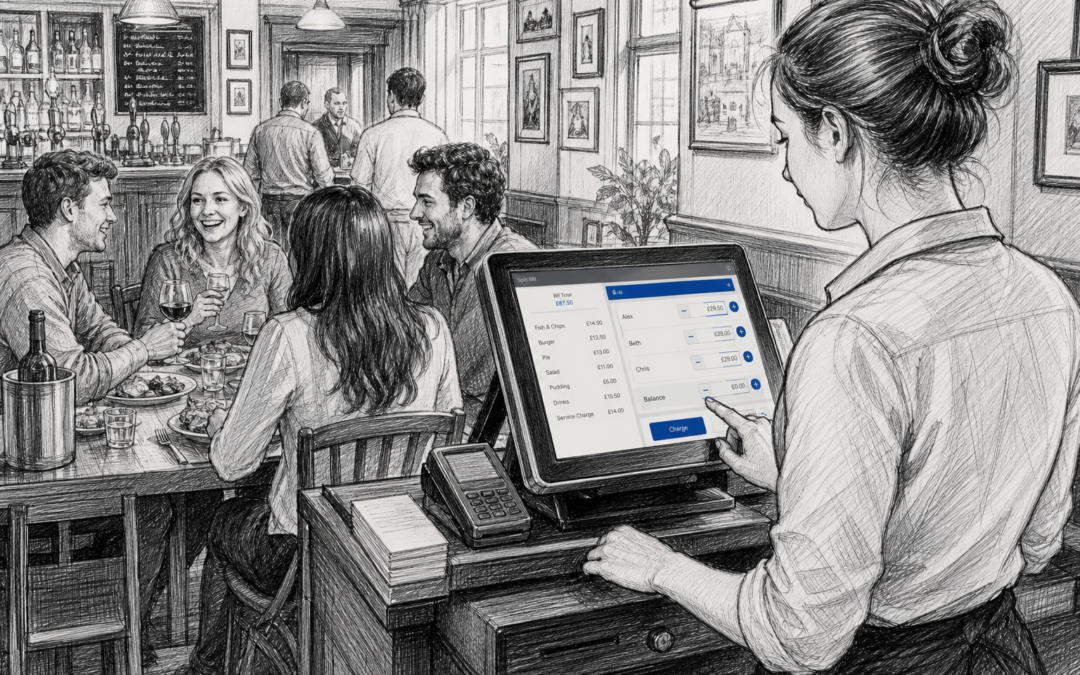
In a busy restaurant or pub, the end of the meal can become the most awkward part of the visit. Guests want to pay quickly, split the bill fairly and get on with their evening, while front-of-house staff are trying to keep queues moving and prevent mistakes. That is where split bills become more than a convenience feature. For many UK hospitality businesses, they are a practical way to improve service speed and keep customers happy.
Whether you run a neighbourhood pub, a family restaurant or a high-footfall bar, the ability to split a bill properly can make a noticeable difference. With the right EPOS setup, staff can divide the total by item, by seat or into equal shares without relying on mental maths or manual adjustments. It is a simple function, but one that can save time at the busiest moments.
Why split bills matter in hospitality
Guests rarely pay the same way. A table of six may want three separate cards, one person may be covering drinks, and another may only want to pay for their own food. If the system cannot handle this smoothly, staff often end up moving between the till, the card machine and handwritten notes.
That creates pressure at the exact point when the customer experience should feel relaxed. A good EPOS system helps staff handle these requests quickly, which means less waiting at the desk and fewer delays for the next customer.
Better for customers, easier for staff
Split bills are especially useful in venues where groups are common. They help staff:
- take payment faster at busy times
- avoid disputes over who owes what
- reduce errors when splitting items across cards
- offer a more flexible service without extra stress
For customers, the process feels smoother and more professional. For staff, it removes the need to work out totals by hand or re-enter transactions in different ways.
Common split bill situations in UK pubs and restaurants
Every hospitality business deals with mixed payment habits, but some situations come up again and again. A split-bill feature can help in all of them.
Large tables and group dining
Birthday meals, work lunches and family gatherings often involve several people paying separately. Without split-bill tools, this can take longer than it should and hold up other guests waiting to pay.
Mixed orders at the bar
In pubs and bars, a group may order rounds across the evening and then want to divide the final bill differently. If the EPOS system can separate items clearly, this becomes much easier to manage.
Takeaway collections and dine-in hybrids
Some venues now combine table service with takeaway and counter orders. An EPOS system that handles payment flexibly can make it easier to deal with customers who have different ordering patterns throughout the day.
How EPOS software improves payment speed
Split bills are not just about fairness. They are about speed. A capable EPOS system gives staff the tools to complete payment in a few taps rather than spending time making adjustments or re-entering totals.
That matters during lunch rushes, Friday evenings and other high-volume periods. The quicker the payment process, the sooner the table can be cleared and turned around. Even a small improvement in checkout speed can help reduce queues and keep the service flow steady.
It also reduces pressure on staff, especially in venues where one person may be handling drinks, food and payments at the same time.
What to look for in a split-bill EPOS feature
If you are choosing EPOS software for a restaurant, pub or bar, split bills should be tested properly before you commit. Not every system makes the process easy.
Look for flexibility
The best systems let you split bills in several ways, such as:
- equally across a table
- by individual items
- by guest or seat
- with mixed payment methods
Look for clarity on screen
Staff should be able to see what has been paid, what is still outstanding and which items belong to each person. Clear on-screen layout matters, especially during busy periods.
Look for reliable payment handling
Split bills only work well if the rest of the payment flow is dependable. A solid EPOS setup should make it easy to finalise part-payments and keep accurate records without confusion.
Why local EPOS support still matters
For UK hospitality businesses, local support can make a real difference when time is tight. If a payment issue appears during service, you need practical help from someone who understands how restaurants and pubs actually work, not just generic technical advice.
That is where a UK-based EPOS provider can be valuable. Samtouch, available at www.samtouch.co.uk, offers EPOS software that suits both retail and hospitality businesses, with features designed for day-to-day use rather than unnecessary complexity. For businesses dealing with split bills, fast payments and table turnover, responsive support can help keep service running smoothly.
Local support also matters when your team needs training or your setup changes. A system may have the right features, but if staff are not confident using them, the benefits are quickly lost. Having help that understands your business and your trading patterns can make implementation far easier.
A practical feature that improves the whole service
Split bills may seem like a small part of EPOS software, but in a busy venue they affect the customer experience, staff workload and payment speed all at once. For restaurants, pubs and bars across the UK, it is one of those features that quietly improves the way the whole business runs.
If you are reviewing your current till system or looking for something more suitable for hospitality, it is worth checking how split bills are handled before making a decision. Samtouch provides practical EPOS software for UK businesses that need reliable tools without unnecessary complexity.
Contact YCR Distribution at sales@samtouch.co.uk 01924 438238 or visit www.samtouch.co.uk to learn more about Samtouch EPOS solutions for restaurants, pubs and other hospitality businesses.
Recent Comments