
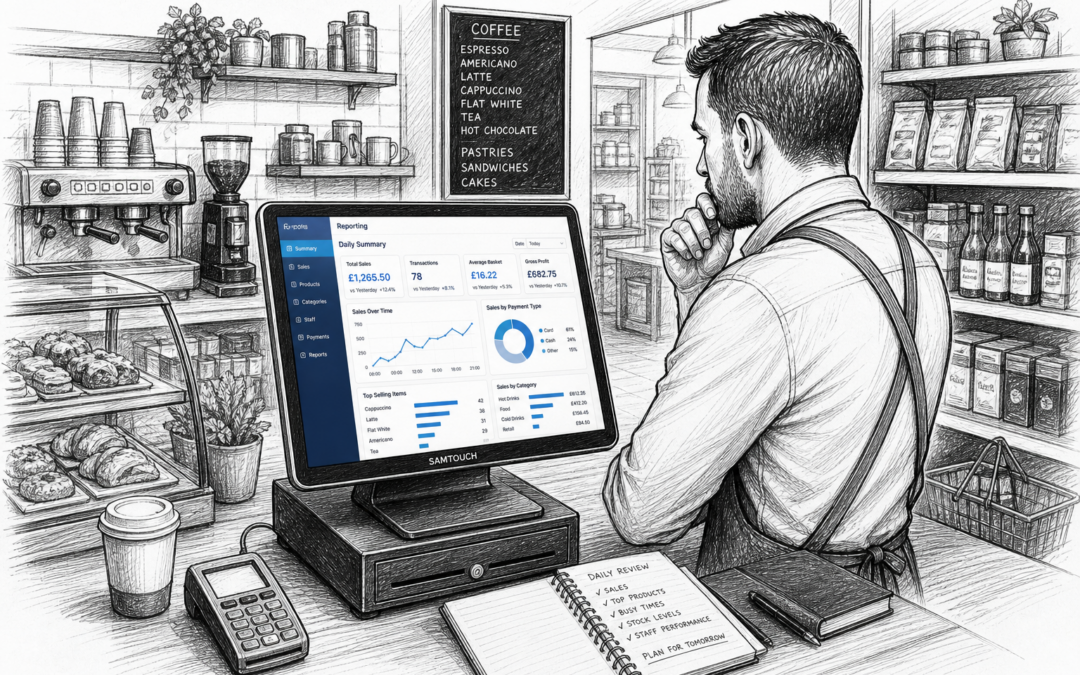
Many UK businesses collect plenty of sales data but do not always use it well. Whether you run a shop, café, pub, restaurant or takeaway, EPOS reporting can help you understand what is selling, when your busiest periods happen, and where small changes could improve performance.
For independent businesses, this is less about complicated dashboards and more about having clear, useful information in one place. The right EPOS system can turn everyday sales into practical reports that support better decisions.
Why EPOS reporting matters
Basic tills usually show you how much money has gone through the till, but not much else. EPOS reporting goes further by showing patterns in sales, product performance, staff activity and trading trends. That makes it easier to manage the business day by day.
For example, a café may notice that breakfast trade is stronger than expected on weekdays, while a shop may see that certain product lines perform best on Saturdays. A takeaway may find which hours are busiest and how that affects staffing. Without reporting, those insights are easy to miss.
Better decisions, less guesswork
One of the biggest benefits of reporting is that it reduces guesswork. Instead of relying on instinct alone, you can check actual sales figures and compare them over time. That can help with decisions such as:
- which products or menu items deserve more focus
- which days or times need additional staff
- which promotions are worth repeating
- which locations or departments are performing well
This is particularly helpful for smaller businesses where the owner is often balancing sales, staffing and customer service at the same time.
What good EPOS reports can show
The exact reports available will depend on the system, but useful EPOS reporting usually covers more than just total takings. A practical setup should give you clear information that you can act on quickly.
Sales by time and day
Knowing when your business is busiest helps with rota planning, table management and service speed. A restaurant may want different staffing levels for lunch and evening service, while a convenience store may see clear peaks around commuting times.
Top-selling items
Understanding your best sellers can support ordering, pricing and promotions. In hospitality, it can also help you build stronger menus by focusing on dishes that customers already buy. In retail, it can highlight popular lines that should be displayed more prominently.
Staff and till activity
Some EPOS reports can show staff performance and till usage, which may help with training and accountability. This is not about micromanaging people. It is about making sure the right processes are in place and that the business runs smoothly.
End-of-day summaries
End-of-day reporting gives owners a quick view of how trade has gone without needing to go through paperwork. This can be especially useful for multi-site businesses, shift managers and business owners who are not always on site.
How reporting supports different UK sectors
Different businesses need different insights, but reporting remains valuable across retail and hospitality.
Retail businesses
For shops, reporting can show which products are moving quickly, which departments are strongest and how sales vary across the week. That is useful for businesses such as garden centres, gift shops, fashion retailers and hardware stores where trading patterns can change with the season or even the weather.
Hospitality businesses
For cafés, restaurants, bars and takeaways, reporting can help with menu planning, staffing and service timing. If a certain time of day is consistently busy, you can prepare more effectively. If a particular item sells well, it may deserve a better position on the menu or display.
Why local EPOS support still matters
Reporting only helps if the system is set up properly and the information is easy to access. That is where local support can make a real difference. UK retail and hospitality businesses often need straightforward, practical help with everyday issues such as report setup, user permissions and understanding what the figures actually mean.
Working with a UK-focused provider can also be useful when you want support that understands local trading patterns, VAT considerations and the pressures of busy service periods. If your team needs help, it is reassuring to have someone available who understands how a small business operates in the real world.
Samtouch is designed with UK retail and hospitality businesses in mind, offering EPOS software that aims to make reporting and day-to-day management more manageable. You can learn more at www.samtouch.co.uk.
Making reporting part of the routine
The best reporting systems are the ones your team actually uses. That means keeping reports simple enough to review regularly. Many businesses benefit from checking a few key figures each day, with a deeper look each week or month.
A sensible routine might include:
- reviewing end-of-day sales totals
- checking busy time periods
- looking at top-selling products or menu items
- comparing performance with previous weeks
Small, regular checks often lead to better decisions than waiting until the end of the month.
Choosing an EPOS system for clearer reporting
If your current till makes it hard to understand trading trends, it may be time to look at a more useful EPOS setup. The goal is not to add complexity. It is to save time and give you clearer information that supports the business.
For many UK businesses, that means choosing a system that is practical, easy to use and supported by people who understand your sector.
Contact YCR Distribution at sales@samtouch.co.uk 01924 438238 to find out how Samtouch could support your retail or hospitality business with clearer reporting and smarter day-to-day control.
Recent Comments