
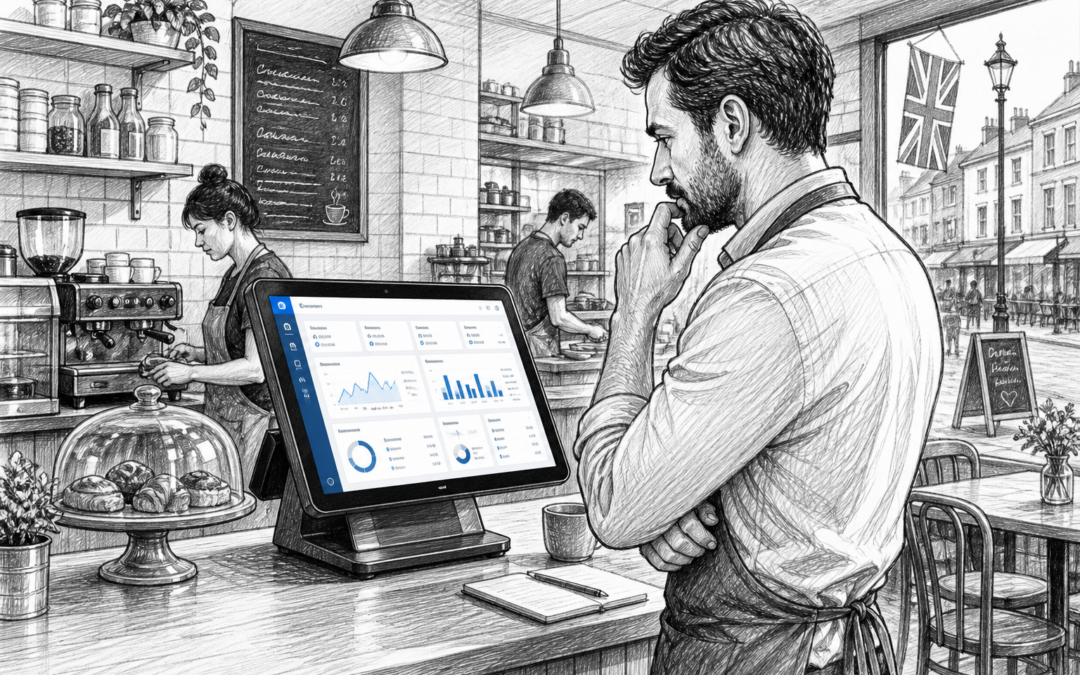
Why EPOS reporting matters for everyday decisions
For many UK retailers, cafés, restaurants, bars and takeaways, the hardest part of running the business is not serving customers or taking payments. It is knowing what is really happening behind the scenes. Which products sell best? When are your busiest periods? Which days underperform? A good EPOS system can answer these questions quickly, without long manual checks or guesswork.
That is why EPOS reporting is such a useful feature. Instead of relying on notes, memory or end-of-week estimates, business owners can look at clear figures and act on them. A quality EPOS setup such as Samtouch can help turn everyday sales data into practical information that supports better decisions.
What EPOS reporting can show you
Reporting does not need to be complicated to be valuable. In most businesses, the most useful reports are the ones that help you understand sales, staff performance and trading patterns in a straightforward way.
Sales by day, week or month
Simple sales reporting can show whether trade is improving, staying steady or dipping at certain times. This is useful for planning staffing, ordering supplies and spotting seasonal changes.
Best-selling products and services
Retailers can see which lines are performing best, while hospitality businesses may want to know which meals, drinks or combo deals are most popular. That information can help with pricing, promotions and menu changes.
Busiest trading periods
Knowing when customers are most likely to visit helps you plan rotas and prepare stock, equipment and service levels. For example, a café may find its busiest period is mid-morning, while a takeaway may peak much later in the evening.
Staff activity and till usage
Some EPOS reports can show which team members processed sales, when they were on shift and how the till was used. That gives business owners a clearer picture of how the front line is running.
How reporting helps different UK businesses
One of the strengths of EPOS reporting is that it is useful across both retail and hospitality, but in slightly different ways.
For retailers
Retail businesses can use reporting to identify strong-selling ranges, slow movers and seasonal trends. A garden centre may want to track plant sales at peak times of year, while a fashion shop may use reports to see which sizes or styles are selling fastest. This can help with range planning and markdown decisions.
For cafés, restaurants and takeaways
Hospitality businesses often use reports to manage menu performance, service efficiency and staffing. A restaurant may want to compare weekday and weekend trade, while a takeaway may focus on order volumes at different times of day. These insights can support better rota planning and improve service during busy periods.
Why local EPOS support still matters
Reporting is most useful when you can actually understand it and use it. That is where local support can make a real difference. UK businesses often work to tight schedules, and it helps to have someone who understands local trading patterns, VAT considerations, tills, receipts and the practical realities of running a shop or venue.
If a report is not showing the figures you expect, or you need help setting up the right categories for your business, local EPOS support can save time and frustration. It is particularly valuable for independent businesses that do not have an internal IT team or a dedicated data analyst. A practical supplier such as Samtouch can help you get more value from the reports you already have, rather than leaving them unused.
Using reports without getting overwhelmed
A common mistake is trying to track too much at once. The best approach is to start with a few key reports that answer real business questions. For example:
- Which products are selling best this month?
- What time of day is busiest?
- How do weekday and weekend takings compare?
- Are certain team members consistently serving more customers?
Once these basics are clear, you can build a more detailed picture over time. The aim is not to spend hours studying spreadsheets. It is to make better decisions with less effort.
Reporting and service improvements go hand in hand
EPOS reporting is not just about looking backwards. It also helps you improve what happens next. If a café sees a regular afternoon slip in trade, it may test a new promotion or adjust staffing. If a shop notices that a product line is selling well on certain days, it can plan displays or reorder timing around that pattern.
The same applies to service. If reports suggest your busiest periods are being stretched, that may be a sign to improve till layout, speed up checkout or adjust team cover. In busy retail and hospitality settings, small changes can make a noticeable difference.
Choosing reporting tools that suit your business
Not every business needs the same level of reporting. A basic till may give you simple totals, but a proper EPOS system gives you more useful detail. The key is choosing software that matches the way you trade and the questions you need answered.
Samtouch is designed as a practical UK EPOS option for retail and hospitality businesses that want clearer oversight of sales and daily operations. If you are reviewing your current system, it is worth looking at whether your reports are helping you make decisions or just storing numbers.
Final thoughts
EPOS reporting is one of the simplest ways to understand how your business is really performing. From sales trends and busy periods to staff activity and product performance, the right reports can help you make more informed choices and run a tighter operation. For independent UK businesses, that clarity can be genuinely valuable.
To find out more about practical EPOS software for UK retail and hospitality businesses, visit www.samtouch.co.uk or contact YCR Distribution at sales@samtouch.co.uk 01924 438238.
Recent Comments