
Why staff permissions matter more than many businesses realise
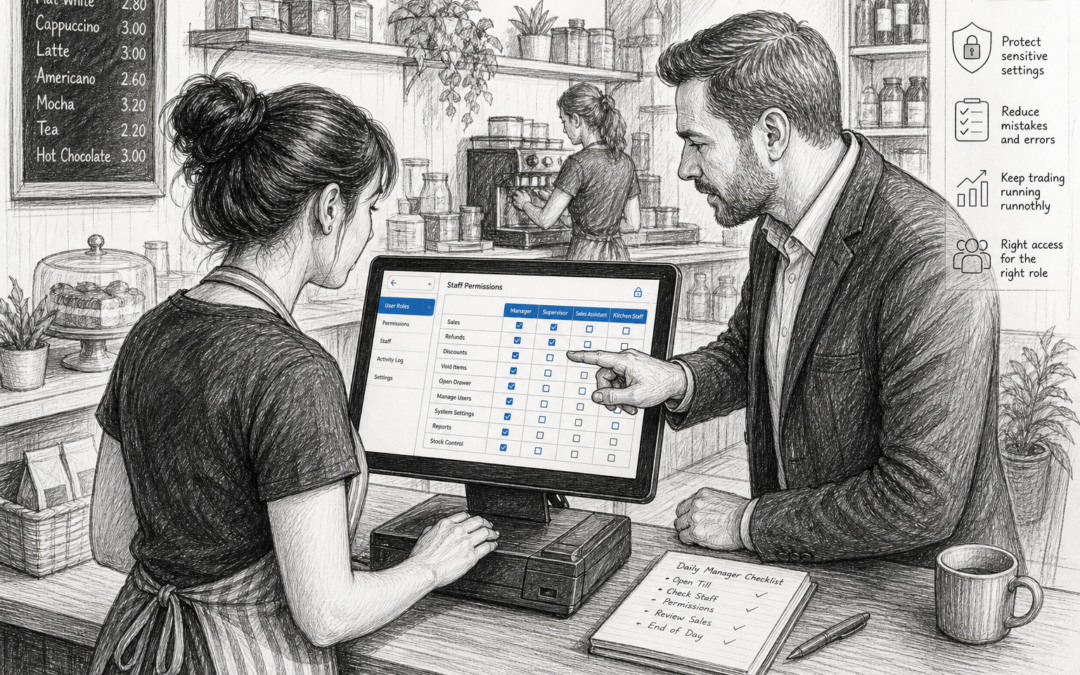
When an EPOS system is used by several team members, it is not just about taking payments quickly. Businesses also need to control who can void items, apply discounts, refund orders, edit prices or access sensitive reports. That is where staff permissions become essential.
For UK retailers, cafés, restaurants, bars and takeaways, good permissions help keep the till secure without slowing the team down. They make it easier to give each employee the access they need for their role, while limiting the actions that should stay with a manager or supervisor.
This matters whether you run a small independent shop or a busier hospitality venue with part-time staff, seasonal workers or multiple shifts. A well-set-up EPOS system can support smoother operations and reduce avoidable errors.
What are staff permissions in EPOS software?
Staff permissions let you decide which team members can do which tasks on the till or back office system. In practice, that might mean a new starter can process sales, but only a supervisor can issue refunds or change product prices.
Depending on the EPOS setup, permissions can also cover:
- discounts and promotions
- voids and cancellations
- refunds and returns
- cash drawer access
- report viewing
- menu or price changes
- administrative settings
For many businesses, this is a simple way to keep trading organised without creating extra paperwork.
How staff permissions help retail businesses
In retail, tills are often shared by several people across the day. A convenience store, gift shop, fashion boutique or hardware shop may have different levels of experience on the shop floor, so it helps if the EPOS can match access to responsibility.
Reduce mistakes at the till
If every member of staff can make changes to pricing or apply discounts, it becomes harder to keep transactions consistent. Permissions help reduce accidental overrides and make it easier to understand what happened if a transaction needs checking later.
Protect sensitive information
Sales reports, margin data and admin settings should not always be visible to everyone. Limiting access keeps important business information in the right hands while still letting team members do their jobs.
Support training and confidence
New employees often feel more confident when their till access is clear and limited to what they need. That can be especially helpful in seasonal retail businesses or stores that rely on temporary staff during busy trading periods.
How staff permissions help hospitality businesses
In cafés, restaurants, bars and takeaways, the till is often at the centre of a fast-moving service. Orders are taken quickly, payments must be accurate and staff need to work efficiently under pressure. Permissions help set sensible boundaries.
Keep service moving without losing control
A team member can take orders or process payments, while managers keep control of refunds, complimentary items and larger discounts. This helps maintain service speed without giving away too much control at the front line.
Protect revenue on busy shifts
In a busy pub or takeaway, mistakes can happen when the team is rushing. Permission levels help reduce the risk of unapproved changes, which can make it easier to spot unusual activity and keep records clean.
Make handovers easier
When different staff members work across lunch, evening or weekend shifts, it helps if access rights are already set. Managers do not need to re-explain every setting each time someone logs in, which saves time and keeps operations consistent.
Why local EPOS support still matters
Staff permissions are straightforward in principle, but they still need to be configured properly. A business may want one set of permissions for supervisors, another for new starters and a third for managers who need reporting access. If the setup is not quite right, it can cause frustration or slow the team down.
That is one reason local EPOS support still matters for UK businesses. When support is based in the UK and understands how independent shops, cafés and hospitality venues actually work, it is easier to get practical help with setup, training and day-to-day questions. If you need permissions adjusted quickly before a busy weekend, it helps to speak to someone who understands the pace of service.
This is part of the appeal of using a practical UK EPOS option such as Samtouch. Rather than trying to fit your business around a generic system, you can choose a setup that supports the way your team already works.
What to look for in staff permission settings
If you are reviewing your EPOS system, it is worth checking whether it gives you enough flexibility. Useful permission features often include:
- role-based access for different team members
- manager override for selected actions
- refund and discount controls
- secure access to reports and settings
- simple ways to add or remove staff access
- clear audit trails of changes and transactions
The best setup is one that feels practical, not restrictive. Staff should be able to serve customers confidently, while management keeps proper oversight.
A practical step for growing businesses
As a business grows, informal till access often becomes harder to manage. What worked with two staff members may not work with a full rota, split shifts or multiple sites. Staff permissions help create structure without making the system complicated.
For UK retail and hospitality businesses, that balance can be just as important as speed at the till. When permissions are set properly, staff can focus on service, managers can keep control and the business can operate with more consistency across every shift.
If you are looking for a UK EPOS solution that can support your team with sensible access control, visit www.samtouch.co.uk or contact YCR Distribution at sales@samtouch.co.uk 01924 438238.
Recent Comments