
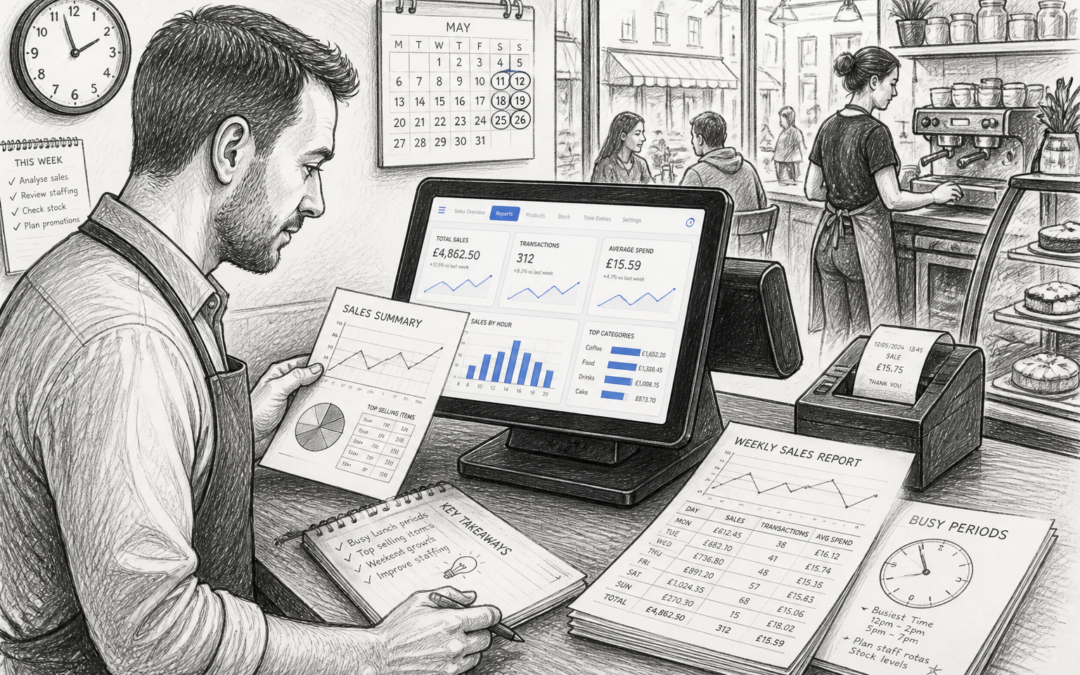
For many UK retailers, cafés, restaurants, bars and takeaways, the till is no longer just a place to take payments. A modern EPOS system can also provide the detailed reporting needed to understand what is happening in the business each day.
That matters because business decisions are often made in a hurry. Which products are selling well? When are the busiest times? Which staff shifts need adjusting? Which promotions are working? EPOS reporting helps answer those questions quickly, using real trading data rather than guesswork.
For independent businesses in particular, that can make a real difference. You may not have time for complicated spreadsheets or manual checks, so having clear reports built into your EPOS system can save effort and improve decision-making at the same time.
Why EPOS reporting is so useful
EPOS reporting gives you a practical view of how your business is performing. Instead of relying on a general impression of trade, you can look at actual sales figures and patterns.
Useful reports often include:
- daily and weekly sales totals
- busiest trading times
- best-selling products or menu items
- refunds and voids
- staff sales activity
- payment method breakdowns
These are not just numbers for the sake of it. When used well, reports can help you spot problems early, plan staffing more sensibly and understand what your customers really want.
Retail businesses: see what is selling and when
For retail businesses, reporting can be especially helpful when trading patterns change through the week or across the seasons. A garden centre, gift shop or fashion retailer may find that certain products move faster on weekends, while other lines perform better during quieter midweek periods.
Sales reports can also highlight slow-moving ranges, popular price points and the effect of promotions. That makes it easier to decide where to focus attention, which items deserve more floor space and when to review pricing.
Support better buying decisions
Rather than ordering based on instinct alone, reporting helps identify what is actually selling. That can reduce over-ordering and improve planning, while also making it easier to prepare for busy trading periods such as bank holidays, Christmas or seasonal events.
Hospitality businesses: understand busy periods and menu performance
In hospitality, reporting can be just as valuable. A café may want to know which drinks sell best at breakfast and which lunch items drive the most sales. A restaurant may need to understand which menu sections are most profitable, while a takeaway may want clearer insights into peak order times.
When this information is available through EPOS reporting, managers can make better decisions about staffing, prep levels and service timing. That can help reduce pressure during peak periods and improve the customer experience.
Spot trends before they become problems
If Monday lunchtime is consistently busy, for example, you can plan accordingly. If a certain dish is rarely ordered, you may decide to review the menu. If card payments are much more common than cash, that is useful operational information too.
These are the kinds of practical decisions that improve day-to-day trading without adding unnecessary complexity.
Reports that help with staffing and service
One of the most valuable uses of EPOS reporting is planning staff levels. Busy periods can be easier to manage when you know where pressure usually builds. That is especially helpful for businesses with a small team or limited cover.
Sales and time-based reports can show:
- when customer demand is highest
- which shifts handle the most transactions
- which days need more support
- how service changes during lunch, evening or weekend trade
This information can help you schedule staff more effectively and improve service without increasing costs unnecessarily.
Why local EPOS support still matters
Good reports are only valuable if you can use them properly. That is where local support still matters for UK businesses. A system may have lots of reporting features, but if you are not sure how to set up the views you need, or how to interpret the figures, those features can go unused.
Working with a UK EPOS provider means support is more likely to reflect how your business actually operates. Local knowledge can be useful when you need help with retail trading patterns, hospitality shift planning or day-to-day reporting queries. It also means you are dealing with a team that understands UK business expectations, rather than a generic call centre far removed from your operation.
For growing businesses, that support can make the difference between having data and actually using it well.
How Samtouch fits in
Samtouch provides EPOS software for UK retail and hospitality businesses that need a practical system for everyday trading. For businesses wanting clearer reporting without unnecessary complexity, it offers a straightforward way to view sales and performance data in one place.
You can learn more at www.samtouch.co.uk. If you want to discuss the right setup for your business, Contact YCR Distribution at sales@samtouch.co.uk 01924 438238.
Making better decisions every day
EPOS reporting is not about collecting data for its own sake. It is about using simple, reliable information to make better decisions about staffing, stock, promotions and service. For independent UK businesses, that can lead to a calmer, more informed way of working.
Whether you run a retail shop, café, restaurant, bar or takeaway, the right reports can help you understand your trade more clearly and respond with confidence.
Recent Comments