
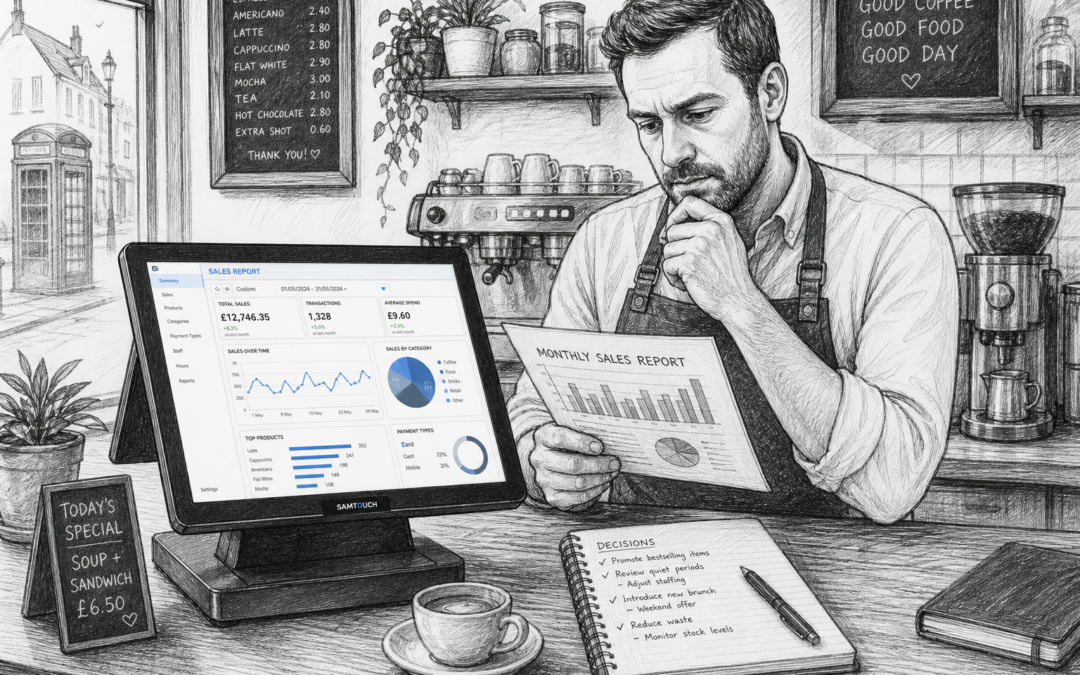
Good business decisions are often based on simple, reliable information. For independent retailers, cafés, restaurants, bars and takeaways, EPOS reporting can provide that information quickly, without relying on guesswork or time-consuming manual totals.
Whether you want to understand your busiest trading hours, compare product performance or review staff performance across shifts, the right EPOS software can make the numbers easier to use. That is where a practical system such as Samtouch can help UK businesses keep track of daily trading in a more organised way.
Why EPOS reporting matters
Many businesses still rely on a cash drawer count, a basic tills report or a spreadsheet at the end of the day. That may work in the short term, but it rarely gives the full picture. EPOS reporting can bring together sales, payment types, item performance and trading patterns in one place.
This is useful because it helps owners move from reacting late to spotting trends early. For example:
- Retailers can see which products are selling well and which are slowing down.
- Cafés and restaurants can track peak times and prepare staffing more effectively.
- Bars and pubs can review busy periods and drinks performance.
- Takeaways can see which menu items are most popular by day or time of week.
The aim is not to create more administration. It is to make the information already coming through the till genuinely useful.
What good EPOS reports should show
Sales trends over time
Daily totals are helpful, but weekly and monthly trends matter more when planning ahead. A good EPOS system can show whether trade is improving, where quiet periods fall, and how busy weekends compare with weekdays.
For a retail shop, that may mean understanding seasonal shifts or the effect of local events. For hospitality businesses, it may mean recognising the difference between lunch trade, evening trade and quieter off-peak hours.
Best-selling items
Product-level reporting helps you see what customers actually buy. That can support decisions on which items to feature more prominently, which dishes to keep on the menu, and which products may not justify the space they take up.
This is especially valuable for businesses with changing ranges, such as gift shops, farm shops, garden centres or multi-department retailers. It can also help cafés and restaurants learn which dishes remain consistent favourites rather than assuming every item performs equally well.
Payment and basket information
Reports that show payment mix, average basket value and sales by category can be very useful when reviewing service and pricing. If card payments dominate, for example, it may affect how quickly the till area needs to move. If average spend is falling, it can be worth reviewing offers, product placement or menu structure.
Staff and shift performance
For businesses with more than one team member on the till, reporting can help highlight differences in sales patterns, service times and basket sizes between shifts. Used carefully, this is not about criticism. It is about understanding where training, scheduling or process changes may help.
How retailers and hospitality businesses can use the information
The real value of reporting comes when owners and managers use it to make small, practical changes. Examples include:
- Adjusting opening hours around actual trading patterns.
- Ordering popular lines more confidently.
- Running better promotions based on what sells naturally.
- Planning staffing levels for peak service times.
- Spotting underperforming items before they become a bigger issue.
In busy independent businesses, these changes can make a noticeable difference to daily working life. Even a simple report review each week can help owners keep tighter control of operations without spending hours on paperwork.
Why local EPOS support still matters
Reporting is only useful if the data is reliable and you can access the right information when you need it. That is one reason local EPOS support still matters for UK businesses. If you are trying to pull a sales report before a staff meeting, review a problem with figures, or set up a new report format, it helps to speak to someone who understands how UK retail and hospitality businesses actually work.
Local support can also be valuable when your business changes, whether that is adding a second till, opening a new site, or adjusting to a seasonal trading pattern. Samtouch is positioned as a practical UK EPOS software option, with the kind of support many independent businesses look for when they want technology that fits their day-to-day operations rather than complicating them.
Making reports part of your routine
You do not need to review every report every day. In many businesses, a simple routine works best:
- Check daily sales and payment totals at close.
- Review weekly trends for busy and quiet periods.
- Look at monthly item performance and margins.
- Use the findings to make one or two small changes at a time.
That approach keeps reporting manageable and useful. It also means your EPOS system becomes a decision-making tool rather than just a till.
A practical next step
If you are running a retail or hospitality business and want clearer reporting without unnecessary complexity, Samtouch may be worth exploring. You can learn more at www.samtouch.co.uk and see how a UK-focused EPOS system can support better day-to-day decisions.
Contact YCR Distribution at sales@samtouch.co.uk 01924 438238
Recent Comments