
Why table service needs the right EPOS
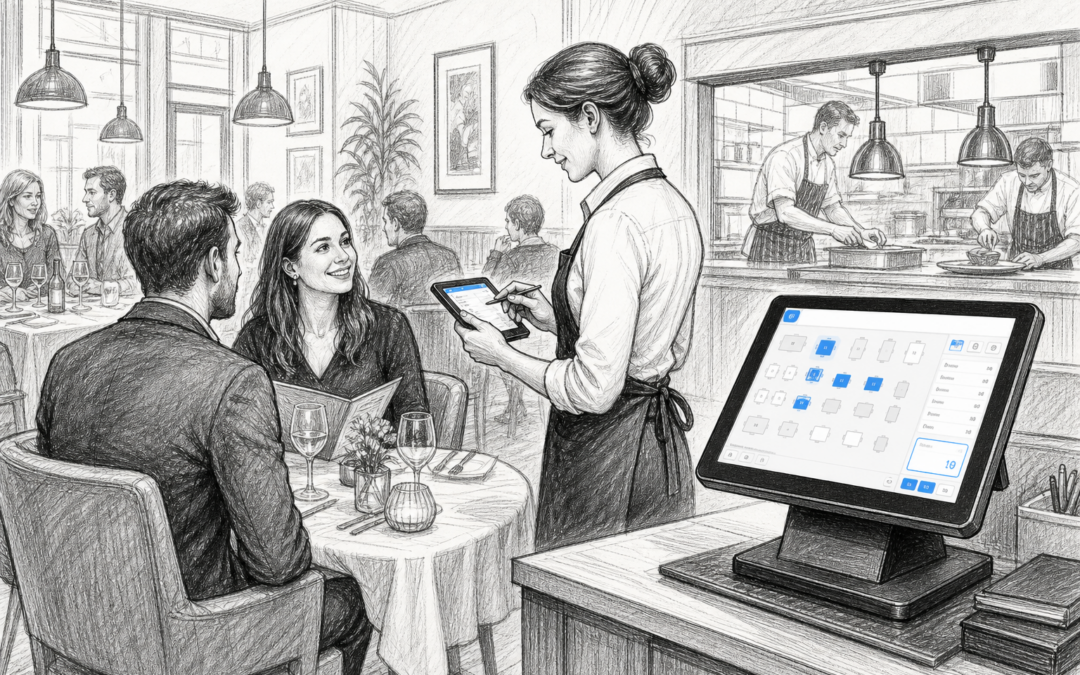
For many UK restaurants, table service is where first impressions are made and where service can either feel seamless or chaotic. Guests expect staff to take orders quickly, send them to the kitchen accurately and keep the whole experience moving without long waits or confusion.
That is where a well-chosen EPOS system can make a real difference. It gives front-of-house teams a clearer way to manage orders, tables and payments, while helping the kitchen receive information in a more structured way. For busy venues, that can mean fewer mistakes, smoother service and a better experience for customers.
At Samtouch, we work with retail and hospitality businesses across the UK, so we understand that no two sites operate in exactly the same way. A café with a lunch rush, a family restaurant with varied covers, and a pub serving food across several areas will all need table service tools that fit the way they work. You can find more about our approach at www.samtouch.co.uk.
What good table service EPOS should help with
Table service is about much more than taking a note and sending it to the till. A practical EPOS setup should support the full journey from greeting the customer to closing the bill.
1. Clear table management
Staff need to know which tables are occupied, where orders have already been taken and which covers are ready for payment. A clear on-screen layout can reduce confusion, especially when a venue is busy or when different team members are covering the same section.
2. Faster order entry
Taking orders directly on the EPOS terminal or handheld device can help staff move quickly between tables. It also reduces the risk of re-writing orders or passing unclear notes to the kitchen. In a busy restaurant, those small time savings add up.
3. Better communication with the kitchen
One of the biggest advantages of table service EPOS is the link between front-of-house and the kitchen. Orders can be sent straight through with fewer chances of items being missed or entered incorrectly. For restaurants with special requests or menu changes, that clarity is valuable.
4. Easier bill handling
Guests may want to pay at the table, split the bill or settle in different ways. A flexible EPOS system helps staff handle those requests without taking extra time or creating unnecessary delays. That can help the final stage of service feel just as smooth as the start.
How table service improves the customer experience
Customers rarely think about EPOS software, but they do notice the results. When orders are taken correctly, food arrives in the right sequence and bills are handled efficiently, the whole visit feels more relaxed.
For restaurants, this can support a better rhythm of service. Staff spend less time fixing avoidable errors and more time looking after guests. That matters in smaller independent venues as well as in larger hospitality settings where consistency is key.
Table service EPOS can also help reduce pressure on new staff. If the system is straightforward to use, they can learn the process more quickly and feel more confident on the floor. That is especially helpful in hospitality businesses that experience seasonal turnover or rely on part-time team members.
Why local EPOS support still matters
For UK restaurants, local support can make a practical difference when service is under pressure. If something goes wrong during a lunch rush or evening shift, it helps to know there is UK-based help available rather than waiting on generic call centres or searching through online forums.
Local support is particularly useful for table service, because any issue can affect the customer experience immediately. A printer problem, a table layout issue or a payment workflow question may not seem major in isolation, but during service it can slow the whole operation down. Having support that understands UK hospitality businesses, opening hours and on-the-ground realities can be reassuring.
That is one reason many businesses look for a practical software partner rather than just a basic till. Samtouch is designed to support UK retail and hospitality operations with a sensible, business-first approach.
Choosing EPOS features that suit your venue
Not every restaurant needs the same setup. A compact café may want a simple, clean table layout and quick payment handling. A high-volume restaurant may need stronger order routing and a clearer workflow between front and back of house. A pub serving food may want something flexible enough to handle mixed trade throughout the day.
When reviewing EPOS options, it is worth asking:
- Can staff see tables clearly at a glance?
- Is order entry quick enough for busy service?
- Can the kitchen receive orders in a clear and reliable format?
- Can the system handle different bill types without slowing service down?
- Is support available when you need it?
Thinking through these practical questions can help you choose a system that supports real service conditions, not just a list of features on paper.
A practical step forward for busy restaurants
Table service works best when the technology supports the team rather than getting in the way. A good EPOS system should help staff stay organised, keep orders accurate and make the whole process easier for customers.
If your current setup feels slow, awkward or too limited for your service style, it may be time to look at a more suitable EPOS option. Samtouch offers a practical UK solution for hospitality businesses that want to improve service without overcomplicating day-to-day operations.
To discuss your requirements, visit www.samtouch.co.uk or contact YCR Distribution at sales@samtouch.co.uk 01924 438238.
Recent Comments