
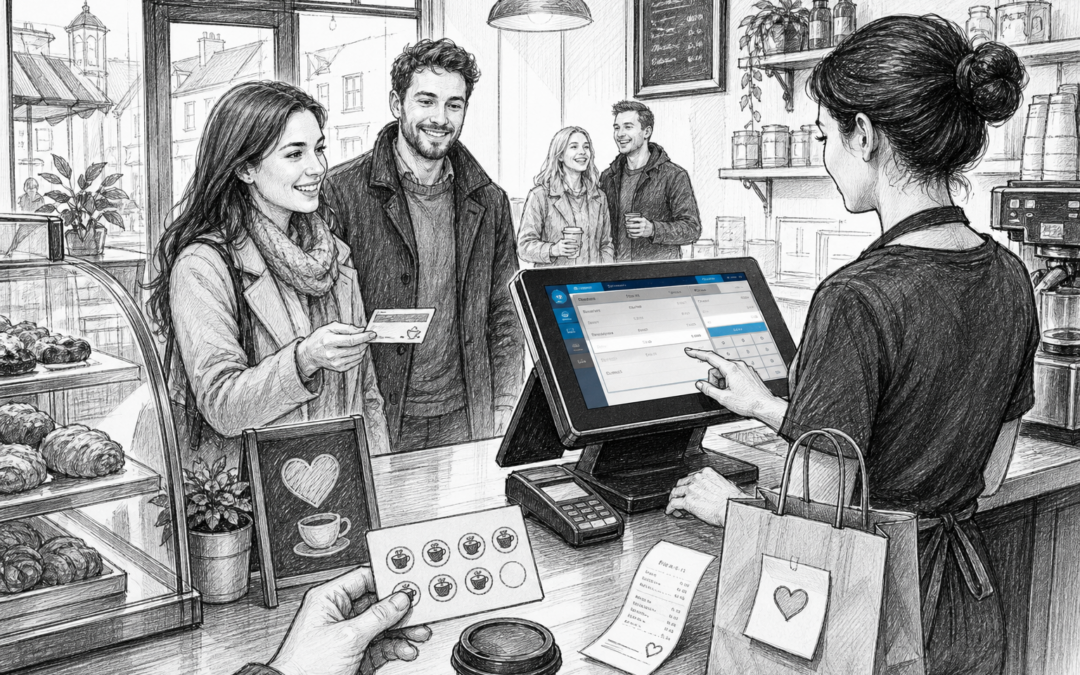
For cafés, restaurants, bars and takeaways, repeat business is often the difference between a busy week and a slow one. Attracting new customers matters, but keeping existing customers coming back is usually more reliable, and often more cost-effective. That is where customer loyalty can play a practical role.
A good EPOS system can make loyalty easier to manage, track and measure. Instead of relying on paper cards, memory or manual notes, hospitality businesses can link loyalty to real transactions and use the information to encourage returning trade. For many UK businesses, that means less guesswork and a clearer picture of what customers actually respond to.
Why customer loyalty matters in hospitality
Loyalty is not just about offering a discount after a certain number of visits. In a café, restaurant or takeaway, it is about making customers feel recognised and giving them a reason to return. Small, consistent benefits can keep your business front of mind when people are choosing where to eat or drink.
For example, a regular customer may return for their usual breakfast, lunch offer or family takeaway because they know they will earn a reward or receive a simple benefit. Over time, that can support repeat custom, especially in areas where there is strong competition or passing trade is unpredictable.
What loyalty can help you achieve
- Encourage repeat visits from existing customers
- Reward regular spending without complicated admin
- Make promotions feel more personal and relevant
- Give customers a reason to choose your business over a competitor
- Support quieter periods with targeted offers
How EPOS supports loyalty schemes
Many businesses start with a basic card system, a stamp card or a manual promotion. Those options can work in the short term, but they are harder to manage as the business grows. A proper EPOS setup can connect loyalty to the till itself, so staff do not need to remember separate rules or enter details manually every time.
With the right EPOS software, loyalty can be tied to transactions at the point of sale. That makes it easier to apply offers consistently, record return visits and see which promotions are being used. It can also help reduce errors, especially during busy periods when staff are serving multiple customers at once.
Practical loyalty features to look for
Not every business needs a complicated scheme. In many cases, the most useful features are the simplest ones:
- Track repeat purchases against customer accounts
- Apply rewards or discounts at the till
- Record visit history for regulars
- Support simple membership or reward structures
- Link loyalty activity to sales reporting
This is particularly useful for independent cafés and fast-moving hospitality venues, where service speed matters and staff need a clear, easy-to-use system.
Loyalty should feel easy for staff and customers
If a loyalty scheme is awkward, it will not be used consistently. Customers do not want a complicated process, and staff do not want to slow down the queue while checking reward rules or writing things down by hand.
A good EPOS system helps keep the process simple at the counter. Staff can apply an offer quickly, see whether a customer has reached a reward threshold and complete the sale without disrupting service. That is especially useful in busy lunch periods, weekend trade and takeaway rushes.
For customers, convenience matters just as much. A loyalty scheme works best when it is easy to understand and easy to redeem. If the benefit is clear, people are more likely to use it again.
Using loyalty data to make better decisions
Loyalty is valuable not only because it encourages return visits, but because it can give you useful insight into how people buy. When linked to EPOS reporting, it can help you see which products are popular with regular customers, which offers are being redeemed and when your busiest repeat visits happen.
That kind of information can help with planning promotions, staffing and menu or product choices. For example, if certain afternoon offers are popular with loyal customers, you can build on that rather than guessing. The aim is not to collect data for its own sake, but to use it to make better day-to-day decisions.
Why local EPOS support still matters
For UK hospitality businesses, support is often just as important as the software itself. If your loyalty setup needs adjusting, or if staff need help understanding how to use a feature during service, it helps to have support that understands how UK cafés, restaurants and takeaways actually operate.
Local support can make a real difference when you need practical advice, not just generic technical answers. That might mean helping with a loyalty setup, checking that promotions are working properly or making sure your till is configured for the way your business serves customers. For busy independent businesses, having someone who understands the pace of hospitality can save time and reduce frustration.
Choosing a loyalty system that fits your business
Before adding a loyalty scheme, think about what you want it to achieve. Some businesses want to reward frequent small purchases, while others are focused on increasing average spend or encouraging weekday trade. The best EPOS setup is the one that fits your service style and your customers.
Samtouch provides practical UK EPOS software for retail and hospitality businesses, including features that can support loyalty, reporting and smooth day-to-day trading. If you are looking for a system that fits real hospitality workflows, it is worth exploring what is available at www.samtouch.co.uk.
Contact YCR Distribution at sales@samtouch.co.uk 01924 438238
Conclusion
Customer loyalty is one of the most useful ways to support repeat business in UK cafés, restaurants and takeaways. When it is handled through EPOS, it becomes easier to manage, easier for staff to use and more useful for decision-making. For many hospitality businesses, that makes loyalty a practical part of everyday trading rather than just a marketing idea.
Recent Comments