
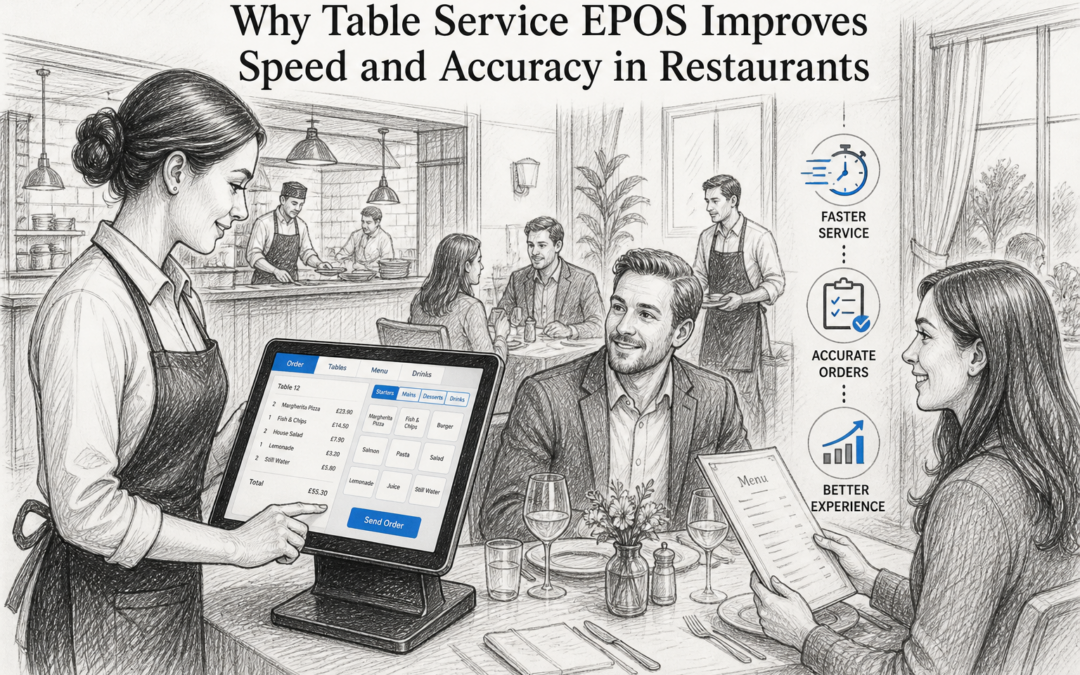
Table service is one of the biggest pressure points in a busy restaurant. Customers expect quick ordering, accurate bills and attentive service, while staff need to keep multiple tables moving without confusion. That is where a good EPOS system can make a real difference.
For UK restaurants, table service EPOS is not just about taking orders at the till. It is about helping front-of-house and kitchen teams work together more smoothly, reducing avoidable errors and making it easier to serve guests well during busy periods. For independent venues in particular, that extra bit of structure can have a noticeable impact on day-to-day service.
Why table service needs more than a basic till
A basic till can take payments, but it does not always support the flow of a restaurant. When staff have to remember table numbers, write orders on paper, or walk repeatedly between the dining area and the till, mistakes can creep in. Orders can be delayed, table turnover can slow down, and staff may spend more time correcting errors than serving guests.
An EPOS system designed for hospitality can keep everything in one place. Staff can take orders more clearly, send them to the right destination, and keep a better overview of what each table has ordered. That helps service feel more organised, especially during lunch rushes, evening bookings and weekend trade.
How EPOS supports faster table service
Clear order entry
When orders are entered directly into an EPOS terminal, tablet or handheld device, there is less chance of handwriting being misunderstood or items being missed. Staff can add dishes, drinks and special requests as they take the order, which helps keep service moving.
This is particularly useful in restaurants where guests may order in stages. Starters, mains, desserts and drinks can all be grouped properly, making it easier for the kitchen and bar to work from accurate information.
Better table management
Table service becomes easier when staff can see which tables are occupied, which are waiting to order and which are ready for the bill. A clear table view helps the team prioritise the right tasks at the right time.
That can improve customer experience too. Guests are less likely to feel forgotten, and staff can spend less time checking notes or asking colleagues for updates.
Fewer mistakes between front of house and kitchen
One of the most common frustrations in restaurants is an order that arrives at the wrong table, with the wrong additions or at the wrong time. EPOS can help reduce these issues by sending clearer orders to kitchen printers or screens, depending on how the business is set up.
For restaurants serving a varied menu, that accuracy matters. It can help protect service quality, reduce waste from remakes and avoid awkward conversations with customers.
Improving the customer experience without slowing staff down
Good table service is not only about speed. It is also about making guests feel looked after. A well-chosen EPOS system supports that by helping staff respond quickly, split bills when needed and keep track of each table’s progress.
In practice, that means less time spent on manual checks and more time spent on customers. Staff can focus on the parts of service that really matter: taking orders accurately, answering questions and keeping the dining experience smooth.
For restaurants that get busy at predictable times, such as Friday evenings or Sunday lunches, this can be especially useful. A reliable EPOS setup helps the team stay calm and organised when the room fills up.
Why local EPOS support still matters
When a restaurant depends on table service, even a short disruption can affect trade. That is why local support still matters for many UK businesses. If there is a problem with the till, a printer or a setup issue during service, having support that understands the pressures of hospitality can be reassuring.
Local support can also be helpful during installation, training and setup. Every venue is different, and a restaurant with table service may need a different workflow from a café, pub or takeaway. A UK-based provider such as Samtouch can help businesses choose a practical setup that suits their operation rather than forcing a one-size-fits-all approach.
For independent restaurants, that sort of guidance can make the transition from basic tills or manual processes much easier.
What to look for in a table service EPOS system
Restaurants should look for a system that is straightforward for staff to use and flexible enough to match the way they work. Useful features may include:
- Fast order entry for food and drinks
- Table tracking and clear order status
- Kitchen printing or kitchen screen support
- Bill splitting and payment handling
- Reporting to review busy periods and staffing patterns
- Simple user permissions for different team roles
The best EPOS system is usually the one that fits the venue’s service style without adding unnecessary complexity.
A practical choice for UK restaurants
Table service in a restaurant depends on timing, accuracy and clear communication. EPOS software can help bring those parts together so staff can work more confidently and customers can enjoy a better experience.
For UK hospitality businesses looking for a practical, easy-to-use solution, Samtouch offers EPOS software designed for retail and hospitality operations. To learn more, visit www.samtouch.co.uk or contact YCR Distribution at sales@samtouch.co.uk 01924 438238.
Recent Comments