
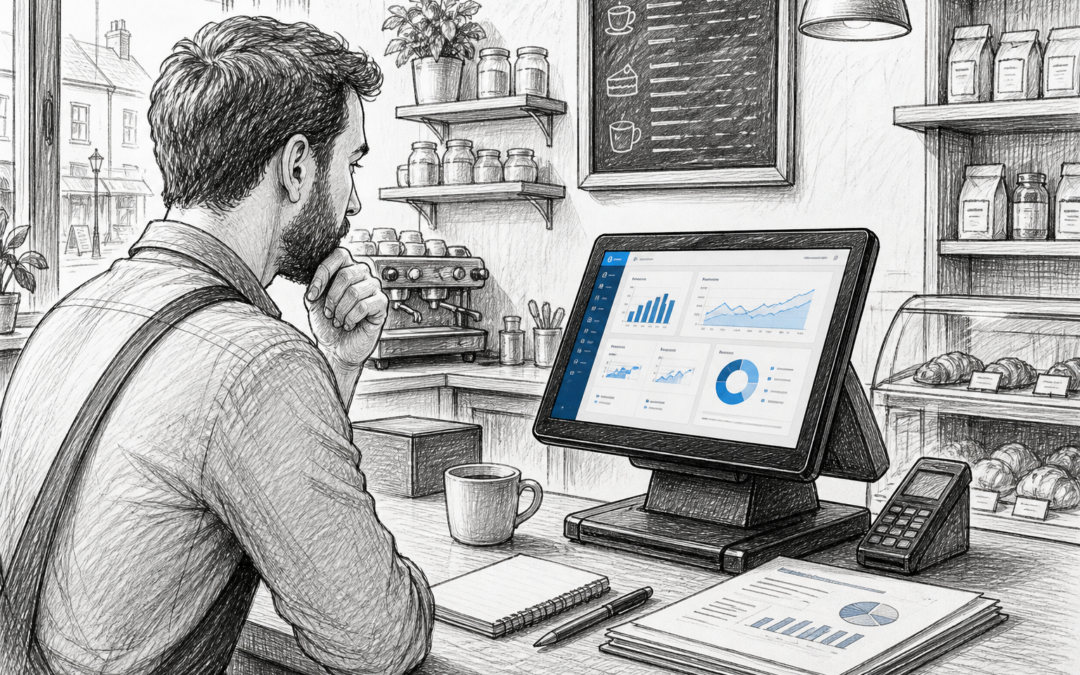
For many UK businesses, day-to-day decisions are made quickly. A café decides how much staff to bring in for lunch. A shop manager reviews which products are moving. A pub owner checks which times are busiest. The challenge is knowing whether those decisions are based on a clear picture, or just a rough guess.
That is where EPOS reporting becomes useful. A good EPOS system does more than process sales. It gives business owners straightforward information they can actually use, without having to spend hours adding things up by hand. For independent retailers, cafés, restaurants, bars and takeaways, that can make a real difference to planning, service and profit control.
Why reporting matters in everyday trading
Sales reports help turn daily transactions into useful business information. Instead of looking at a till and seeing only today’s takings, owners can see patterns across time, departments, products and staff shifts. That makes it easier to spot what is happening in the business and respond early if needed.
For example, a retailer may notice certain categories perform well on weekends but slow down midweek. A café may find that breakfast trade is stronger than expected, while late afternoon is quieter. A takeaway may see which menu items are consistently popular and which are rarely ordered. These are practical insights that can shape stock levels, staffing and promotions.
What a good EPOS reporting system can show
Different businesses need different information, but useful EPOS reporting usually includes a few key areas.
Sales by day, week or month
This helps owners understand overall trading performance and compare periods more accurately. It can highlight seasonal trends, quieter days and busy trading windows.
Product and category performance
Knowing which products or menu items sell best can support better ranging, menu planning and pricing decisions. It also helps businesses focus on the lines that really drive sales.
Staff and shift performance
Reporting can show which shifts are busiest and how sales are building across the day. For hospitality businesses, that can support smarter rota planning. For retailers, it can help with staffing on peak footfall days.
Payment method breakdowns
Understanding how customers pay can be useful when reviewing fees, reconciling takings and planning front-of-house processes. It can also help identify whether certain payment types are becoming more common.
How this helps different business types
Reporting is useful in different ways depending on the business.
In a convenience store, it can help owners monitor high-traffic times and understand which ranges drive regular footfall. In a garden centre or gift shop, it can reveal which departments are strongest during certain periods. In a restaurant, it can support menu reviews and service planning. In a bar or pub, it can help highlight busier trading hours and trends across different days of the week.
For takeaways and quick-service food businesses, reporting can support faster decisions around peak demand, popular items and staffing levels. The goal is not to create more paperwork. It is to make daily management simpler and more informed.
Reducing manual admin
One of the biggest advantages of EPOS reporting is the time it can save. Without good reporting, owners may need to pull figures from several sources, count cash, check card machine totals and rebuild sales numbers manually. That takes time and leaves more room for errors.
With the right EPOS software, key reports are available in one place. That makes end-of-day checks easier and gives managers a clearer starting point for the next shift. It also helps when reviewing performance with staff or checking whether a promotion had the result you expected.
Why local EPOS support still matters
Even the best reporting tools are only useful if your team can set them up properly and understand them. That is why local support still matters for UK businesses. When you are busy serving customers, you do not want to waste time trying to work out a report on your own or wait too long for help with a setup question.
A UK-based supplier that understands retail and hospitality trading patterns can make support more relevant and practical. Samtouch is designed for UK businesses that want a straightforward EPOS system with useful reporting and responsive help when they need it. For many owners, that reassurance matters just as much as the software itself.
Using reports to make better decisions
Good reporting should lead to action. If a product is underperforming, you may review its price, placement or description. If one day of the week is consistently slower, you may adjust staffing or opening arrangements. If a busy trading period is harder to manage than expected, reports can help you prepare better next time.
The most useful reports are often the simplest ones: clear sales totals, busy periods, top-selling lines and staff performance snapshots. These are the figures that help business owners make practical decisions without getting lost in unnecessary detail.
Choosing EPOS software that works for your business
If you are comparing basic tills, manual spreadsheets or generic POS systems, think about how easily you can access the information you need. A system should not just record sales; it should help you understand them.
Samtouch provides UK retail and hospitality businesses with practical EPOS software built around day-to-day trading. If you want reporting that is useful rather than complicated, it is worth taking a closer look.
Contact YCR Distribution at sales@samtouch.co.uk 01924 438238 or visit www.samtouch.co.uk to learn more.
Recent Comments