
When a restaurant gets busy, table service can quickly become the difference between a smooth shift and a stressful one. Orders need to be taken clearly, sent to the kitchen quickly and managed in a way that keeps both staff and customers happy. For UK restaurants, a reliable EPOS system can make that process much easier.
Table service is not just about carrying plates from the kitchen to the dining room. It covers order-taking, splitting bills, tracking tables, handling special requests and making sure the right information reaches the right place. If those steps are handled well, service feels more professional and the team can focus on the customer rather than the paperwork.
What good table service looks like in a restaurant
In a busy dining room, staff need a clear view of what is happening at each table. A sensible EPOS setup helps by keeping orders tied to the correct table, showing which dishes have been sent, and making it easier to add extras or remove items before payment. That reduces confusion and helps keep service steady, even during peak times.
It also helps front-of-house teams work together. One server may take the order, another may deliver the food, and a third may handle payment. When everyone is working from the same live information, there is less repetition and fewer mistakes.
Faster order taking at the table
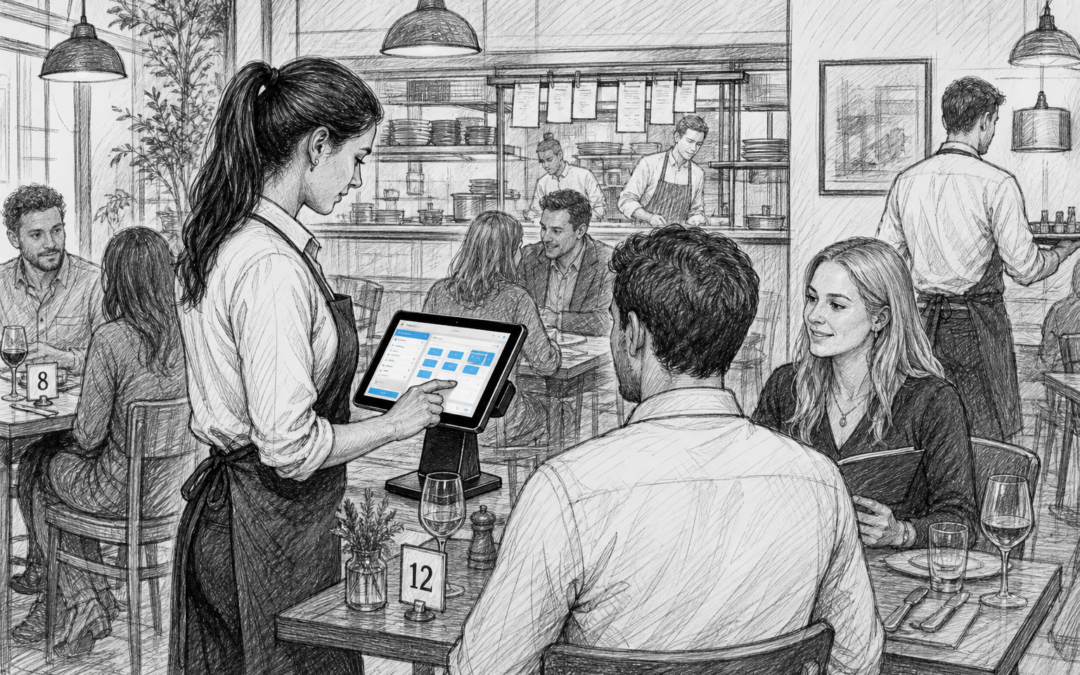
Restaurants often lose time when staff have to write orders down and re-enter them later. A table-service EPOS system can remove some of that delay by letting staff place the order directly at the table. That means fewer steps between taking the order and sending it to the kitchen.
For customers, this can make the experience feel more responsive. For staff, it can free up time for checking on tables, offering recommendations and dealing with requests promptly.
Helping the kitchen and front of house work together
Table service works best when the kitchen and dining room are connected. If an order is sent clearly from the EPOS to the kitchen, staff are less likely to miss notes such as “no onions”, “sauce on the side” or “allergy aware”. That improves order accuracy and helps service run more smoothly.
In many restaurants, kitchen printing is still an important part of the process. A well-configured EPOS can make sure orders are printed in the right place, in the right order and with the right level of detail. That keeps the team organised during busy lunch or evening periods.
Why table management matters for customer experience
Good table service is about more than speed. It also affects how the customer feels while they are in the restaurant. If orders arrive correctly, bills are handled without delay and staff know what is happening at each table, the whole visit feels more professional.
That matters for repeat business. Diners are more likely to return to a restaurant where service feels calm and well managed. They are also more likely to leave positive feedback when the experience is consistent from start to finish.
Split bills and payment at the table
One area where EPOS can make a real difference is payment. Splitting bills, adding additional items and processing payments at the table can all take time if the system is not set up properly. A practical EPOS solution helps staff handle these requests without slowing the rest of the service.
That is especially useful in restaurants where groups dine together or where customers want to settle up quickly before leaving. Reducing friction at payment time helps keep tables turning without making service feel rushed.
Why local EPOS support still matters
For UK restaurants, support matters as much as the software itself. If a printer stops working, a menu needs changing or staff need a quick refresher before a busy weekend, having local help can save time and reduce stress. That is one reason many businesses value a UK-based provider with practical support and an understanding of how hospitality venues operate.
Local support is also useful when menus change, service styles evolve or additional terminals are needed. Restaurants often work to tight schedules, so having someone who understands the pressures of a lunch rush or evening service can make setup and maintenance much simpler.
Choosing EPOS that fits the way your restaurant works
Not every restaurant needs the same features, but table service should feel easy to use. The best systems are straightforward for staff to learn and flexible enough to support the way the business operates. That may mean table plans, live order updates, kitchen printing, bill splitting or simple reporting at the end of the day.
Samtouch provides practical UK EPOS software for hospitality businesses, including restaurants that want a clear, dependable way to manage service. It is designed to support day-to-day operations without making the front of house more complicated than it needs to be. If you are comparing EPOS options, it is worth looking for a system that fits your service style rather than forcing your team to adapt to the software.
Better service, less pressure
When table service runs well, the whole restaurant benefits. Staff feel more in control, kitchens receive clearer orders and customers enjoy a smoother experience. For independent UK restaurants in particular, that can make a real difference to daily trading and long-term reputation.
If you want to see how Samtouch could support your restaurant, visit www.samtouch.co.uk. Contact YCR Distribution at sales@samtouch.co.uk 01924 438238 for more information.
Recent Comments