
Why reporting matters in a busy restaurant
Running a restaurant means making decisions all day long. Which dishes are selling best? When do bookings peak? Are staff handling the rush efficiently? Without clear reports, many owners end up relying on instinct, which can work to a point but is not always enough when margins are tight and service matters.
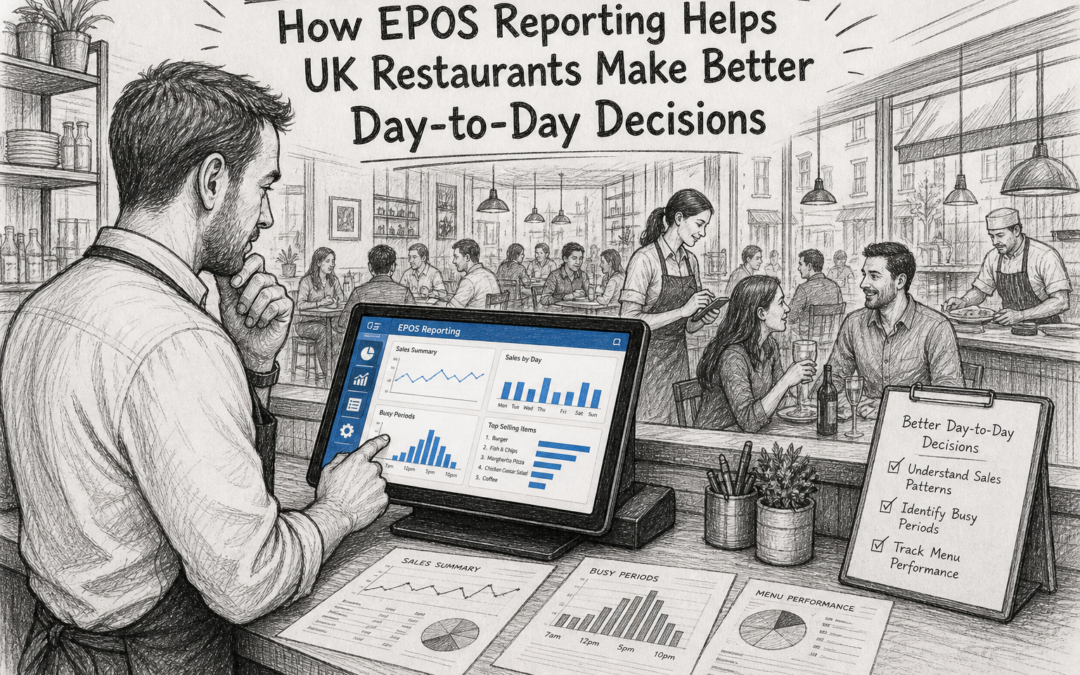
EPOS reporting gives restaurant owners a clearer view of what is actually happening on the floor. Instead of waiting until the end of the week to piece things together, you can look at sales information from the system and use it to make practical changes. For UK restaurants, that can mean better staffing choices, smoother service and a fuller understanding of how the business really performs.
What EPOS reports can tell a restaurant owner
A good EPOS system can produce reports that are useful in daily management as well as longer-term planning. The exact reports vary between systems, but the most helpful ones often include:
Sales by day, time and trading period
This helps you spot your busiest hours and quieter gaps. If Friday evenings are consistently the strongest, you can plan rotas and prep more confidently. If lunch trade is weaker on certain days, you can review menu offers or local promotion ideas.
Best-selling dishes and menu trends
Menu performance reports can show which items customers order most often and which dishes rarely move. That does not just help with menu planning. It can also support pricing decisions, stock ordering and staff training around popular dishes.
Staff performance and till activity
EPOS reporting can help managers understand sales by logged-in staff member or by shift. Used carefully, this is not about watching every action. It is about spotting where service is moving smoothly and where extra training or support may help.
Payments and average transaction value
Reports on payment type and average spend can be useful for understanding customer behaviour. For example, if diners are spending more on certain days or when particular offers are running, it may be worth looking at what is driving that change.
Turning report data into practical action
The value of reporting is not in the figures alone. It comes from using those figures to make sensible changes. A restaurant owner might use EPOS reports to adjust staffing levels before a busy weekend, highlight a dish that deserves more menu visibility, or identify slow periods when a lighter shift pattern makes sense.
It can also help with day-to-day control. If you can see what is selling well, you can brief the team more effectively and reduce confusion during service. If you know when the restaurant is likely to be busiest, you can prepare the kitchen, check tables are set and reduce pressure on front-of-house staff.
For independent restaurants, this kind of insight is often more useful than complicated spreadsheets. The aim is not to create more admin, but to make decisions quicker and more confidently.
Why reporting is useful beyond the till
Many restaurant owners start with a basic till or a card-terminal-only setup. Those tools may take payments, but they usually offer limited visibility. That can make it hard to judge whether a menu change worked, whether trade improved after a marketing push, or whether service is slowing down at certain times.
With a hospitality EPOS system, reporting becomes part of normal operations rather than an extra job. Managers can check information at the end of a shift, review patterns over a week, or compare quieter and busier trading periods across the month. For growing businesses, that can make a real difference to planning.
Why local EPOS support still matters for UK restaurants
Reporting only helps if the system is set up properly and the data is easy to understand. That is one reason local EPOS support still matters. UK restaurant owners often need help with setup, menu changes, reporting options and staff training, especially when they are busy and cannot afford long delays.
Working with a UK-based provider also means support is more likely to understand the way local hospitality businesses operate. Whether you run a neighbourhood restaurant, a café with a food menu or a takeaway with seats, it helps to know you can speak to someone who understands your day-to-day pressures. Samtouch, available at www.samtouch.co.uk, is designed with practical UK retail and hospitality use in mind, including the kind of reporting features that help owners stay on top of trading.
What to look for in restaurant EPOS reporting
If you are reviewing your current system, it is worth asking a few simple questions:
- Can I quickly see sales by day, hour or shift?
- Can I review popular items and slower-selling dishes?
- Can managers access the reports they need without confusion?
- Is the information clear enough to use without extra manual work?
- Can I get help from a UK support team if something is not set up properly?
These are practical questions, not technical ones. The best EPOS software is the one that helps you run the restaurant more effectively without adding unnecessary complexity.
A better way to make decisions
Restaurant owners do not need more data for the sake of it. They need clear information they can use. EPOS reporting can help with staffing, menu planning, service improvements and overall business control, all while keeping the focus on day-to-day operations.
If you are looking for a practical EPOS solution for a UK restaurant or hospitality business, Samtouch offers a straightforward approach with support that is easy to work with. Contact YCR Distribution at sales@samtouch.co.uk 01924 438238 or visit www.samtouch.co.uk to find out more.
Recent Comments