
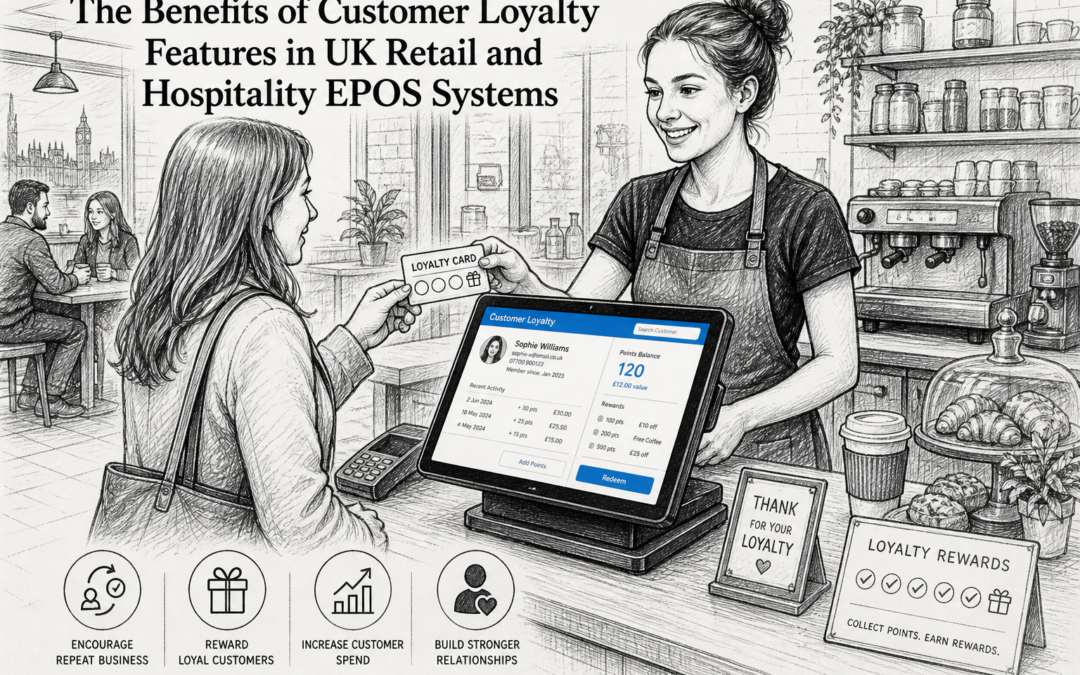
Why customer loyalty matters for everyday trade
For many UK retail and hospitality businesses, repeat customers are the lifeblood of the business. A strong loyalty offer can encourage people to come back more often, spend a little more, and feel recognised when they visit. That matters whether you run a neighbourhood café, an independent shop, a takeaway, or a busy pub.
The key is to make loyalty feel simple rather than awkward. If the process takes too long at the till, staff may skip it and customers may lose interest. A good EPOS system helps loyalty fit naturally into the sale, so it supports service instead of slowing it down.
What loyalty features should an EPOS system offer?
Not every loyalty setup needs to be complicated. In fact, the best systems are usually the ones customers understand at a glance and staff can use without extra effort.
Simple reward collection
This might mean points collection, visit-based rewards, or spend-and-save offers. The idea is to give customers a clear reason to return, while keeping the process easy for staff to apply during normal sales.
Flexible reward rules
Different businesses need different approaches. A café may want a simple stamp-style reward for coffee purchases, while a retail shop may prefer spend thresholds or targeted offers. A flexible EPOS system lets you choose a format that suits the way you trade.
Clear customer records
When loyalty is linked to customer data, you can better understand buying habits and respond with more relevant offers. This does not need to be overly technical. Even basic insight into repeat visits and popular items can help businesses make better decisions.
How loyalty helps different UK businesses
Loyalty is not just for large chains. Independent businesses often benefit most because they rely on local custom and regular footfall.
Cafés and takeaways
For cafés, loyalty can reward routine purchases such as hot drinks or lunch visits. For takeaways, it can help keep customers coming back in a competitive local market where speed and convenience matter. If the EPOS system handles the reward at the point of sale, staff do not need to manage a separate process.
Restaurants, bars and pubs
In hospitality settings, loyalty can support return visits over time rather than just one-off transactions. For example, a pub may use it to encourage regular lunchtime trade, while a restaurant may use it to reward frequent diners. The system should fit with table service, split payments and varied order sizes without creating extra work.
Retail shops
For convenience stores, gift shops, garden centres and clothing retailers, loyalty can encourage repeat spending and help build stronger relationships with local customers. A well-designed EPOS system can make it easier to offer loyalty without disrupting barcode scanning, promotions or normal checkout flow.
Keep loyalty easy for staff and customers
If customers need to remember too many steps, they may not bother joining. If staff need to search through menus to apply a reward, it can slow queues and create mistakes. Good EPOS software should keep the process straightforward.
That means:
- fast enrolment at the till
- clear prompts for staff
- easy redemption of rewards
- simple customer communication
- reports that show whether the scheme is being used
The aim is to make loyalty part of everyday trading, not a separate admin task.
Using reports to understand what is working
Customer loyalty is most useful when you can see whether it is actually bringing people back. EPOS reports can help track repeat visits, popular products, and busy trading periods. That gives business owners a better idea of what customers value and where the business is gaining the most from regular trade.
For example, if a café sees strong repeat visits on weekday mornings, it may choose to focus loyalty rewards around that part of the day. If a shop finds that certain product categories are often purchased together, it may prefer to structure offers around those buying patterns.
Why local EPOS support still matters
When loyalty is part of your daily sales process, good support matters. UK retailers and hospitality businesses often need practical help setting up a scheme, adjusting it for seasonal trading, or training new staff. Local EPOS support can make those changes faster and less stressful than trying to work everything out alone from a generic help centre.
This is where a UK-focused provider such as Samtouch can be useful. Samtouch is designed for retail and hospitality businesses that want EPOS software that is practical, familiar and suited to day-to-day trading in the UK. If you want a system that supports loyalty without adding unnecessary complexity, local help can make all the difference.
Choosing the right EPOS approach for your business
Before adding loyalty features, it is worth thinking about how your business actually sells. A busy takeaway, a table-service restaurant and a clothing shop will all need different setups. The right EPOS software should match your workflow, not force you into a process that slows things down.
Samtouch offers a practical EPOS option for UK businesses looking to improve customer experience while keeping service efficient. For owners who want to build repeat trade in a sensible way, that balance is often more valuable than flashy features that are never used.
Final thoughts
Customer loyalty works best when it is easy to understand, quick to use and relevant to the way your business operates. Whether you run a café, restaurant, bar, takeaway or retail shop, the right EPOS system can help you encourage repeat visits without adding unnecessary admin.
If you want to explore practical EPOS software for your business, visit Samtouch at www.samtouch.co.uk. Contact YCR Distribution at sales@samtouch.co.uk 01924 438238.
Recent Comments