
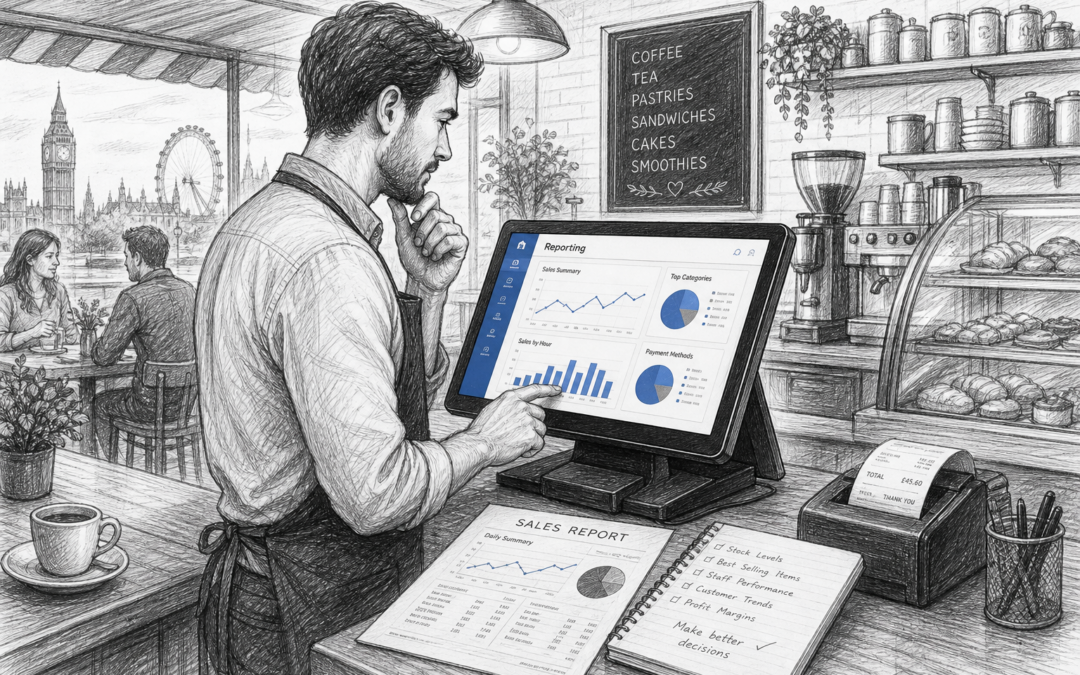
For many UK retail and hospitality businesses, day-to-day decisions are made in the middle of a busy shift. Which products are performing best? Are certain hours consistently busier than others? Are staff working efficiently at the till? Good EPOS reporting helps answer these questions without relying on guesswork.
Whether you run a café, restaurant, bar, takeaway or independent shop, reporting is one of the most useful features in a modern POS system. It can show trends, highlight busy periods and give you a clearer picture of how the business is really performing. For owners who are already juggling customers, staff and costs, that kind of clarity is valuable.
What EPOS reporting actually tells you
EPOS reporting is more than a simple sales total at the end of the day. A well-designed system can help you see patterns across sales, products, payment methods, staff activity and trading times. That means you are not just looking at figures; you are looking at information you can act on.
Common reports that matter to small businesses
- Sales by day, week or month
- Best-selling products or menu items
- Peak trading times
- Transactions by payment type
- Staff performance summaries
- Refunds, discounts and voids
For a café, that might mean spotting the busiest breakfast window. For a shop, it could highlight which products move fastest on weekends. For a takeaway or restaurant, reports can help identify peak order times so staffing can be planned more sensibly.
Why reporting helps with better decisions
Many business owners already know when the shop or venue feels busy, but instinct only goes so far. Reporting gives you a more accurate view and helps support everyday choices with real numbers.
Plan staffing more effectively
If Fridays are regularly busier than Tuesdays, or lunchtime spikes are stronger than breakfast trade, your rota can reflect that. Better staffing at the right time can reduce pressure on the team and improve customer service.
Understand which products or dishes are performing
Knowing what sells well is useful across retail and hospitality. In a shop, it can help with product selection and merchandising. In a café or restaurant, it can guide menu decisions and help you focus on the items customers actually want.
Spot slow periods and trading trends
Reports can show when trade drops off, which may help with targeted promotions, revised opening hours or seasonal planning. This is especially useful for independent businesses that need to make the most of every trading hour.
Reporting for retail and hospitality businesses
Different businesses need different information, but the principle is the same: clear reports help you run a tighter operation.
For retail shops
Independent retailers can use EPOS reporting to understand category performance, compare sales across days and monitor which lines are driving footfall. That makes it easier to make sensible decisions about the shop floor and buying plans.
For cafés, restaurants and takeaways
In hospitality, reports can help with menu planning, service timing and staff scheduling. If some items consistently sell better at certain times of day, you can prepare more effectively and reduce pressure during busy periods.
For bars and pubs
For bars and pubs, reporting can be especially useful around peak trading sessions, payment methods and popular products. That can help owners understand which shifts need the most support and where service speed may need attention.
Why local EPOS support still matters
Even the best reporting features are only useful if the setup makes sense for your business. That is where local support can make a real difference for UK businesses. If your reports are not showing what you need, or you want help tailoring the system to your operation, it helps to speak to people who understand how UK retail and hospitality businesses work in practice.
Local EPOS support can be especially valuable when you are busy, short on time or setting up a new site. Rather than working through generic advice, you get straightforward help that is relevant to your tills, reports and daily workflow. For many small businesses, that practical support is just as important as the software itself.
What to look for in a reporting-friendly EPOS system
If you are comparing EPOS options, look beyond basic sales totals. A useful system should make reports easy to find, easy to understand and easy to use in day-to-day decision-making.
Key things to check
- Can reports be viewed quickly in the till or back office?
- Are reports simple enough for non-technical users?
- Can you compare trading across different periods?
- Does it suit your type of business, whether retail or hospitality?
- Can you use the information to support staffing, pricing and product decisions?
Samtouch provides UK EPOS software for retail and hospitality businesses that need practical tools rather than unnecessary complexity. If you want clearer reporting without relying on manual spreadsheets or basic tills, a system like Samtouch can help bring the details together in one place. You can learn more at www.samtouch.co.uk.
Bringing the numbers into everyday decisions
The real value of reporting is not in collecting data for its own sake. It is in making decisions that improve the running of the business. That might mean adjusting staffing, refining your product mix, improving service during busy periods or simply understanding your trade more clearly.
For busy UK businesses, that insight can make daily management feel more controlled and less reactive. A good EPOS system should help you spend less time working things out by hand and more time focusing on customers.
Contact YCR Distribution at sales@samtouch.co.uk 01924 438238 to find out more about Samtouch EPOS and how it could support your business.
Recent Comments