
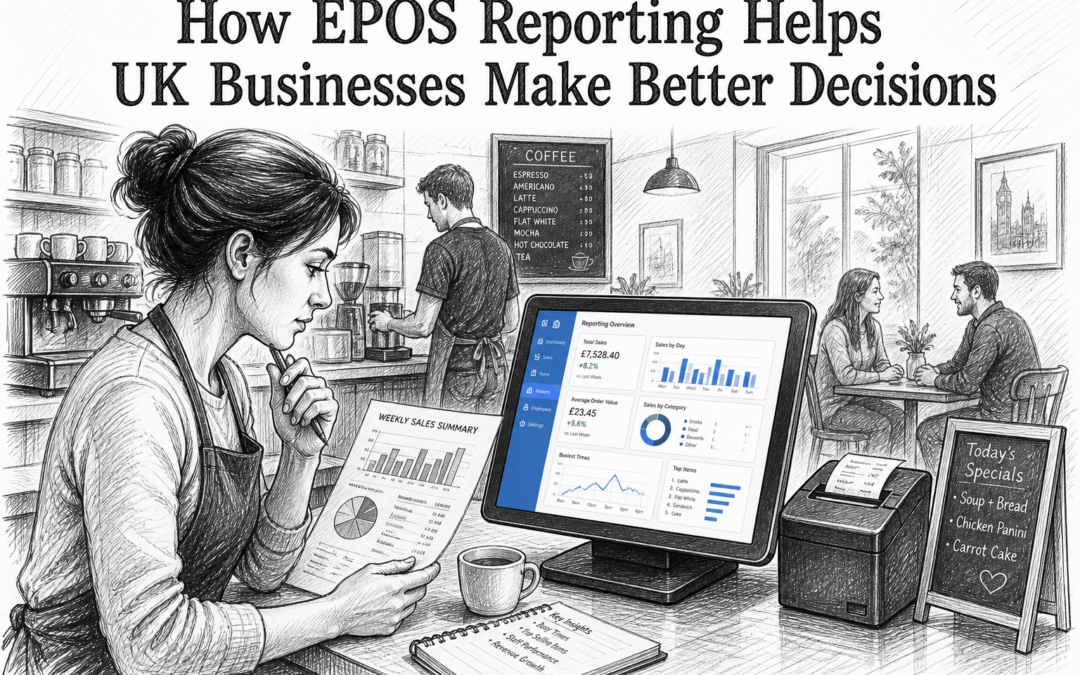
Why EPOS reporting matters for everyday decisions
For many UK retail and hospitality businesses, the biggest decisions are not the dramatic ones. They are the day-to-day choices about staffing, opening hours, product ranges, menu changes and busy trading periods. That is where EPOS reporting becomes genuinely useful.
Instead of relying on gut feeling alone, reporting from your till system can show what is selling, when customers are most active and which parts of the business deserve more attention. For independent retailers, cafés, restaurants, pubs and takeaways, that kind of insight can make planning much more straightforward.
A modern EPOS system should do more than process payments. It should help you understand your business better. With Samtouch, a UK EPOS software solution for retail and hospitality businesses, reports can support more informed decisions without making the day-to-day operation more complicated.
What EPOS reports can tell you
The best reports are the ones that answer practical questions. You do not need pages of data for the sake of it. You need clear information that helps you act. Useful EPOS reporting often includes:
- sales by day, week or month
- busiest trading times
- best-selling products or menu items
- average transaction values
- staff performance summaries
- refunds, discounts and voids
- category or department performance
These reports can quickly highlight trends that would be difficult to spot from manual records alone. For example, a café may notice that breakfast trade is stronger than expected, while a shop may find that certain product categories perform much better at weekends.
Spotting patterns in sales
One of the clearest benefits of EPOS reporting is being able to see patterns over time. A single busy day does not tell you much, but several weeks of data can show what is really happening. That may help you decide whether to extend opening hours, increase staffing at particular times or place more focus on certain products or dishes.
Understanding what is driving performance
Good reporting also helps you understand why sales are changing. If revenue is up but profit feels tight, you may need to review pricing, waste, discounting or product mix. If a particular item is consistently popular, it may deserve more prominent placement, better promotion or a place on your regular reorder list.
How different business types use reporting
EPOS reporting is useful across both retail and hospitality, but the data becomes most powerful when it matches the way you trade.
For retail businesses
Independent shops, gift shops, farm shops, fashion retailers and convenience stores can use reports to understand which product lines are moving and when. That can support buying decisions, seasonal planning and smarter merchandising. A retailer may also use sales trends to review which promotions are actually working, rather than assuming every discount is worthwhile.
For cafés, restaurants and takeaways
In hospitality, reporting can help businesses manage service times, menu performance and staffing levels. A café might discover that lunchtime trade is more important than expected, while a takeaway may see distinct peaks on specific days of the week. Restaurants can also use reports to compare front-of-house activity with menu performance and better understand the impact of specials or limited-time items.
Using reporting to support cash flow and planning
Clear reports are valuable because they help owners plan with more confidence. If you know when trade is strongest, you can schedule staff sensibly and avoid overcommitting during quieter periods. If you know which items contribute most strongly to sales, you can focus your attention where it matters most.
This is especially helpful for smaller businesses where time is limited. Many owners are juggling suppliers, customers, staffing and compliance, so having one system that brings key figures together can save a lot of manual checking.
EPOS reports can also make conversations easier with accountants or managers, because the figures are already recorded in one place. That reduces the need to piece together information from different sources.
Why local EPOS support still matters
When reporting is part of your everyday decision-making, local support can be especially helpful. UK businesses do not always need a generic onboarding guide or a distant support desk. They often need clear, practical help from people who understand how retail shops, cafés, pubs and takeaways operate in real trading conditions.
Local EPOS support matters because it can help with setup, report configuration and staff training in a way that fits your business. If you want to compare weekly figures, review margins or track high-volume periods, it helps to have support from a team that understands the pressures of UK trading hours and customer expectations.
That is one reason many businesses look for a practical UK EPOS option such as Samtouch rather than a basic till or a generic system that does not reflect how they work.
Choosing reports that are actually useful
Not every report is essential. The best EPOS setup is one that gives you the information you will actually use. When reviewing your reporting needs, ask:
- Which figures do I check most often?
- Do I need daily, weekly or monthly reporting?
- Which products, departments or menu items matter most?
- Would staff-level reporting help with training or oversight?
- Do I need figures I can read quickly without exporting lots of files?
The aim is not to drown in data. It is to make better decisions with less effort.
Final thoughts
For UK retailers and hospitality businesses, EPOS reporting is one of the most practical features available. It helps owners move beyond guesswork and base decisions on real trading information. Whether you run a café, shop, restaurant or takeaway, clear reports can improve planning, support staffing choices and highlight opportunities that might otherwise be missed.
If you are looking for a UK EPOS software option that combines practical reporting with local support, Samtouch could be worth exploring.
Contact YCR Distribution at sales@samtouch.co.uk 01924 438238 or visit www.samtouch.co.uk to find out more.
Recent Comments