
Why EPOS reporting matters
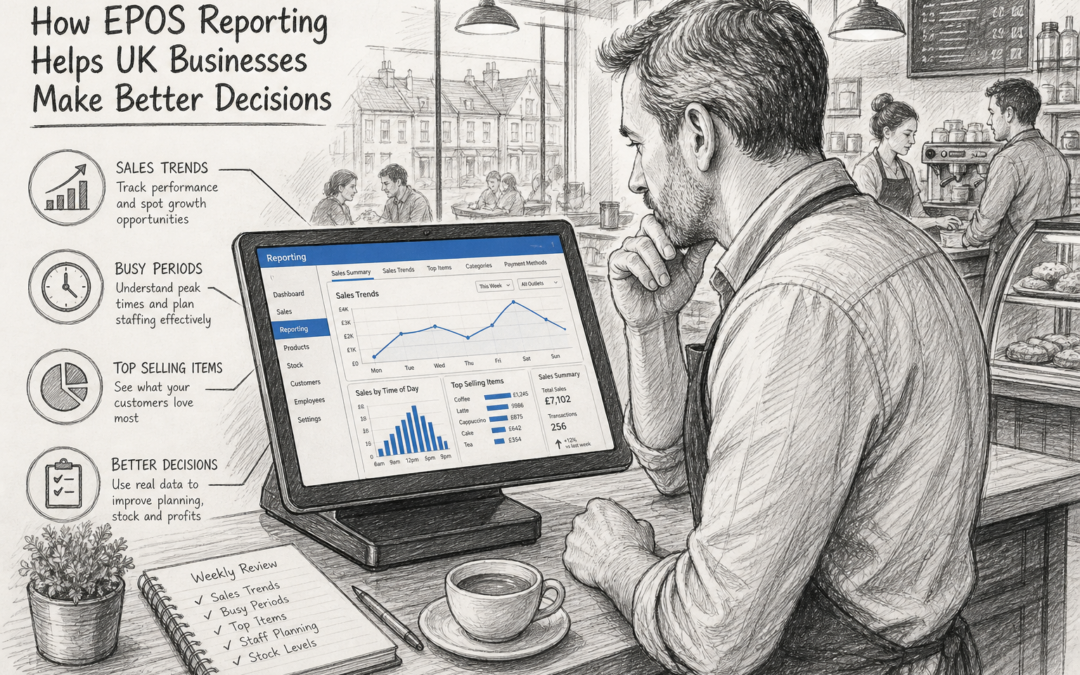
For many UK retailers, cafés, restaurants, bars and takeaways, the biggest challenge is not collecting data, but knowing what to do with it. A well-designed EPOS system turns everyday sales information into reports that are easier to read and more useful for decision-making.
Instead of relying on gut feeling alone, business owners can use EPOS reports to spot patterns, understand demand and identify where service or sales could be improved. That kind of visibility matters whether you run a single shop or manage several sites.
What useful EPOS reports can show
Different businesses need different reports, but the most helpful EPOS data usually falls into a few practical areas.
Sales trends
Sales reports can show which days, weeks or months are strongest. A café may notice that breakfast trade is steady but lunchtime is far busier on Fridays. A retailer might see that certain product lines perform better at specific times of year. That gives you a better basis for planning stock, staffing and opening hours.
Peak trading times
Knowing when the busiest periods happen helps you manage queues and service. For example, a pub might see a surge just before football matches, while a takeaway may be busier between 6pm and 8pm. If your EPOS system highlights those times clearly, you can plan rotas and preparation more carefully.
Product and category performance
EPOS reporting can show which items sell consistently and which ones move slowly. That is useful for retailers reviewing ranges and for hospitality businesses looking at popular menu items. The point is not to focus only on what sells the most, but to understand what your customers actually value.
Average transaction size
Average spend per transaction is a practical measure for both retail and hospitality businesses. If it rises over time, that may suggest better upselling, stronger basket building or improved menu design. If it falls, it may be worth checking pricing, promotions or customer flow.
How reporting supports day-to-day decisions
EPOS reports are most valuable when they help with everyday choices, not just month-end reviews. A business owner can use them to decide how many staff are needed on a Saturday, which menu items should be promoted, or whether a shop layout is helping customers find the right products.
Reports also make it easier to compare different periods. If a retail shop had a strong May last year but a quieter one this year, the figures can help highlight whether the change is due to trading conditions, weather, events or customer behaviour. In hospitality, that kind of comparison can help with menu updates, opening hours and staffing plans.
Why local EPOS support still matters
Good reporting is only useful if business owners understand how to use it. That is where local support can make a real difference.
UK businesses often want straightforward advice from someone who understands local trading patterns, VAT considerations, payment habits and the pressure of busy service periods. Whether you are checking a sales report before a weekend shift or reviewing figures after a seasonal rush, local help can make setup and training easier.
For independent retailers and hospitality venues, that practical support can be just as important as the software itself. It means less time guessing how to extract the right information and more time using the data to run the business well.
Reporting features to look for in an EPOS system
If you are choosing EPOS software for your business, it helps to check that the reporting tools are clear and flexible enough for everyday use.
Easy-to-read dashboards
Simple dashboards help busy owners see the main figures quickly without having to dig through lots of menus.
Custom date ranges
Being able to compare this week with the same period last year, or review a single busy weekend, can be very useful.
Multi-site visibility
If you run more than one location, reports that bring everything together can help you compare branches and identify patterns across the business.
Access for managers and owners
It is helpful when different people can view the reports they need without making the system complicated.
Using EPOS reporting well
The best reports are the ones that lead to action. If a product line is underperforming, you can review pricing or placement. If a daypart is busier than expected, you can adjust staffing. If one site is performing differently from another, you can look for reasons and share what works best.
That is why reporting is so valuable: it gives you a clearer view of what is happening in the business, so decisions are based on evidence rather than guesswork.
Samtouch provides UK EPOS software for retail and hospitality businesses that need practical reporting, straightforward operation and support from people who understand the sector. To learn more, visit www.samtouch.co.uk or Contact YCR Distribution at sales@samtouch.co.uk 01924 438238.
Final thoughts
EPOS reporting does not need to be complicated to be useful. For UK businesses, clear sales data can support better staffing, sharper promotions and more confident planning. Whether you run a shop, café, restaurant, bar or takeaway, the right reports can help you make better decisions every day.
Recent Comments