
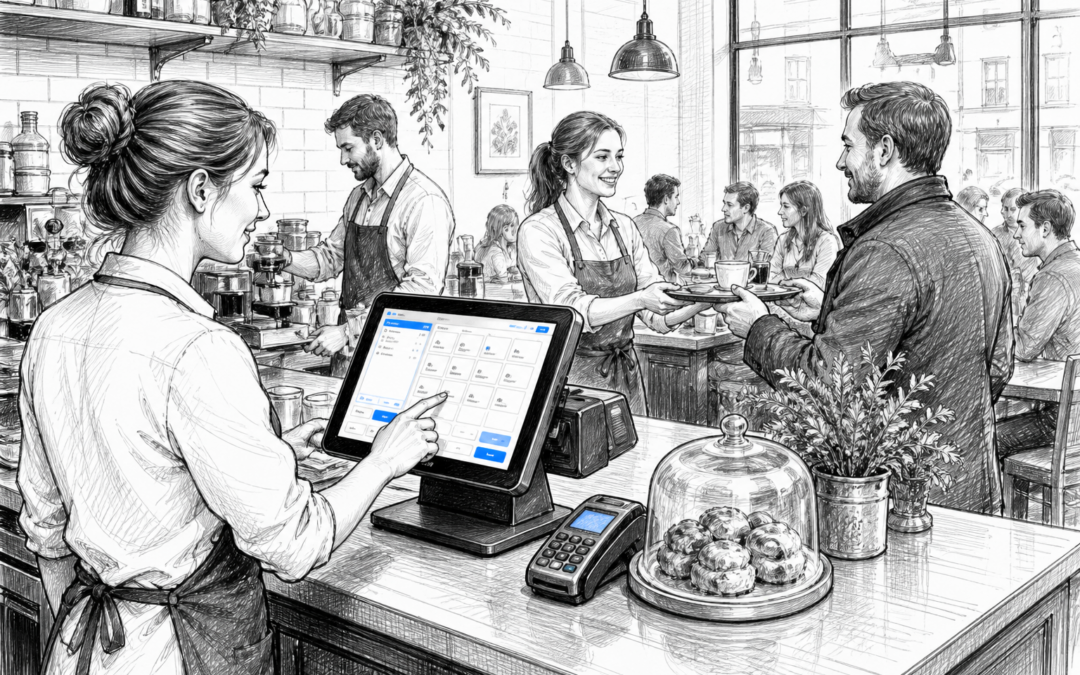
In busy cafés and restaurants, service speed can make a big difference to the customer experience. When queues build up at the counter or table orders take too long to reach the kitchen, even a popular venue can start to feel disorganised. A good EPOS system helps staff work more smoothly, keeps orders moving and makes it easier to serve customers without unnecessary delays.
For UK hospitality businesses, speed is not just about serving more covers. It is also about creating a calmer working day for staff, reducing mistakes and helping customers feel that their order has been handled properly from start to finish. Whether you run a small café, a sandwich shop, a restaurant or a takeaway, the right POS setup can support faster and more consistent service.
Why service speed matters in hospitality
Customers usually notice service speed straight away. If payment takes too long, orders are entered manually in a rush, or staff have to double-check information, the whole operation can slow down. In a café, that may mean a growing queue at lunchtime. In a restaurant, it may mean delays at the table or a slower turnaround between courses. In a takeaway, it can mean longer waits and less satisfied customers.
An EPOS system designed for hospitality helps remove some of those pressure points. It gives staff a quicker way to process orders, take payments and send items through to the kitchen or preparation area. That means less time spent on manual tasks and more time spent serving customers.
How EPOS helps keep queues moving
Faster order entry
A clear touchscreen layout makes it easier for staff to find products quickly, whether they are taking a coffee order, building a lunch deal or entering a table-side meal. Instead of relying on handwritten notes or remembering modifiers, team members can enter the order directly into the system with fewer steps.
Quicker payments
When a customer is ready to pay, speed matters. An EPOS system helps staff bring up the bill, apply the correct items and take payment without unnecessary back-and-forth. That can be especially useful during lunch rushes, busy weekend service or after events when several customers are leaving at once.
Better order flow to the kitchen
In many hospitality venues, delays happen when front-of-house staff have to repeat orders to the kitchen or bar. By sending details through the EPOS system, the team can reduce communication problems and keep orders flowing. This is particularly useful when custom requests, allergen notes or changes to dishes need to be passed on clearly.
Reducing mistakes helps speed service too
Fast service is not only about doing things quickly. It is also about getting things right first time. If an order has to be corrected, remade or refunded, the original time saved is quickly lost. A well-set-up EPOS system helps reduce those disruptions by improving order accuracy and making it easier for staff to confirm items before finalising the sale.
For cafés and restaurants, this can be especially helpful during peak periods. Staff can focus on serving rather than fixing avoidable errors, while customers receive the right order earlier and with less confusion.
Why local EPOS support still matters for UK hospitality businesses
Service speed depends not only on the software itself, but also on how well it is set up and supported. If a system is confusing, poorly configured or difficult to get help with, staff can lose time searching for solutions instead of serving customers. That is why local EPOS support still matters.
For UK cafés and restaurants, having support from a team that understands local trading patterns, VAT handling, peak service times and the realities of hospitality can be a real advantage. It also helps when training new staff, making changes to menu layouts or responding to issues quickly during busy service. Practical support can make the difference between a system that slows people down and one that genuinely helps them work better.
Features to look for in a hospitality EPOS system
Simple screen layout
Staff should be able to learn the system quickly, even during a busy shift. Clear buttons, sensible menu categories and an easy checkout process all help reduce hesitation at the till.
Flexible table and counter use
Some venues need to handle both counter sales and table service. A good EPOS system should support both styles without making the process more complicated than necessary.
Helpful reporting
Speed is easier to improve when you can see where delays happen. Reports can help business owners identify busy times, popular items and periods where staffing needs adjusting. That makes scheduling and planning more practical.
Reliable day-to-day use
A hospitality business cannot afford a till system that is awkward to use under pressure. The system should make busy periods easier to manage, not create extra tasks for staff.
A practical choice for growing venues
For independent UK hospitality businesses, Samtouch offers a practical EPOS approach that supports both front-of-house speed and day-to-day control. It is designed for real trading environments, where staff need to process orders quickly and keep service running smoothly. If you are looking at upgrading from a basic till, card-terminal-only setup or manual process, it can be worth exploring what a more capable EPOS system could do for your café or restaurant.
To find out more, visit www.samtouch.co.uk. If you would like to discuss your setup, contact YCR Distribution at sales@samtouch.co.uk 01924 438238.
Final thoughts
Improving service speed does not always mean working harder. Often, it means giving staff better tools so they can do their jobs with less friction. For cafés and restaurants, the right EPOS system can help reduce queues, support smoother order handling and create a better experience for customers and staff alike.
Recent Comments