
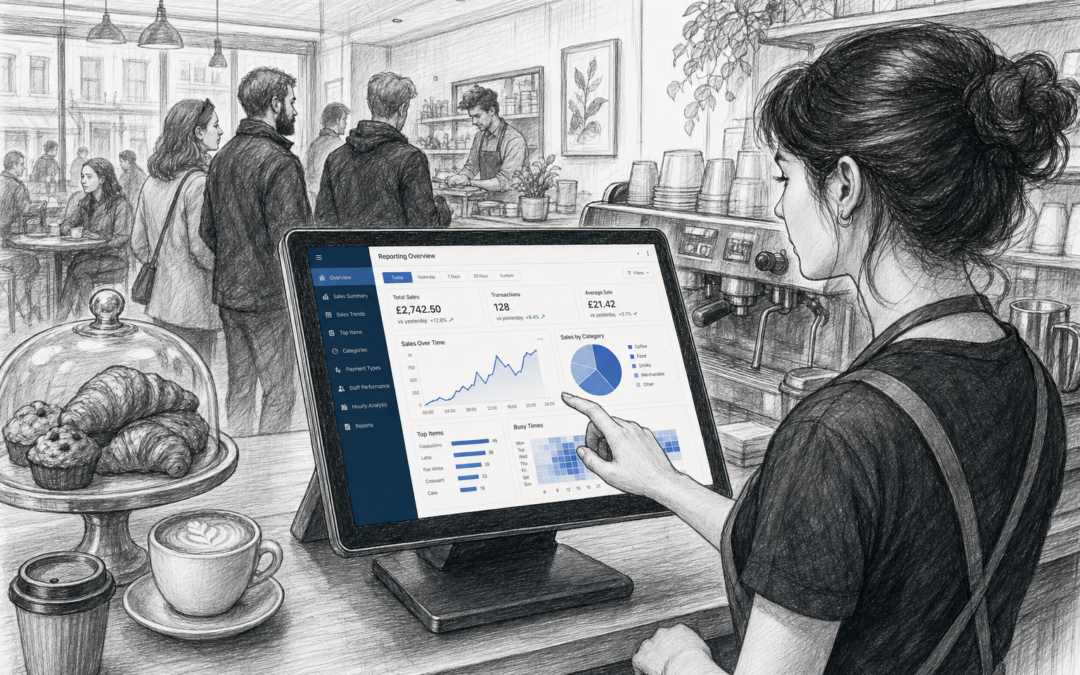
Running a café in the UK means making dozens of small decisions every day. Which drinks are selling best? When do queues start building? Are your busiest hours matched by the right staffing levels? Without clear data, many of those choices are based on guesswork.
That is where EPOS reporting becomes especially useful. A modern café EPOS system does more than take payments. It can turn everyday sales into practical insights that help owners improve service, manage stock, and understand what is really happening in the business.
Why reporting matters in a busy café
In a café, timing is everything. Breakfast rush, lunchtime surges, mid-afternoon lulls and weekend trade all put pressure on staff and systems. Good reporting helps you see patterns that may not be obvious during a hectic shift.
Instead of relying on memory, you can review sales by hour, product category, till operator, or day of the week. That gives you a more reliable picture of how the business performs and where small changes could make a difference.
Understand your busiest periods
One of the most useful things a café can learn from EPOS reports is when customers are most likely to visit. If you know your peak periods, you can schedule staff more effectively and reduce bottlenecks at the till.
This can also help with prep. For example, if hot drinks spike early in the morning and sandwiches sell best around midday, you can plan production around that demand. Better planning often means less waste and a smoother customer experience.
See which products actually drive sales
It is easy to assume your best-selling items are the most profitable or most popular, but reporting shows the facts. A café EPOS system can highlight top-selling beverages, food items, add-ons, and seasonal specials.
This information supports menu decisions. If a certain cake sells consistently well, it may deserve a more prominent place in display or on your menu. If another product rarely sells, you can review whether it should be replaced or promoted differently.
Reporting can also show how combinations perform. For example, you may notice that customers who buy a sandwich often add a cold drink. That kind of insight helps you shape offers and bundle deals more intelligently.
Use sales data to improve stock control
For cafés, stock control is closely linked to reporting. The more accurately you understand what sells and when, the easier it becomes to order ingredients and manage waste.
Without reporting, cafés can end up over-ordering slow-moving products or running short of high-demand items. EPOS reports help reduce that uncertainty by showing what has sold, what remains in demand, and where stock patterns may be inconsistent.
That does not mean every issue disappears automatically, but it does mean you have a better foundation for ordering decisions and daily checks.
Spot waste and reduce unnecessary spend
Waste can be hard to track if it is not measured. If a café regularly throws away unsold pastries or runs out of milk too soon, reporting can help reveal why. Over time, this makes it easier to fine-tune purchasing and reduce losses.
Some businesses use reports to compare sales during similar trading periods, which can help identify unusual trends. If a rainy week unexpectedly boosts hot drink sales, for instance, you may want to keep a closer eye on related stock levels in future.
Support better staff management
EPOS reporting is not only about products. It can also help café owners understand how different team members perform across the day. This is useful for training, rota planning, and ensuring smooth service.
For example, if one shift consistently processes more transactions or handles peak hours more efficiently, you may spot opportunities to share good practice across the team. Reporting can also support fairer scheduling by showing when staffing needs are highest.
In a busy café, that kind of visibility can make a real difference to service quality and morale.
Make decisions based on real evidence
Many café owners already have a strong sense of what works. EPOS reporting adds evidence to that experience. It helps confirm assumptions, challenge weak spots, and guide future planning.
That can be especially useful when making seasonal changes. If summer iced drinks perform well but breakfast footfall drops slightly, your reports can help you adjust menus, stock, and staffing with more confidence.
It also makes it easier to review promotions. If a loyalty offer or special menu item does not deliver the expected result, reporting gives you the facts needed to refine it rather than repeat it blindly.
A practical tool for everyday café management
For UK cafés, EPOS reporting is one of the simplest ways to stay in control of day-to-day operations. It brings together sales, stock, and staff data in one place, making it easier to respond quickly and plan ahead.
When trade is busy, having reliable information can save time and reduce stress. And when trade is quieter, reports can reveal opportunities to improve efficiency and grow sales.
If you are looking for a café EPOS system that helps you understand your business better, Samtouch can support you with practical tools designed for UK retailers and hospitality venues. Contact YCR Distribution at sales@samtouch.co.uk 01924 438238
A short conversation could help you explore how the right EPOS reporting features fit your café’s day-to-day needs.
Recent Comments