
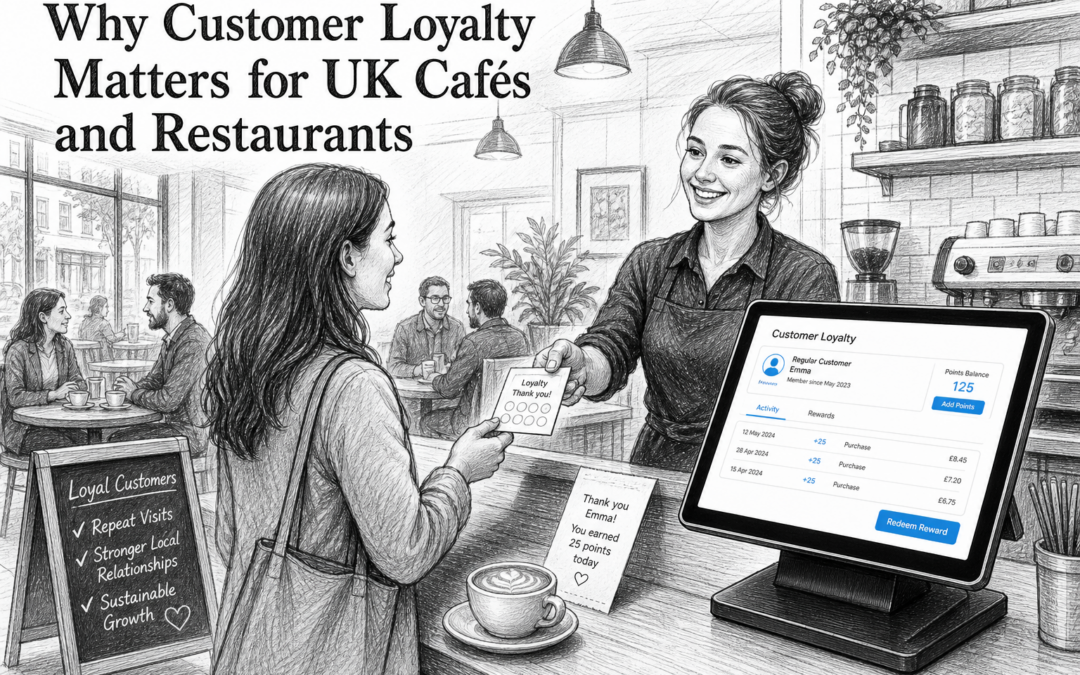
Why customer loyalty matters in hospitality
For cafés and restaurants in the UK, repeat custom is often just as important as getting new customers through the door. People may visit because of the menu, location or atmosphere, but they tend to return when service feels reliable and they feel recognised. That is where customer loyalty can make a practical difference.
A good loyalty approach does not need to be complicated. It might mean keeping track of returning customers, offering sensible rewards, or simply making it easier for staff to recognise regulars and their preferences. When loyalty is managed well, it can support smoother service and encourage guests to come back more often.
For many businesses, this is easier to handle through EPOS software than with paper cards or manual notes. A modern system can help cafés, restaurants, bars and takeaways keep loyalty information connected to sales, rather than leaving it spread across different systems.
Moving beyond one-off sales
Independent hospitality businesses often work hard to win every single sale. But loyal customers can be far more valuable over time than one-off visits. A regular customer may come in several times a week, recommend the business to others and be more forgiving if service is busy.
Customer loyalty features in EPOS software can support that relationship in a few practical ways:
- recording repeat visits or customer accounts
- linking rewards to actual purchases
- tracking favourite items or common orders where appropriate
- helping staff recognise returning customers more easily
This is especially useful in cafés and restaurants where service can feel more personal. If a customer often orders the same lunch or drinks, that familiarity can help the business create a better experience without adding extra admin.
How EPOS software supports loyalty schemes
Not every business needs a complicated loyalty programme. Some only need a straightforward points system, while others may prefer rewards such as a free drink after a set number of purchases or a return visit incentive. The best option depends on the type of venue and how customers usually buy.
EPOS software can help by keeping loyalty activity linked to the sale itself. This means staff do not have to complete extra steps at the counter or table, and the business can reduce mistakes caused by manual recording. It also makes it easier to see whether a loyalty offer is being used in the way intended.
Useful examples for cafés and restaurants
A café might reward frequent coffee buyers with a simple stamp-style digital scheme. A restaurant might use loyalty offers to encourage weekday dining or repeat lunchtime visits. A takeaway may want to reward customers who order regularly, especially if the business depends on local trade.
In each case, the aim is the same: encourage repeat custom without making the service process slower or more complicated. That balance matters because hospitality businesses need to keep queues moving, orders accurate and the customer experience straightforward.
Why customer loyalty works best with good service
Loyalty schemes do not replace good food, good drinks or friendly service. They work best when the customer already has a positive reason to return. That is why EPOS features should support the wider experience rather than sit on their own.
For example, if a business uses loyalty alongside faster billing, better order tracking or clearer staff processes, the customer is more likely to notice the overall improvement. Regular guests appreciate when service feels consistent and when rewards are simple to understand.
It is also worth keeping loyalty offers easy to explain. If customers need too much information or staff have to remember too many steps, the scheme may not get used properly. A clear EPOS setup can help keep everything manageable for both staff and customers.
Why local EPOS support still matters
For UK cafés and restaurants, local support can be a real advantage when setting up or fine-tuning loyalty features. If staff need help on a busy trading day, being able to speak to someone who understands local retail and hospitality conditions can save time and reduce stress.
This is particularly relevant when a business is adapting its EPOS system around real service patterns. A local support team is more likely to understand the pressures of lunch rushes, weekend trade and seasonal changes. That kind of practical help can make it easier to keep loyalty functions working in a way that suits the business, rather than forcing the business to adapt to the software.
Samtouch is a UK EPOS software option designed for retail and hospitality businesses that need practical tools without unnecessary complexity. For venues that want to manage customer loyalty alongside day-to-day trading, a system like this can provide a sensible balance of functionality and support.
Choosing the right loyalty approach for your venue
If you are thinking about customer loyalty, start by asking what you want it to achieve. Do you want more repeat visits, larger basket values, stronger customer relationships or a way to reward regulars? The answer will shape the features you need.
It is also sensible to think about how the scheme will work in practice. Staff should be able to use it quickly, customers should understand it easily, and the results should be simple to review. That is where an EPOS system becomes useful, because it can tie loyalty to real sales instead of guesswork.
For cafés, restaurants, bars and takeaways, loyalty is often most effective when it feels natural rather than forced. A simple, well-managed programme can help keep customers coming back while supporting everyday service.
To learn more about practical EPOS software for UK hospitality businesses, visit www.samtouch.co.uk. Contact YCR Distribution at sales@samtouch.co.uk 01924 438238.
Recent Comments