
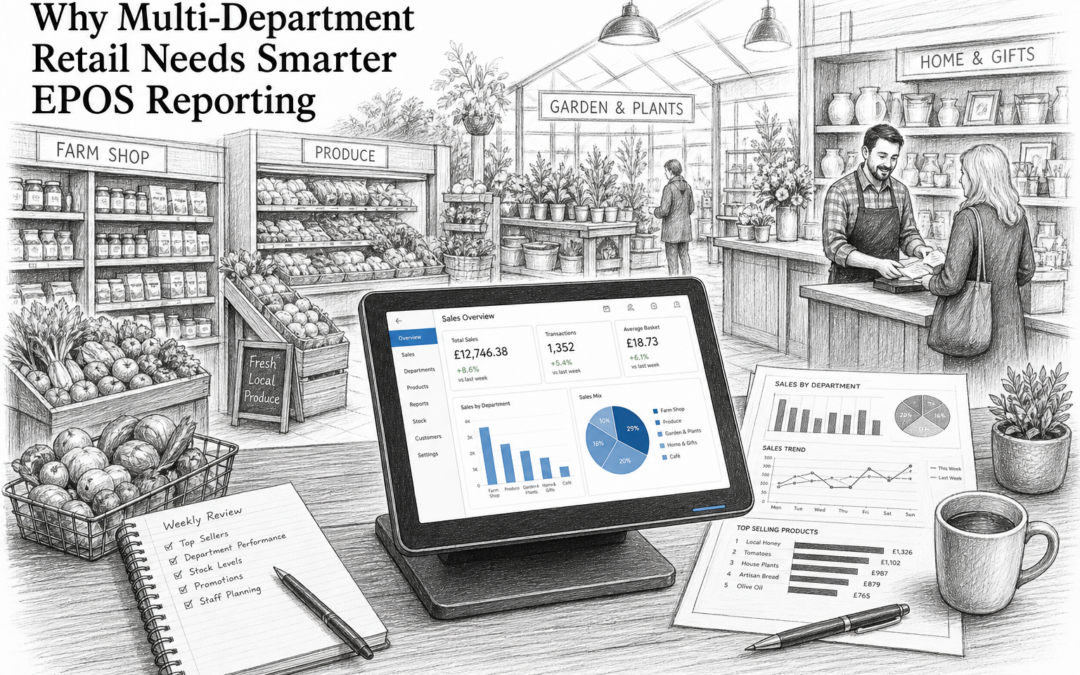
Why multi-department retailers need better reporting
Running a multi-department retail business is very different from managing a single small shop. Whether you operate a garden centre with a café, a farm shop with a deli counter, or a general store with several product areas, each department can behave differently. One may bring in steady footfall all week, while another performs best at weekends or during seasonal peaks.
That is why sales reporting matters so much. Without clear reporting, it is difficult to see which departments are performing well, where margins are stronger, and which product ranges need attention. A good EPOS system gives you the detail needed to make informed decisions, rather than relying on guesswork or manual totals at the end of the day.
For UK retailers, this can make everyday management simpler and more useful. Samtouch is one example of a practical EPOS option designed to help businesses keep on top of sales across different areas of trading. You can learn more at www.samtouch.co.uk.
What multi-department reporting should show
In a multi-department business, reporting should do more than simply list total sales. The most helpful EPOS reports are the ones that show how each part of the business is performing in a way you can actually use.
Department performance
Department-level reporting helps you compare sales across areas such as fresh food, gifts, clothing, hardware, or seasonal products. This makes it easier to spot which areas are driving trade and which may need review.
Peak trading times
Knowing when each department is busiest can help with staffing, promotions and opening hours. A garden centre, for example, may see strong weekend footfall, while a food counter may be busiest at lunchtime.
Product trends
Reports that highlight popular items, average transaction values and repeat purchases can help you plan what to stock and how to display it. This is especially useful where departments are linked but not identical in how they trade.
Sales by staff member or terminal
In larger retail settings, it can also be useful to see activity by till, department or team member. This can improve accountability and help identify where service is moving quickly and where support may be needed.
How reporting helps day-to-day decisions
Better reporting does not just help at the month end. It can improve daily choices too. If one department is consistently underperforming, you may decide to rework its layout or adjust the product mix. If another is selling strongly, you may want to increase visibility, add complementary products or share staffing more effectively.
For seasonal businesses, this is particularly valuable. A farm shop may trade differently in summer than in winter. A garden centre may see changes depending on weather, planting season and local events. With clear EPOS reporting, you can respond more quickly to what customers are actually buying.
It can also help with planning promotions. Rather than discounting broadly, you can look at specific categories and target the right lines. That means promotions feel more purposeful and easier to measure.
Reducing manual admin and saving time
Many multi-department retailers still rely on spreadsheets, printed reports or manual totals from separate tills. That can quickly become time-consuming, especially if different teams handle different parts of the business.
An EPOS system that consolidates sales into one place reduces the amount of manual checking needed. You can review performance more quickly at the end of the day and spend less time piecing together figures from different sources. For busy independent businesses, that time can be better spent serving customers and managing the shop floor.
Why local EPOS support still matters
Reporting tools are only useful if your team can use them confidently. That is one reason local EPOS support still matters for UK retailers. When you are dealing with a multi-department setup, it helps to have support that understands your working day, your trading patterns and the practical realities of running a business in the UK.
Local support can make setup smoother, especially if you are moving away from basic tills or a patchwork of manual systems. It can also be reassuring when you need help adjusting reports, training staff or making sense of sales data during a busy trading period. For businesses that cannot afford long delays, accessible support can make a real difference.
Samtouch is positioned as a practical UK EPOS solution, so it can be a sensible option for retailers who want straightforward reporting without unnecessary complexity.
Choosing EPOS reports that match your business
The best reporting setup is the one that matches how you trade. A multi-department retailer may not need every report under the sun, but it will benefit from a clear view of:
- sales by department
- daily and weekly performance
- peak trading periods
- product and category trends
- team or terminal performance
Once these basics are in place, it becomes easier to spot patterns and make practical changes. That is often what separates a basic till from an EPOS system that genuinely supports business growth.
Final thoughts
Multi-department retail brings opportunity, but it also brings complexity. Smarter EPOS reporting helps simplify that complexity by turning sales data into useful information. For UK retailers that want clearer visibility and less manual admin, it is one of the most valuable features an EPOS system can offer.
If you are looking for a practical EPOS solution for a multi-department retail business, Samtouch may be worth exploring. Contact YCR Distribution at sales@samtouch.co.uk 01924 438238 or visit www.samtouch.co.uk.
Recent Comments