
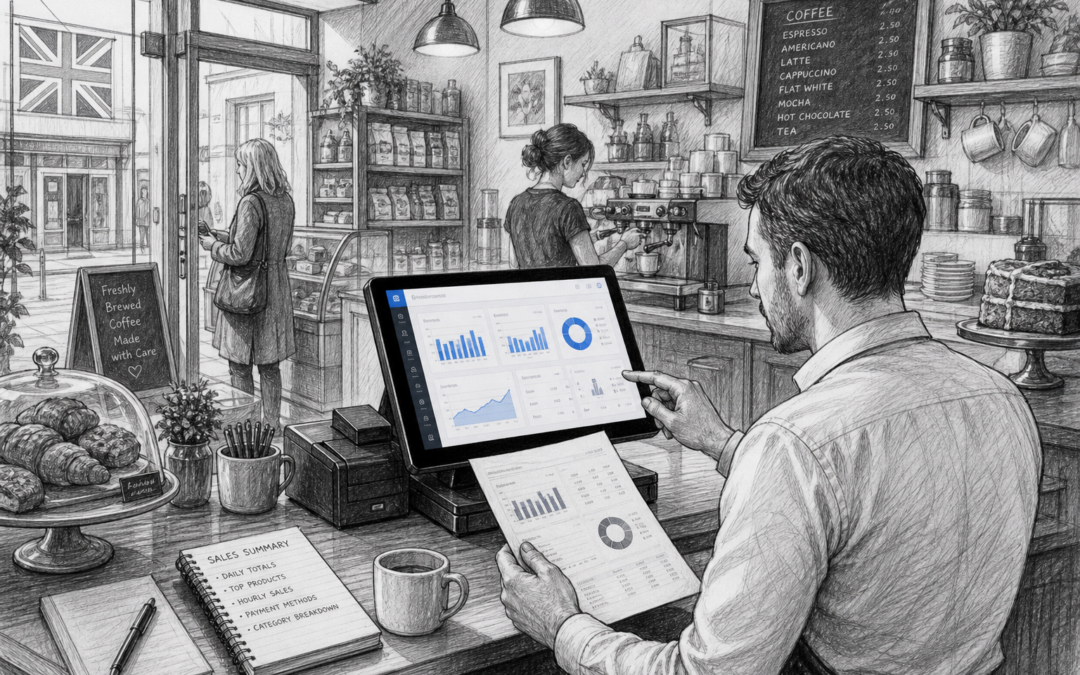
For many UK retail and hospitality businesses, day-to-day trading moves quickly. It is easy to stay busy without always seeing the full picture. That is where EPOS sales reporting becomes useful. Instead of relying on memory, paper notes or a quick look at the till, businesses can review what has been sold, when it sold and which products or menu items are performing well.
Whether you run a shop, café, restaurant, bar, takeaway or multi-site business, reporting can help you make better decisions. It will not run the business for you, but it can show patterns that are hard to spot when you are focused on serving customers.
What EPOS sales reporting can show
A good EPOS system records transactions in a structured way, so you can review sales by product, category, time of day, staff member or location. That makes it easier to answer practical questions such as:
- Which products or dishes sell best on weekdays versus weekends?
- What time of day is busiest?
- Which promotions have actually increased sales?
- Are some locations or departments outperforming others?
For retailers, this might highlight popular lines, slow-moving categories or the effect of seasonal trading. For hospitality businesses, it can show which meals, drinks or extras are most ordered at different times, helping with menu planning and staffing.
Why reports matter for day-to-day decisions
Sales reports are most valuable when they are used regularly, not just at month-end. A quick daily or weekly review can help you adjust ordering, staffing and promotions before small issues become larger ones.
Better planning for busy periods
If your reports show that Fridays are consistently busier than other days, you can plan staffing and stock levels accordingly. A café might need more cover for lunch, while a pub could see stronger trade later in the week. A retailer may notice that certain categories peak before weekends or school holidays.
More informed promotions
Promotions can be useful, but only when they are measured properly. EPOS reporting can help you see whether a discount or offer lifted sales, or simply reduced margin. That is especially important for independent businesses that need to make every offer count.
Clearer understanding of product performance
Not every popular item is equally profitable, and not every slow seller should be removed immediately. Reports help you look at the full picture. You may find that a lower-volume product still plays an important role in a wider menu or product range.
How this helps retail businesses
In retail, sales reporting can be especially useful when ranges change with the seasons. Garden centres, gift shops, fashion stores and convenience stores all benefit from knowing what is selling now, not just what sold last quarter.
For example, a shop can use reports to compare departments, spot stronger trading times and understand which products are driving footfall. If you run a multi-department store, reporting can also help you compare sales performance across different areas without having to count manually.
This is one reason many retailers move beyond basic tills. A simple till may record a transaction, but it can be harder to turn that data into something useful. EPOS reporting brings those sales together in a way that is easier to review and act on.
How this helps hospitality businesses
For cafés, restaurants, bars and takeaways, reporting supports smoother service and better planning. You can see which items are most popular at breakfast, lunch or evening service, and use that information to shape staff rotas, prep levels and menu decisions.
A takeaway may notice that certain meal deals sell better on particular days. A restaurant may find that specific starters or desserts are strong sellers only when promoted prominently. A bar may use reports to understand peak periods and make more informed staffing decisions.
When your business is busy, those insights can help reduce guesswork. They can also make it easier to spot unusual changes in trade, such as a drop in average spend or a shift in customer behaviour.
The value of local EPOS support still matters
Reporting features are only useful if you can set them up properly and trust the information you are seeing. That is why local EPOS support still matters for many UK businesses. When you need help understanding reports, adjusting your till setup or tailoring the system to your business, speaking to a UK-based team can save time and reduce frustration.
This is particularly relevant for busy shops and hospitality venues where every hour counts. Local support often means a better understanding of UK trading patterns, VAT considerations and the practical pressures of running a business here. Samtouch, available through www.samtouch.co.uk, is designed with those needs in mind as a practical EPOS option for retail and hospitality businesses.
What to look for in EPOS reporting
If you are reviewing EPOS software, it is worth checking that the reporting tools are easy to use and relevant to your business. Helpful features may include:
- Sales by date, time and product
- Reports by category, department or menu section
- Staff performance summaries
- Location or branch comparisons
- Easy export for accounts or review
The best reporting tools are the ones your team will actually use. Clear layouts and straightforward filters are often more valuable than complicated dashboards that take time to interpret.
Making reporting part of normal business routine
Sales reporting works best when it becomes part of your routine. A short review each morning, week or trading period can help you stay ahead of changes and make decisions with more confidence. Over time, this creates a clearer view of how your business is really performing.
For independent UK businesses, that can be one of the biggest advantages of EPOS software. It helps turn day-to-day sales into practical insight without adding unnecessary admin.
If you would like to discuss EPOS reporting for your retail or hospitality business, Contact YCR Distribution at sales@samtouch.co.uk 01924 438238 or visit www.samtouch.co.uk.
Recent Comments