
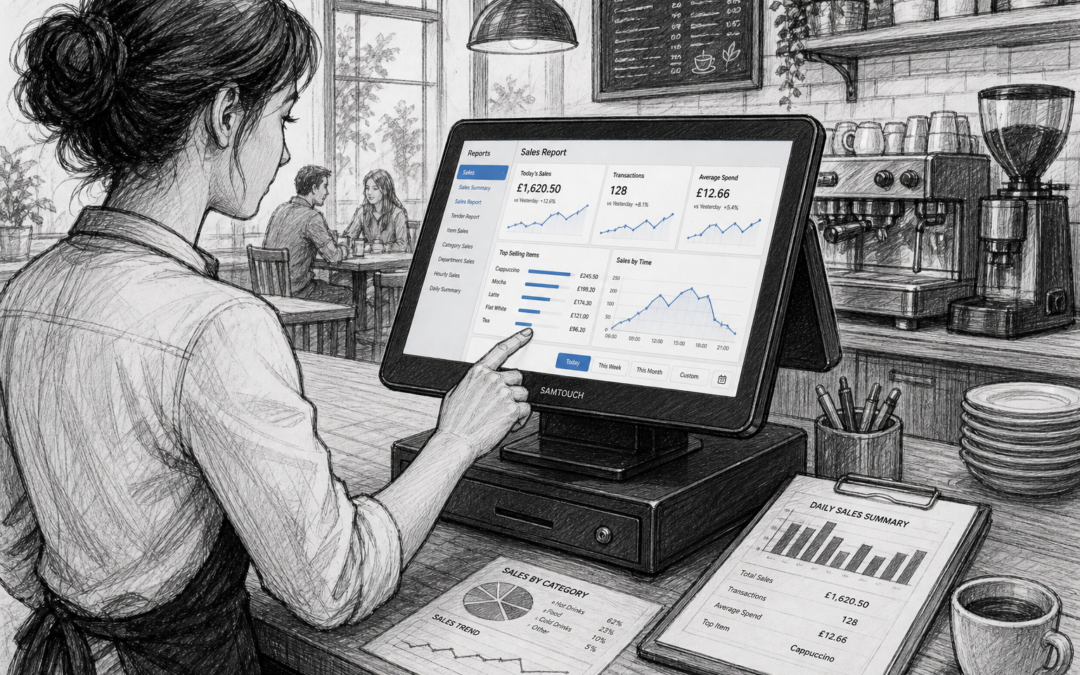
For many UK retail and hospitality businesses, the difference between guessing and knowing often comes down to reporting. A basic till may tell you how much was taken, but a good EPOS system can show you much more: which products are moving, when customers are busiest, which shifts perform best and where simple changes could improve service.
That is why sales reporting has become one of the most useful EPOS features for independent businesses. Whether you run a shop, café, restaurant, bar or takeaway, the numbers you already collect can help you make better decisions every day.
Why EPOS reporting matters in day-to-day trading
Reporting is not just for accountants or end-of-month reviews. It can support practical decisions across the business, including staffing, ordering, promotions and opening hours. When information is easy to access, it becomes much easier to spot patterns and act on them.
For example, a café may notice that breakfast sales peak earlier than expected on weekdays, while a bar may find that certain drink lines sell best on Friday evenings. A retailer might discover that some products perform well in the afternoon but not at the weekend. Without reporting, these trends can be easy to miss.
Useful decisions reporting can help with
- Identifying busy and quiet trading periods
- Reviewing top-selling products or menu items
- Comparing performance by day, shift or location
- Spotting slow-moving lines that need attention
- Understanding which promotions are actually working
What to look for in EPOS sales reports
Not every reporting feature is equally useful. The best EPOS reporting is clear, flexible and easy to use, so staff and managers can find the information they need without wasting time.
If you are comparing systems, look for reports that are simple to read and relevant to the way your business operates. Good reporting should help you answer real questions quickly, not leave you digging through endless screens.
Common report types worth having
Sales by time and day: Helps you understand trading patterns and busy periods.
Product or category performance: Shows which items or ranges are strongest.
Staff performance: Useful for reviewing service patterns and shift activity.
Payment type breakdown: Helps you see how customers are choosing to pay.
Void and refund reports: Gives visibility over corrections and unusual transactions.
For some businesses, even a small amount of insight can make a noticeable difference. A takeaway may use reports to plan staffing around peak ordering times. A shop may use them to fine-tune ranges. A restaurant may use them to review menu performance and adjust what is offered at quieter times.
How reporting supports better service
Sales reporting is not only about increasing revenue. It can also help improve the customer experience. If you know when your busiest periods happen, you can roster staff more effectively and reduce waiting times. If you know which items sell together, you can prepare more accurately and keep service flowing.
That is especially useful in hospitality, where speed and consistency matter. In retail, it can help ensure the right products are available at the right time and that staff are not stretched when trade picks up.
Why local EPOS support still matters
Even the best reporting system only helps if it is set up correctly and used in a way that fits the business. That is where local support still matters for UK retailers, cafés, restaurants and takeaways.
Staff may need help understanding reports, adjusting settings or making sure information is being recorded properly. A local EPOS provider can be easier to contact when you need practical advice, and that can save time when trading is busy. For businesses that do not want to rely on distant support teams or generic help articles, having a UK-based partner can make the system more manageable day to day.
Samtouch is a practical UK EPOS software option for businesses that want straightforward tools and support that understands local trading needs. For independent operators, that combination can be more useful than a one-size-fits-all setup.
Using reports without overcomplicating things
Many business owners do not need dozens of reports. They need a few clear ones that can be checked regularly and acted on quickly. Start with the basics, then add more detail as your business grows.
For example, you might review weekly sales by product, daily takings by time and staff performance by shift. That gives you a useful overview without creating extra administration. Over time, these reports can help you make small improvements that build into better trading decisions.
A simple reporting routine
- Check daily sales at the end of trading
- Review weekly trends for peak times and popular items
- Look at monthly reports to support planning
- Compare promotions and seasonal changes
- Use the results to adjust staffing, stock levels or opening hours
Choosing an EPOS system that fits your business
If your current till only gives you a total, it may be time to look at a more capable EPOS system. The right setup should give you the reporting you need without making things harder for staff.
That is particularly important for smaller businesses where time is limited and every decision matters. A well-chosen EPOS system can bring clearer information, better visibility and fewer surprises at the end of the week.
If you would like to explore EPOS reporting for your business, Samtouch can help. Contact YCR Distribution at sales@samtouch.co.uk 01924 438238 or visit www.samtouch.co.uk to learn more.
Recent Comments