
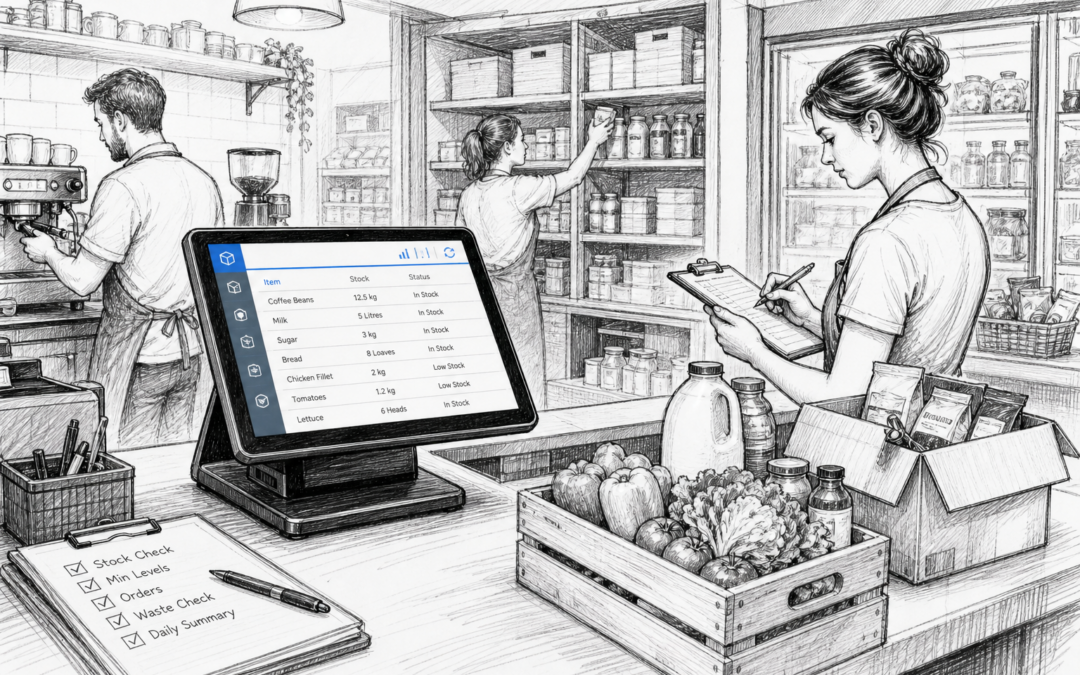
For many UK retail and hospitality businesses, stock control is one of the most valuable parts of an EPOS system. It is not just about knowing what is on the shelf or in the kitchen. It is about making smarter decisions every day, avoiding unnecessary waste, and making sure popular items are available when customers want them.
Whether you run a café, restaurant, bar, takeaway, garden centre or convenience store, good stock visibility can make a real difference. When stock is tracked properly through your EPOS, you can keep records up to date, react more quickly to busy periods, and spot problems before they affect sales.
What stock control does in an EPOS system
Stock control within an EPOS system helps businesses record what comes in, what goes out, and what is left on hand. In practical terms, that means your team can work with clearer information at the till, in the stockroom, or in the kitchen.
For example, if a product is sold at the till, the EPOS can reduce the recorded stock level automatically. If ingredients are used in a food-led business, stock data can help you understand how much is being used and when replenishment is needed. That gives managers a much better view of day-to-day trading than paper-based counting or manual spreadsheets.
How stock control helps retail businesses
In retail, stock control supports everything from shelf availability to seasonal planning. A convenience store may need to keep fast-moving lines topped up throughout the week. A garden centre may want to track items that sell strongly in certain months. A general retail shop may need to know which products are moving quickly and which are sitting still.
With EPOS stock data, you can:
- spot bestselling products more easily
- reduce the risk of over-ordering slow stock
- identify missing or low-stock items sooner
- make stock counts more accurate and less stressful
- support better purchasing decisions
This kind of insight helps businesses stay organised and improves the customer experience. After all, there is little point promoting a product if it is always out of stock.
Why hospitality venues benefit even more
For cafés, restaurants, takeaways and bars, stock control can be especially useful because so many items are perishable or time-sensitive. Ingredients can be wasted if demand is not managed well. Drinks can go out of date. Menu items can become difficult to prepare if a key ingredient runs low.
A hospitality EPOS with stock tracking can help managers understand what is being used, where waste may be happening, and how purchasing should be adjusted. That makes it easier to protect margins and keep service moving smoothly, especially during busy periods.
Stock control can also support menu planning. If a dish is consistently popular, the data can help you keep ingredients available. If another item is not selling, it may be time to rework the menu or run a promotion to increase interest.
Better decisions with clearer reporting
Stock control works best when it is combined with reporting. When sales data and stock data sit together in one EPOS system, managers can see the bigger picture. This makes it easier to answer questions such as:
- Which products are selling fastest?
- Which items are causing waste or shrinkage?
- Are certain days of the week more stock-heavy than others?
- What should be reordered before the next busy period?
That kind of visibility is useful for both small independent businesses and multi-site operations. It creates a more reliable way to manage inventory without relying on guesswork.
Reducing waste and improving efficiency
One of the biggest advantages of stock control is reducing waste. If a business knows exactly what it has and what it needs, it can avoid buying too much. This matters in hospitality where margins can be tight and food waste can quickly eat into profit. It matters in retail too, where slow-moving stock can tie up cash and shelf space.
Efficient stock control also saves time for staff. Instead of manually checking the same items repeatedly, teams can use the EPOS system to support stock checks and reorder decisions. That means more time for customers, service, and daily operations.
Why local EPOS support still matters
Software is important, but support is just as important. For many UK retail and hospitality businesses, having local EPOS support remains a key reason to choose a trusted supplier. When a till issue, stock setup question, or system update happens at a busy moment, it helps to have someone who understands your business and your market.
Local support can make onboarding easier, reduce downtime, and help staff feel more confident using the system. That is especially valuable for independent businesses that need practical advice rather than generic call centre responses. When your EPOS provider understands UK retail and hospitality operations, it is easier to get the help you need quickly and keep trading smoothly.
Choosing an EPOS system that fits your business
Not every business needs the same level of stock control, but most benefit from having at least a clear, reliable picture of what is selling and what needs reordering. The best EPOS systems make stock management feel simple rather than complicated. They should fit the way your team works and support your day-to-day routine.
If you are reviewing your current setup, look for an EPOS solution that gives you clear stock visibility, straightforward reporting, and support when you need it. For many UK businesses, that combination can make a noticeable difference to how efficiently the business runs.
At Samtouch, we work with retail and hospitality businesses across the UK that want a practical EPOS system built around real-world operations. Contact YCR Distribution at sales@samtouch.co.uk 01924 438238 to discuss how Samtouch could help your business manage stock more effectively.
Recent Comments