
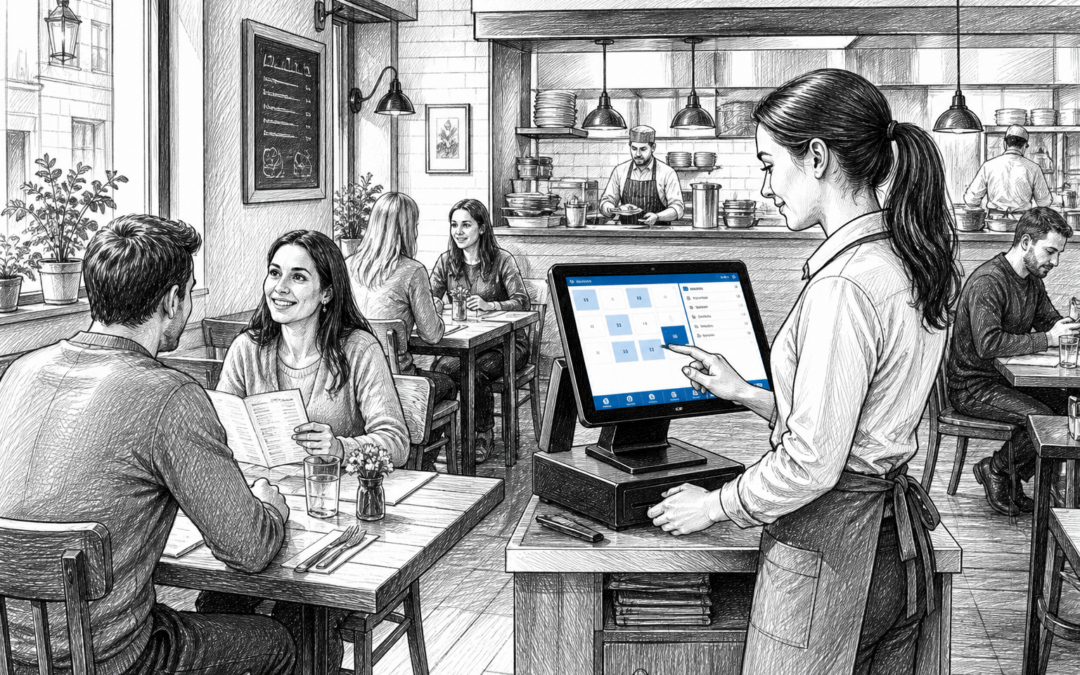
Table service is one of the biggest reasons customers choose to eat in rather than order elsewhere. In cafés, restaurants, pubs and casual dining venues, good service at the table can shape the whole experience. But when the room is busy, taking orders by memory or scribbled notes can quickly lead to mistakes, delays and frustrated staff.
That is where a practical EPOS system can make a real difference. Rather than treating the till as just a payment point, table service EPOS gives your team a clearer way to manage orders, send them to the right place and keep track of what each table needs. For UK hospitality businesses, it can be one of the simplest ways to improve day-to-day service without changing the style of the venue.
Why table service needs more than a basic till
A basic till is fine for simple transactions, but it is not built for the pace of table service. When customers are seated, staff need to do more than take payment. They need to record orders accurately, split items if needed, keep track of table numbers and make sure the kitchen or bar receives the right information quickly.
If any of those steps rely on memory or paper tickets, errors are more likely. Drinks may be delayed, dishes may go to the wrong table and staff can spend valuable time checking details instead of serving customers. In a busy lunch period or evening rush, those small issues add up.
How EPOS supports smoother table service
A table service EPOS setup is designed to help staff move more confidently between the table, the bar and the kitchen. It gives teams a central place to record orders and makes the whole process easier to follow.
Faster order taking
When orders are entered directly into the EPOS system, staff do not need to rely on handwritten notes or repeated trips back to the till. That can save time, especially when customers add extra items or make special requests.
Better order accuracy
Clear item selection, modifiers and table references reduce the chance of mistakes. This is particularly helpful in restaurants and cafés where customers often ask for substitutions, different cooking preferences or allergy-related changes.
Cleaner communication with the kitchen or bar
Once an order is entered, it can be sent straight to the right prep area. That improves flow and helps staff focus on preparation rather than working from unclear notes. In busy venues, this simple step can reduce confusion and make service feel more organised.
More control over the front of house
EPOS software also helps supervisors keep an eye on which tables have ordered, what is still waiting and where delays might be building. That makes it easier to prioritise service and support staff during peak times.
What table service means for staff and customers
Good table service is not just about speed. Customers also want to feel looked after and confident that their order has been taken properly. Staff, meanwhile, need a system that helps them work efficiently without feeling rushed or overwhelmed.
With the right EPOS setup, staff can spend less time back and forth between tables and the till. That leaves more time for welcoming guests, answering questions and checking that customers are happy. For the business, that can mean a smoother operation and a better overall impression.
In cafés, this may mean handling breakfast and lunch queues with less stress. In restaurants, it may help during busy dinner service, especially where tables turn over quickly. In pubs and bars that offer food, it can help teams balance drinks and food orders without losing track of either.
Local EPOS support still matters for UK hospitality businesses
Table service can be different from venue to venue. A compact café, a high-street restaurant and a village pub will not all use EPOS in the same way. That is why local support still matters. When a system is set up and supported with UK hospitality businesses in mind, it is easier to adapt it to your actual workflow rather than forcing your team to work around it.
Local support can also be valuable when you need help quickly, whether that is setting up table layouts, training new staff or adjusting how orders are handled during a busy period. For many businesses, having a clear point of contact is just as important as the software itself.
Samtouch is positioned as a practical UK EPOS software option for retail and hospitality businesses, including restaurants and cafés that need reliable table service tools. If you are looking at improving day-to-day service rather than replacing your whole operation, a system like this can be a sensible place to start.
Choosing the right EPOS features for table service
When comparing EPOS options, it helps to focus on the features that match your service style. Not every business needs the same setup, but for table service, the following can be particularly useful:
- table tracking and order recording
- clear menu and modifier handling
- quick sending to kitchen or bar
- simple payment processing at the end of the meal
- basic reporting so you can see busy periods and service patterns
- staff permissions to control who can edit or void orders
It is often better to choose software that feels straightforward for staff than a system with features you may never use. The aim is to make service easier, not more complicated.
Table service EPOS can improve the whole shift
For hospitality businesses, good table service depends on timing, clarity and teamwork. EPOS software helps bring those elements together so staff can serve customers more smoothly and with fewer interruptions. It will not replace good hospitality, but it can make it much easier to deliver consistently.
If your business is growing, getting busier or simply ready to move away from manual order-taking, it may be worth reviewing whether your current till is doing enough.
To find out more about Samtouch and explore a practical EPOS approach for UK hospitality businesses, visit www.samtouch.co.uk. Contact YCR Distribution at sales@samtouch.co.uk 01924 438238.
Recent Comments