
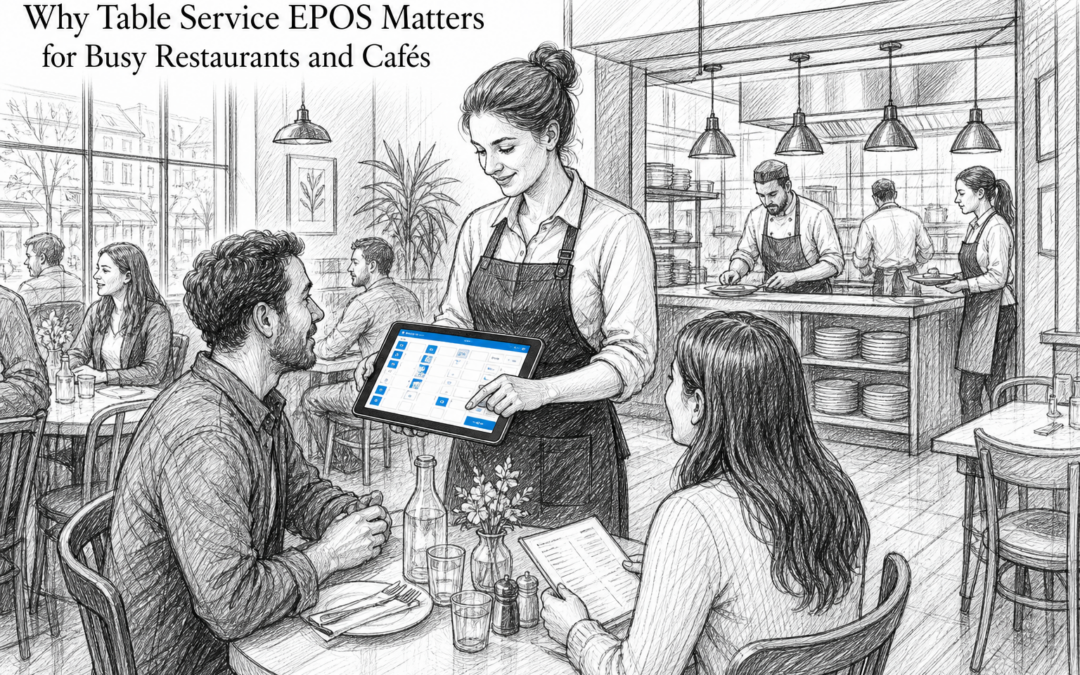
In busy restaurants and cafés, table service is about more than taking orders at the table. It is about keeping service smooth, reducing mistakes and making sure customers feel looked after from the moment they sit down to the moment they pay.
For many UK hospitality businesses, the challenge is not whether table service is useful, but how to manage it consistently during busy lunch periods, evening rushes and weekend trading. A good EPOS system can help staff stay organised, improve order accuracy and make the whole service feel more professional.
What table service EPOS should help with
When staff are moving between tables, the right EPOS setup can make a noticeable difference. It should help them capture orders clearly, send them quickly to the kitchen or bar, and keep track of what each table has ordered without needing extra paperwork.
This matters in cafés, restaurants and other seated venues where customers expect prompt, friendly service. If a team is relying on handwritten notes, memory or back-and-forth checking, mistakes can creep in and service can slow down.
Taking orders at the table
Table service works best when staff can record orders as soon as they are taken. With a touchscreen EPOS terminal, team members can scroll through menu items, modifiers and special requests in a simple way. That reduces the chance of missed details, especially when customers ask for menu changes or combinations.
For example, if a customer wants a sauce on the side, a dish without a certain ingredient, or a drink to arrive with the meal rather than straight away, these details need to reach the kitchen or bar clearly. The right EPOS system helps make that possible.
Keeping track of tables
Another practical benefit is table management. Staff need to know which tables are occupied, which ones have ordered, and which are ready for the next course or for billing. An EPOS system can help teams stay on top of this without relying on guesswork.
That is especially useful during busy services, when one member of staff may be covering multiple tables. A simple, well-structured system can help reduce delays and make handovers between staff easier.
Why order accuracy matters in table service
In hospitality, speed is important, but accuracy is just as valuable. One missed item or wrong modifier can lead to delays, remakes and unhappy customers. In restaurants and cafés, those small mistakes can affect the whole dining experience.
A table service EPOS setup can help reduce these issues by sending clearer orders to the kitchen and bar. It also makes it easier for staff to review the order before confirming it, which gives them a chance to catch errors early.
This is particularly useful in venues with varied menus, daily specials or customisable dishes. The more choice you offer, the more important it is to have a reliable system for recording that choice accurately.
Improving service speed without rushing staff
Good table service is not about rushing customers. It is about helping staff work efficiently so they can spend more time with guests and less time correcting mistakes or checking notes.
An EPOS system can support faster service by making common tasks straightforward: taking repeat orders, splitting drinks from food if needed, marking items as urgent and moving through the payment process more neatly at the end of the meal.
That can help venues during their busiest periods, especially when staff are balancing table service with counter service, takeaway orders or drinks service at the same time.
Why local EPOS support still matters
For UK restaurants and cafés, support is not just a technical issue. It is part of keeping service running. If something stops working during a lunch rush or a Saturday evening service, businesses need help that is easy to reach and relevant to how UK hospitality venues operate.
That is where local support can make real sense. A UK-based EPOS provider is more likely to understand the pace of trade, the pressure of peak service and the practical requirements of British hospitality businesses. Whether you are training new staff, setting up table layouts or adjusting the system for seasonal trading, having approachable support close at hand can make day-to-day operations simpler.
For many businesses, that practical reassurance matters as much as the software itself.
Choosing an EPOS system for table service
If you are choosing EPOS software for a restaurant or café, it is worth looking beyond the basics. A system for table service should be easy for staff to learn, quick to use and flexible enough to cope with real trading conditions.
Useful features may include:
- simple touchscreen order entry
- clear table tracking
- kitchen or bar printing
- easy split billing and payment handling
- useful sales reporting for service patterns
- staff permissions for better control
The aim is not to overcomplicate service, but to support it. A well-chosen EPOS system can help front-of-house teams stay organised while giving customers a smoother experience.
A practical option for UK hospitality businesses
Samtouch provides UK EPOS software for retail and hospitality businesses, including venues that rely on table service. It is designed to help businesses handle orders, payments and day-to-day operations in a practical way, without unnecessary complexity.
If you are reviewing your current setup, or moving on from a basic till or manual process, it may be worth looking at a system that fits the way your team actually works. Samtouch can be a sensible option for cafés, restaurants, bars and other hospitality businesses that want clearer service and better control over busy shifts.
Contact YCR Distribution at sales@samtouch.co.uk 01924 438238 or visit www.samtouch.co.uk to find out more.
Recent Comments