
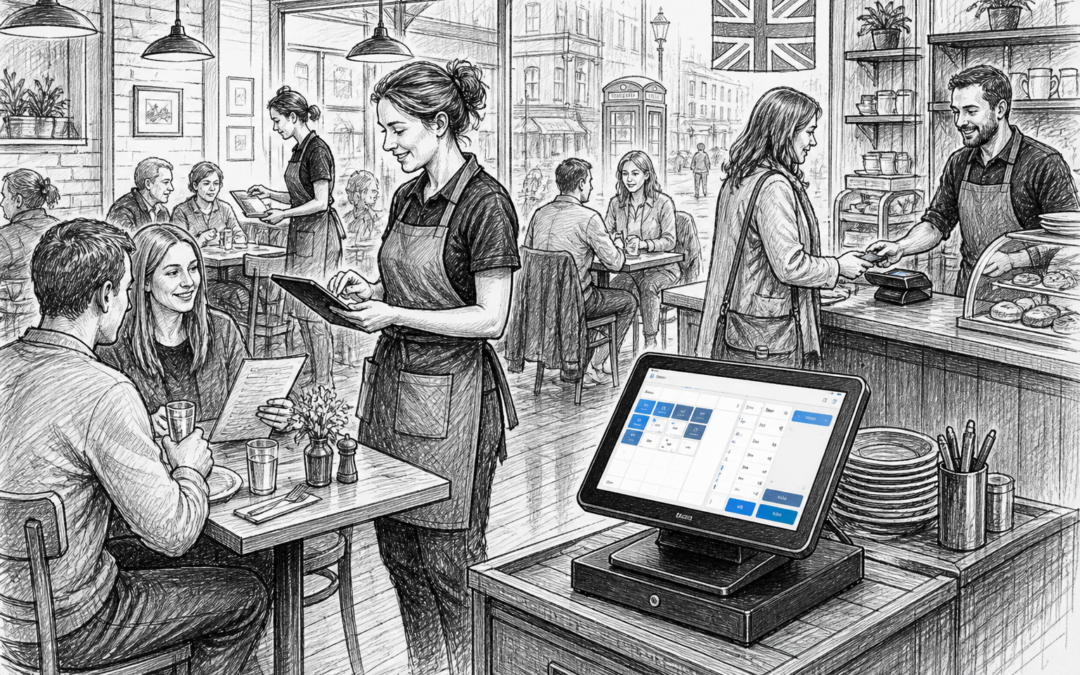
For many UK restaurants and cafés, good service is about more than friendly staff and a well-made menu. When the room is busy, the way orders are taken, sent through and tracked can shape how smooth the whole shift feels. That is where table service EPOS becomes especially useful.
Instead of relying on handwritten notes, separate card terminals or staff trying to remember multiple orders at once, a table service EPOS system helps teams stay organised. Orders can be entered clearly, sent on quickly and managed in a way that suits the pace of the venue. For independent businesses trying to balance service quality with busy trading periods, that can make a real difference.
What table service EPOS actually does
Table service EPOS is designed to support staff who take orders at the table or move between the floor and the till. In practical terms, it gives the team a faster and more reliable way to record what each customer wants, assign it to the correct table and send it through for preparation or payment.
For a café, that might mean making sure a breakfast order and a drinks round are both linked to the same table. In a restaurant, it can help with larger groups, course timing and split payments later on. In a pub or casual dining venue, it can also reduce the chance of missed items when the room is full.
Benefits for day-to-day service
The main advantage is simple: less confusion. Staff do not need to rely on memory or paper notes, and they can see a clear record of each table’s order. That helps reduce mistakes, especially during lunch rushes, weekend service or special events.
It can also improve the flow of service. When orders are entered directly into the EPOS system, they can be handled more quickly than waiting for handwritten tickets to be checked and re-entered at the till. That means fewer delays for customers and less pressure on the team.
For managers, it also creates a clearer picture of what is happening on the floor. If a table is waiting too long, or if a section is particularly busy, the information is easier to see and act on.
Why more accurate orders matter
Order accuracy is one of the biggest reasons hospitality businesses invest in better EPOS tools. Small mistakes can lead to remakes, complaints or wasted time, all of which are frustrating in a busy service environment.
With table service EPOS, staff can check each item before sending the order, reducing the risk of unclear notes or missing requests. This is particularly helpful when handling:
- modifications such as no onion, extra sauce or dressing on the side
- allergy-related requests that need careful attention
- drinks orders added after the first round
- shared plates or multiple courses for one table
It does not remove the need for good staff training and communication, but it gives the team a more reliable system to work with.
How table service EPOS supports smoother payments
Table service is not just about taking orders. It also helps make payment easier at the end of the visit, especially where customers want to pay separately or settle the bill in stages.
A good EPOS setup can help staff view the table’s full order quickly, remove uncertainty over what has been added and process payment without having to work through a paper trail. In a busy restaurant or café, that can shorten the wait at the end of the meal and help free tables up more efficiently.
For venues that offer a mix of walk-ins, reservations and casual group bookings, that flexibility is particularly useful.
Why local EPOS support still matters
When a table service system is central to daily trading, support matters. If a handheld device stops syncing, a printer is not behaving as expected or the team needs help before a busy service, waiting for long support queues is far from ideal.
That is why many UK hospitality businesses still value local EPOS support. A provider that understands how UK cafés, restaurants, bars and takeaways operate can be easier to work with when time is tight. Samtouch, a UK POS and EPOS software solution from www.samtouch.co.uk, is designed with this kind of practical day-to-day use in mind.
For independent venues, local support can mean clearer communication, faster problem-solving and a system that feels more suited to the realities of UK trading rather than a one-size-fits-all setup.
Choosing EPOS features that fit your venue
Not every business needs the same setup. A small café may want simple table service and quick payment options, while a full-service restaurant may need more detailed order handling and better table visibility. A pub or bar may want speed above all else, especially during peak evening trade.
The key is to choose EPOS features that match your service style. If your team spends a lot of time on the floor, table service tools can save steps and reduce mistakes. If you regularly serve larger tables or mixed groups, the ability to manage orders and bills clearly becomes even more important.
That is where a practical UK system such as Samtouch can be a sensible choice for businesses looking for something dependable without overcomplicating the job.
A better experience for staff and customers
Well-managed table service is good for business because it helps the team work confidently and makes the customer experience feel smoother. Staff can focus on service rather than paperwork, and customers are less likely to experience delays, confusion or billing issues.
By improving order taking, reducing mistakes and making payments easier, table service EPOS supports the parts of hospitality that customers notice most. For many UK venues, that makes it one of the most worthwhile EPOS features to get right.
If you are reviewing your current setup or looking for a practical EPOS option for your restaurant or café, Samtouch may be worth exploring.
Contact YCR Distribution at sales@samtouch.co.uk 01924 438238 or learn more at www.samtouch.co.uk.
Recent Comments