
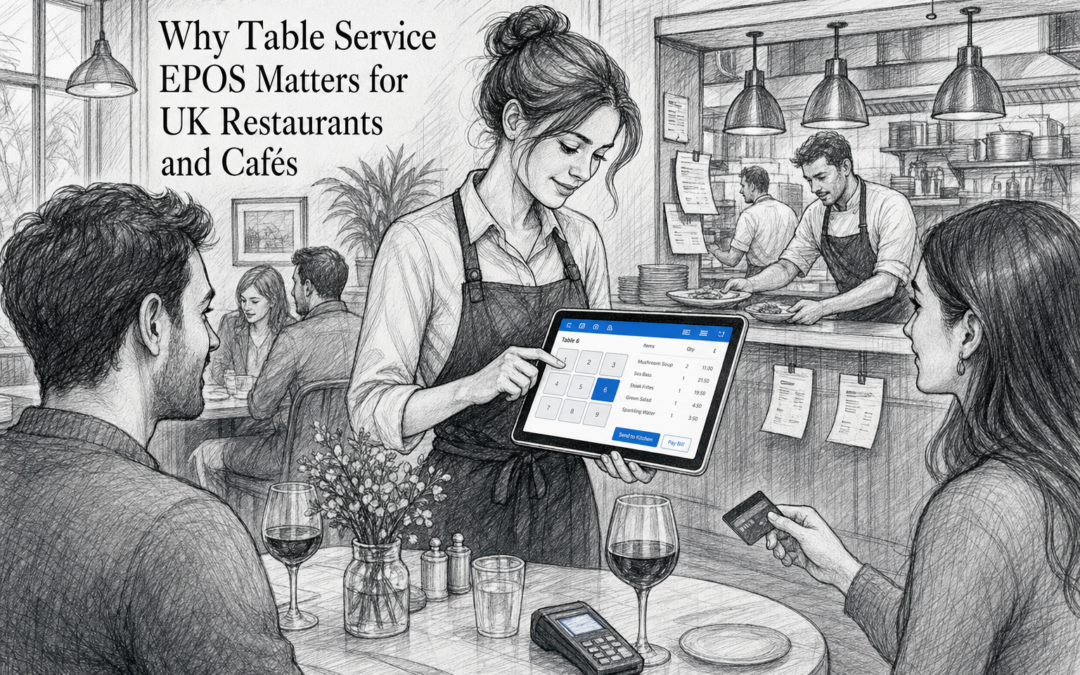
Why table service needs more than a basic till
For many UK restaurants and cafés, table service is where customer experience is won or lost. Guests want to be seated, order quickly, and feel confident that their food and drinks will arrive correctly. A basic till can take payments, but it often does little to support the full flow of service from taking an order to sending it to the kitchen and closing the bill.
That is where a table service EPOS system becomes useful. It gives front-of-house teams a clearer way to manage orders, track tables, and keep service moving during busy lunch periods, evening sittings, and weekend rushes. Rather than relying on handwritten notes or separate processes for every step, staff can handle more of the service in one place.
For independent restaurants and cafés, this is not about adding complexity. It is about making daily service more consistent and easier to manage.
What table service EPOS should help with
The best EPOS setups for table service support the parts of the job that matter most to customers and staff. That usually includes:
- taking orders at the table or counter
- sending items clearly to the kitchen or bar
- keeping track of which dishes belong to which table
- splitting or combining bills when needed
- taking payments without slowing down service
When these tasks are handled well, staff spend less time double-checking details and more time looking after guests. In a busy hospitality venue, that can make a noticeable difference to the pace and quality of the service.
Better order flow from front of house to kitchen
One of the biggest advantages of table service EPOS is cleaner communication between the floor team and the kitchen. Orders can be entered once and passed on in a clear, readable format. This helps reduce the kind of errors that can happen when notes are rushed, unclear, or lost between stations.
For cafés and restaurants serving a mix of meals, drinks and specials, this also helps keep each order organised. Staff can see what has been sent, what is still open, and which table each item belongs to. The result is a smoother handover and fewer interruptions during service.
Faster payments without disrupting the meal
Payment speed matters, but in table service it has to be handled carefully. Guests do not want to wait too long for the bill, yet they also do not want a rushed or awkward checkout. A good EPOS system lets staff prepare the bill, split it if needed, and take payment in a way that feels natural for the customer.
This is especially helpful in UK restaurants and cafés where mixed payment habits are common. Some tables may want one bill, while others prefer separate payments. Having that flexibility built into the EPOS can save time at the end of the meal and reduce pressure on staff during busy periods.
Useful reporting for service planning
Table service EPOS is not only about what happens in front of the customer. It can also help owners and managers understand how service is performing. Sales reports can show which times of day are busiest, which menu items sell best, and where bottlenecks may be forming.
That kind of information can help with staffing decisions, menu planning and overall service flow. For example, if Friday evenings are consistently busy, the business may need more cover at key times. If certain dishes regularly slow service, that may point to a need for better prep or clearer communication with the kitchen.
For busy hospitality businesses, reports are most useful when they are simple enough to act on. A practical EPOS system should make it easier to spot trends without turning reporting into a separate job.
Why local EPOS support still matters
When table service is busy, support matters. Restaurants and cafés cannot always afford long delays if a terminal stops responding, a printer needs setting up, or a floor plan needs adjusting before service starts. Local EPOS support still matters because quick, UK-based help can be more relevant to the way your business actually works.
That is particularly important for independent hospitality businesses that may not have a dedicated IT team. Local support can help with setup, training and everyday questions in a way that feels more practical than a distant, one-size-fits-all service. It can also be easier to get advice that reflects UK trading patterns, staffing pressures and payment habits.
For businesses choosing between basic tills, manual processes and generic cloud EPOS providers, this extra support can be a deciding factor. The software matters, but so does knowing help is available when service is on the line.
How Samtouch fits into table service operations
Samtouch provides UK EPOS software for retail and hospitality businesses, including restaurants, cafés, bars and takeaways. For table service venues, it offers a practical way to keep orders organised, improve payment handling and support day-to-day service without overcomplicating the process.
If you are reviewing your current setup, it is worth considering how well it supports the real pace of service in your business. A system should make table management, order handling and reporting easier for your team, not add another layer of admin.
To learn more, visit www.samtouch.co.uk or contact YCR Distribution at sales@samtouch.co.uk 01924 438238.
Conclusion
Table service EPOS is about improving the experience for both customers and staff. When orders, kitchen communication and payments are handled more clearly, service becomes easier to manage and less stressful to run. For UK restaurants and cafés, that can make a real difference during the busiest parts of the day.
Recent Comments