
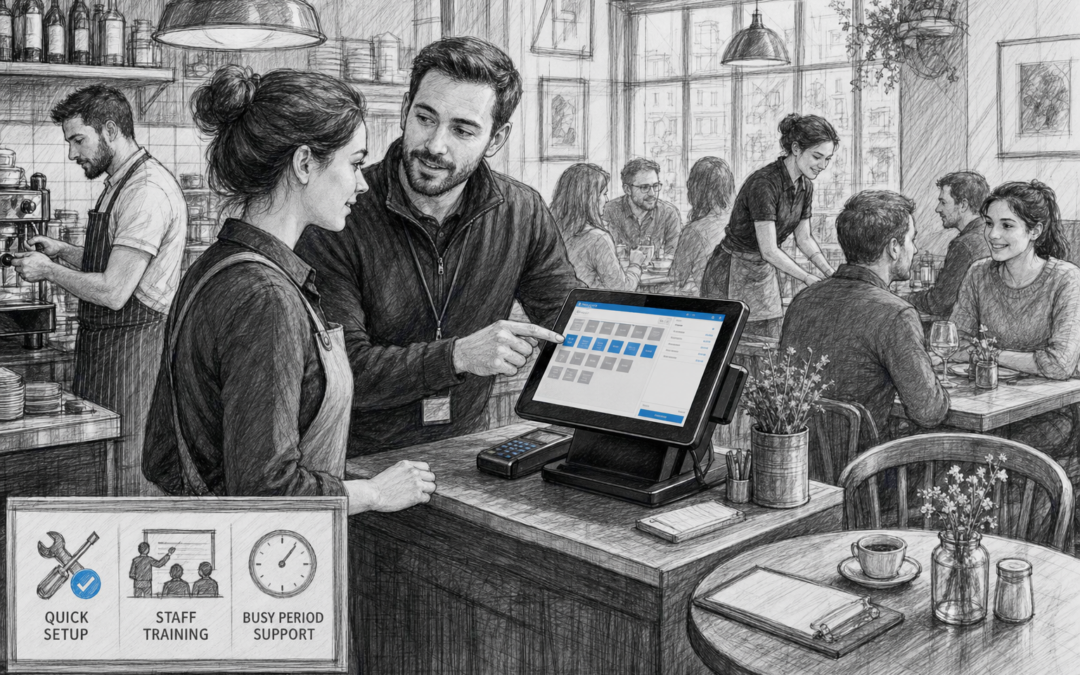
For cafés and restaurants, the EPOS system is often right at the heart of the business. It takes orders, helps staff move quickly, supports the kitchen, and keeps payments flowing at the till. But the software itself is only part of the picture. When something goes wrong, or when you need help making the system work for your team, local support can make a real difference.
Many businesses start with a basic till or a generic POS setup and only later realise they need more than just card payments and a receipt. They need a system that suits UK service patterns, handles busy periods, and is backed by people who understand the pressures of hospitality. That is where local EPOS support still has a clear role to play.
Why support matters as much as the software
An EPOS system should help service run smoothly rather than create extra work. In a café or restaurant, staff need to trust that orders are being sent correctly, payments are recorded properly, and the till is keeping up with the pace of the day.
Even a well-designed POS system can raise questions in real-world use. Staff may need help setting up menus, adjusting table service workflows, working out how refunds should be handled, or changing prices and items after a supplier update. If that support is quick, clear and locally relevant, it is easier to keep the business running without disruption.
What local EPOS support can help with
Faster setup and smoother onboarding
When new EPOS software is introduced, the first few weeks matter. Staff need confidence, and owners need the system to match the way the business actually works. Local support can help with setup in a more practical way, whether that means configuring table service, takeaway orders, or quick-service workflows.
For smaller hospitality businesses, this can also reduce the amount of time spent trying to work things out alone. That matters when you are already busy preparing drinks, taking orders and dealing with customers.
Better staff training and day-to-day confidence
Hospitality teams often include a mix of experienced staff, part-time workers and new starters. A system that is easy to learn is important, but good support is just as valuable. If a team member is unsure how to split a bill, print a kitchen ticket or process a refund, they need a straightforward answer.
That kind of practical guidance helps reduce mistakes at the till and keeps service moving. It also makes it easier for managers to train new staff without spending hours explaining the same tasks again and again.
Quicker help when service is busy
If an EPOS issue appears during lunch service or the evening rush, delay can be costly. Local support is useful because it can feel more responsive and more in tune with the pressure of live trading. A prompt call or clear troubleshooting guidance can help a business get back on track quickly.
That is especially important for businesses that rely on speed and accuracy, such as cafés, restaurants, bars and takeaways. In these settings, even a small technical problem can slow service if no one is available to help.
Why this matters for UK hospitality businesses
UK cafés and restaurants face a few common challenges: changing menus, fluctuating footfall, staff turnover, and busy trading periods that leave little room for error. EPOS software needs to support those realities, not just provide a screen for taking payments.
Local support matters because it tends to be more practical and more familiar with the way UK businesses work. There are differences in VAT handling, receipt preferences, service styles and business hours that generic support teams may not always understand well. A local partner can often offer advice that feels more relevant to the day-to-day running of a UK venue.
This is one reason some businesses prefer a UK EPOS provider such as Samtouch. It gives them a practical system for hospitality, along with support that is built around the needs of retail and hospitality businesses in the UK. You can learn more at www.samtouch.co.uk.
How the right EPOS features support local service
Good support is important, but it works best when combined with features that suit the business. For cafés and restaurants, that may include table service tools, kitchen printing, clear order tracking, and reporting that helps owners understand which times of day are busiest.
When those features are set up properly, staff can serve customers more confidently and managers can spend less time fixing avoidable issues. The EPOS system becomes part of the service rather than a distraction from it.
Choosing a system that grows with the business
As a café or restaurant grows, needs usually become more complex. A business may add extra seating, launch takeaway collections, expand opening hours or bring in more staff. The right EPOS software should be able to grow with those changes without forcing a complete rethink every time something changes.
That is another area where local support is useful. It is often easier to make sensible adjustments with help from someone who understands the business and can guide you through options in plain English. For independent venues, that practical support can be just as valuable as the software itself.
A practical approach for hospitality operators
If you are choosing or reviewing EPOS software, it is worth asking more than just what the system can do. Ask who will help when you need training, setup changes or troubleshooting. Ask whether the provider understands hospitality trading in the UK. And ask whether support will still be available when your busiest shift starts.
For many cafés and restaurants, the answer to those questions matters just as much as the features on the screen.
Contact YCR Distribution at sales@samtouch.co.uk 01924 438238 or visit www.samtouch.co.uk to explore Samtouch as a practical UK EPOS option for your business.
Recent Comments