
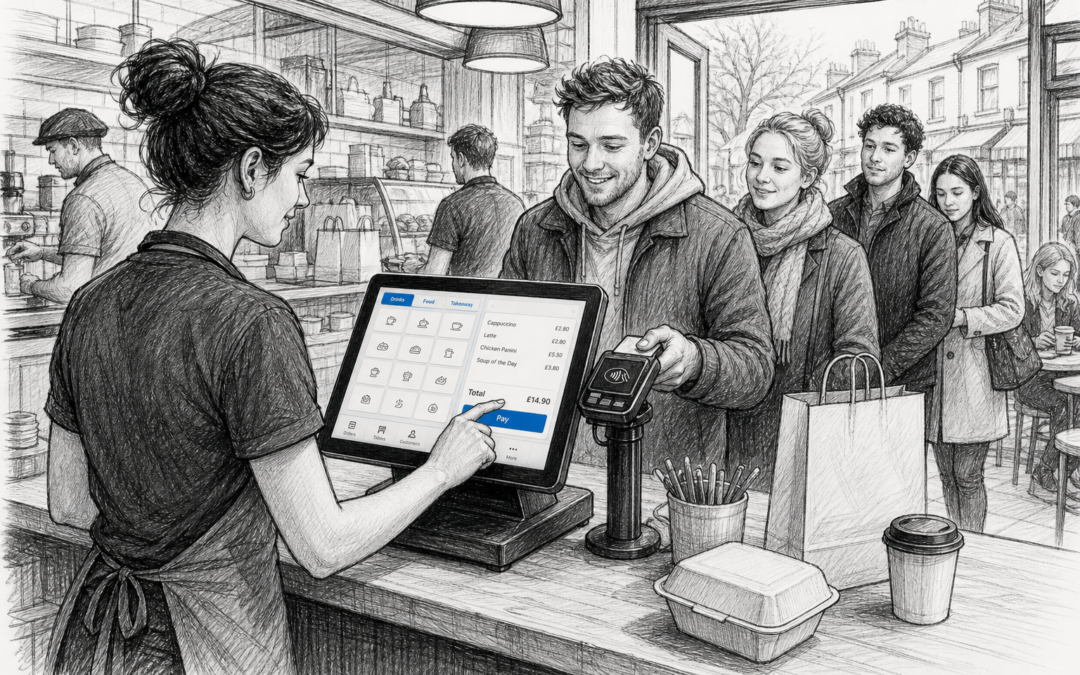
In busy cafés, restaurants and takeaways, every second counts at the point of payment. If staff have to fumble through menus, re-enter totals, split bills manually or wait for a card machine to catch up, the customer journey slows down at exactly the wrong moment.
The good news is that a well-designed EPOS system can make payments quicker and more straightforward without sacrificing accuracy. For many UK hospitality businesses, this is not just about convenience. It can help reduce queues, improve the customer experience and keep tables turning at a steadier pace.
Why payment speed matters in hospitality
Customers notice when paying feels easy. In a café, that might mean a quick takeaway coffee order being settled before the next person steps forward. In a restaurant, it could mean handling multiple tables efficiently at the end of a meal. In a takeaway, it often means keeping the queue moving during the busiest part of the day.
Slow payment handling can create pressure at the till, delay service and leave staff spending more time on admin than hospitality. Faster payment workflows help the whole front of house run more smoothly.
How EPOS software speeds up the payment process
1. Quicker order-to-payment flow
With EPOS software, orders are entered clearly at the till or tablet and move through to payment in the same system. Staff do not need to juggle separate notes, calculators or paper dockets. This keeps the process simple and reduces the chance of repeated tapping or double-checking.
2. Clear item visibility
When products, menu items and modifiers are easy to find on screen, staff can complete sales faster. That matters in cafés and takeaway counters where drinks, snacks and add-ons are sold repeatedly throughout the day.
3. Faster handling of common payment types
Customers in the UK expect flexible payment options, whether they are paying by card, split across two methods, or settling a quick takeaway order in a hurry. A good EPOS setup helps staff move between sale and payment efficiently, rather than treating each transaction as a separate process.
4. Less manual correction
Payment speed is not just about tapping quickly. It is also about avoiding mistakes that cause delays. If the wrong item is entered or a bill needs reworking, the whole queue can slow down. EPOS software gives staff a clearer way to amend orders before payment is taken.
Benefits by business type
Cafés
In cafés, the challenge is often volume and variety. Hot drinks, pastries, sandwiches and grab-and-go items can all be ordered in quick succession. A well-organised EPOS screen helps staff take orders and payments without slowing the counter down during the morning rush.
Restaurants
Restaurants often need to handle payments at the table or at the till, sometimes when several diners want to pay separately. EPOS software helps staff process bills more neatly, which supports better service at the end of a meal and keeps the front of house calmer.
Takeaways
Takeaways depend heavily on speed. When customers are collecting food in person, any delay at payment can build into a longer wait. EPOS supports a more efficient handover, especially during peak periods when every transaction needs to be handled quickly and cleanly.
More than a faster card machine
Some businesses start with a basic till or card-terminal-only setup and find it becomes harder to manage as demand grows. A standalone card machine may take payments, but it will not always help with product selection, table tracking, refunds or keeping orders organised.
EPOS software brings those steps into one system. That means staff have a clearer process from the moment an item is entered to the moment the payment is completed. It also makes daily operations feel more consistent, especially when different team members are covering the till.
Why local EPOS support still matters
For UK cafés, restaurants and takeaways, support is not just a technical detail. If payment speed becomes a problem during lunch, weekend trade or a seasonal rush, you need help that understands the pressure of local trading conditions.
That is where local EPOS support can make a real difference. A UK business is more likely to want straightforward setup guidance, practical training and support that understands how hospitality service works here. Whether it is helping staff get used to a new layout, adjusting payment workflows or resolving a system issue quickly, local support can help keep service moving with less disruption.
Samtouch is designed with this kind of practical use in mind. For businesses looking for a reliable UK EPOS software option, it can be a sensible fit for day-to-day retail and hospitality needs without unnecessary complexity.
Small changes that can improve checkout speed
You do not always need a major overhaul to see better results at the till. Sometimes small adjustments can make the biggest difference:
- Keep popular items easy to find on the screen.
- Group similar products together for faster ordering.
- Train staff on the quickest route from sale to payment.
- Make sure refund and void processes are clear.
- Use a layout that suits the way your team actually works.
These details help reduce friction, especially when the venue is busy and customers are expecting a swift, polite service.
Conclusion
Payment speed is one of the simplest ways to improve the customer experience in hospitality. When cafés, restaurants and takeaways can move from order to payment without unnecessary delays, the whole business feels more organised and responsive.
For UK businesses wanting a practical EPOS setup that supports faster service, clearer workflows and local support, Samtouch is worth considering.
Contact YCR Distribution at sales@samtouch.co.uk 01924 438238 or visit www.samtouch.co.uk to learn more.
Recent Comments