
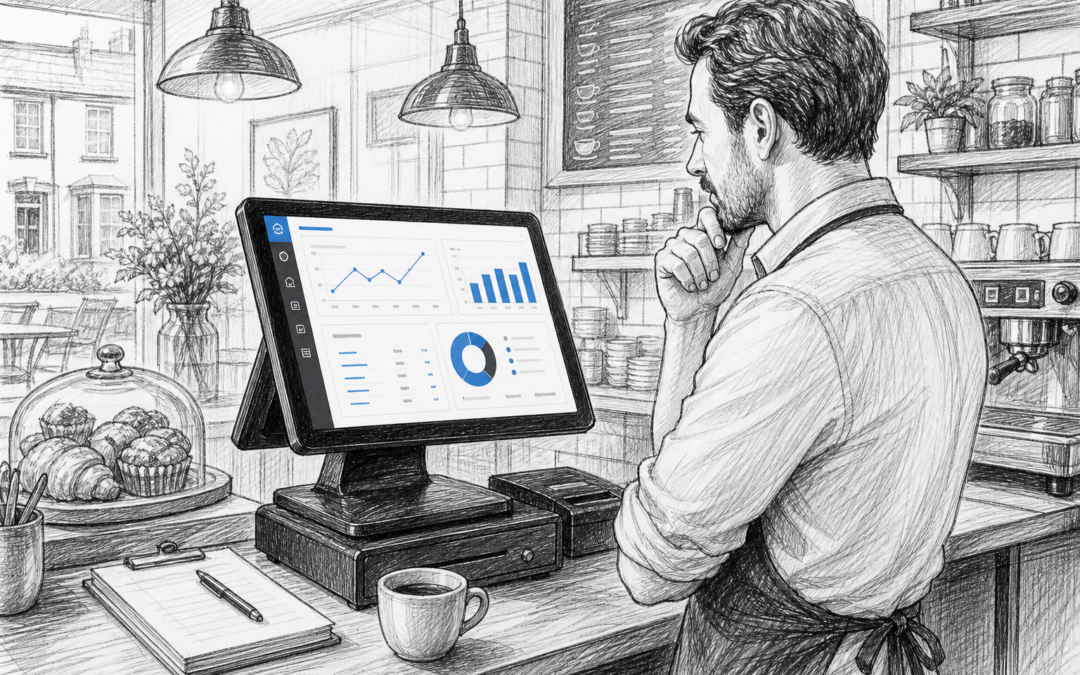
For many UK retail and hospitality businesses, the challenge is not collecting data — it is knowing what to do with it. A modern EPOS system can turn everyday transactions into clear, useful reporting that helps owners make better decisions without spending hours on manual spreadsheets.
Whether you run a shop, café, restaurant, bar or takeaway, the right reports can highlight what is working, what needs attention and where small changes could improve trade. Instead of relying on guesswork, you can base decisions on real sales information from your till system.
Why EPOS reporting matters
Basic tills can show you how much money has come through the till, but that is usually where the insight ends. EPOS reporting gives a fuller picture. It can show sales by day, time, product, category or staff member, helping you understand patterns across your business.
That matters because most businesses do not have time to review every transaction manually. A useful reporting setup saves time and gives owners a clearer view of performance. For independent businesses in particular, that can make it easier to respond quickly when demand changes.
What kinds of reports are most useful?
The most helpful reports will vary slightly depending on your business type, but common examples include:
- Daily and weekly sales summaries
- Best-selling products or menu items
- Sales by category, department or till
- Trading patterns by time of day
- Refunds, voids and discounts
- Staff performance reports
For a café, this might show the busiest breakfast period or which cakes sell best with coffee. For a retailer, it could reveal which product ranges are performing well in different seasons. For a takeaway, it may highlight peak order times so staffing can be planned more accurately.
Using reports to improve day-to-day trading
EPOS reporting is most valuable when it supports everyday decisions. It should not just produce numbers for the sake of it. The best reports help you act quickly and practically.
For example, if a restaurant notices that Friday evenings are consistently busy, it can adjust staffing and stock levels accordingly. If a shop sees that one product category is underperforming, it may be worth reviewing pricing, placement or promotions. If a bar finds that certain drinks are most popular during events, it can plan ahead for those periods.
In this way, reporting helps businesses be more responsive. It can make rota planning more sensible, support better buying decisions and show which parts of the business deserve more attention.
Keep the reports simple and relevant
One common mistake is asking for too much data at once. Too many reports can make it harder to see the important points. It is often better to focus on a small number of practical reports that answer real business questions:
- What sold well?
- When were we busiest?
- Which shifts were strongest?
- Where are discounts being used most?
- Are sales improving or falling over time?
Clear reporting works best when it is easy to read and available when you need it. That is why many businesses prefer EPOS software over paper-based records or basic till systems.
Reporting for retail and hospitality businesses
Although retail and hospitality operate differently, both sectors benefit from better reporting. In retail, it can help owners understand category performance, seasonal demand and branch trends. In hospitality, it can support menu planning, staff scheduling and service decisions during busy periods.
For businesses with multiple departments or sites, reporting becomes even more important. Comparing sales across different locations can show where a business is performing strongly and where support may be needed. That makes it easier to manage growth without losing control of day-to-day trading.
Why local EPOS support still matters
Reporting is only useful if your team can trust the system and get help when something needs adjusting. That is one reason why local EPOS support still matters for UK businesses. If you need to change report layouts, review what data is being captured or solve an issue during a busy trading day, having support that understands UK retail and hospitality setups can save time and reduce frustration.
Local support can also be helpful when your business grows or changes. A café might add table service. A shop might expand into a second department. A takeaway might need more detailed sales reporting. In each case, practical advice from people who understand how UK businesses work can make the system more useful.
Choosing EPOS software that helps you act, not just record
If you are reviewing EPOS software for your business, reporting should be one of the first things you look at. The system should give you useful information in a format that is easy to understand and simple to use. It should fit the way you trade, not force you into a generic template.
Samtouch provides EPOS software for UK retail and hospitality businesses that want a practical way to manage sales and view business performance more clearly. You can learn more at www.samtouch.co.uk.
Contact YCR Distribution at sales@samtouch.co.uk 01924 438238.
In short: better EPOS reporting can help you make faster, more informed decisions every day. For busy independent businesses, that can be a real advantage.
Recent Comments