
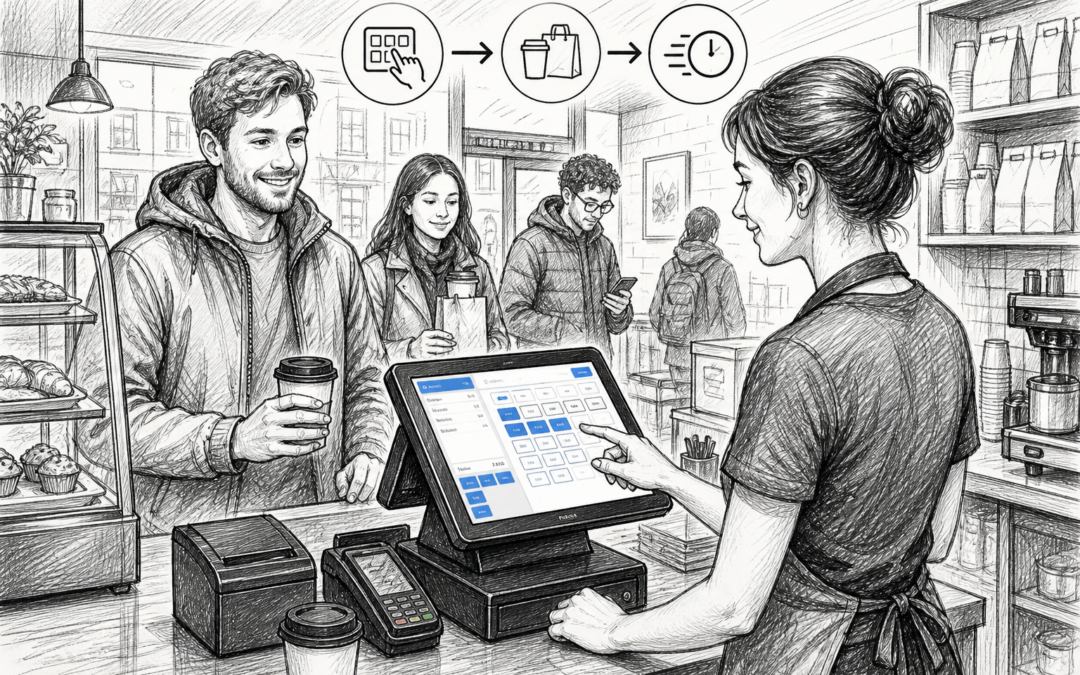
Why service speed matters more than ever
In busy UK retail and hospitality businesses, slow service can quickly become a problem. Whether you run a café, takeaway, shop or restaurant, customers notice when queues build up, staff have to check details twice, or orders take longer than expected.
Good EPOS software can help by making everyday tasks quicker and clearer. It does not replace good staff or good service, but it can remove unnecessary delays and help the team work more smoothly. That can make a real difference during lunch rushes, weekend peaks and seasonal trading periods.
Where EPOS software saves time
One of the main advantages of a modern POS system is that it brings common tasks together in one place. Instead of relying on separate tools, handwritten notes or memory, staff can handle sales, menu or product selection, payments and reporting through the same system.
Faster order entry
In hospitality, speed often starts at the till. A touchscreen EPOS system with clear button layouts can help staff take orders quickly, especially when they are dealing with the same popular items every day. For cafés and takeaways, this can reduce pauses at the counter and help customers move through faster.
In retail, a well-organised till screen can speed up product lookup and checkout, particularly when staff need to find item groups, variants or common add-ons without searching through paper lists.
Quicker payments
When payment processing is built into the overall till workflow, staff do not need to switch between different systems or double-handle the transaction. This is useful in hospitality venues where customers want to pay promptly and move on, but it also helps independent retailers during busy periods when every second count.
Clearer order flow
For food businesses, speed is not only about taking the order quickly. It is also about making sure that orders reach the right place without confusion. EPOS systems that support kitchen printing or clear order routing can help reduce unnecessary delays caused by checking handwritten notes or repeating information over the counter.
That can improve the flow between front of house and kitchen teams, which matters in cafés, restaurants, bars and takeaway businesses where timing is critical.
How better workflows reduce pressure on staff
Busy periods can expose weak points in any business. If staff have to stop and ask for help with pricing, product details or order changes, service slows down for everyone else. A practical EPOS setup can reduce that pressure by keeping useful information close at hand.
For example, promotions can be applied more consistently, product choices can be easier to find, and staff permissions can help managers control who can change certain settings. That means fewer interruptions and a more confident team, even when the business is under pressure.
Useful for training new team members
Speed is often linked to training. If a new starter can learn a clear till layout and follow the same process each time, they are more likely to work confidently and make fewer mistakes. That matters in seasonal retail, weekend hospitality roles and businesses that hire extra staff for peak trading periods.
EPOS software can make onboarding easier by giving teams a consistent way to process sales, handle common tasks and keep service moving without needing to remember lots of separate steps.
Why local EPOS support still matters
For UK independent businesses, fast service is not just about the software itself. It is also about knowing that help is available when you need it. A system may work well on paper, but if you run into a setup issue, printer problem or user access question during a busy shift, local support can make a real difference.
That is one reason many retailers and hospitality businesses prefer a UK-based EPOS provider. Samtouch, for example, is designed as a practical option for businesses that want a system suited to UK trading conditions, with support that understands the pace and pressures of local retail and hospitality.
Having someone to contact who understands how UK businesses work can help reduce downtime and keep service running smoothly when it matters most.
Choosing EPOS features that match your business
If your main challenge is slow service, it helps to look beyond basic tills and focus on features that support day-to-day speed.
- Cafés and takeaways: look for quick order entry, clear menu layouts and efficient payment handling.
- Restaurants and bars: consider table service support, kitchen printing and tools that help staff manage busy shifts.
- Retail shops: product lookup, barcode scanning and a straightforward checkout flow can help reduce queues.
- Growing businesses: reporting and staff controls can help managers understand peak times and plan better staffing.
It is usually better to choose a system that fits the way you already work, rather than trying to adapt your business around clumsy software or a card-terminal-only setup.
Getting more from everyday trading
Improving service speed does not always require a major change. Often, it starts with small improvements in how orders are entered, how information is displayed and how quickly staff can complete each transaction. Over time, those small gains can lead to shorter queues, less stress and a better customer experience.
If you are reviewing your current setup, it may be worth looking at whether your EPOS system is helping your team work at the pace your business needs. For many UK retailers and hospitality businesses, that is where the right software makes a practical difference.
To learn more about Samtouch and how it can support your business, visit www.samtouch.co.uk. Contact YCR Distribution at sales@samtouch.co.uk 01924 438238.
Recent Comments