
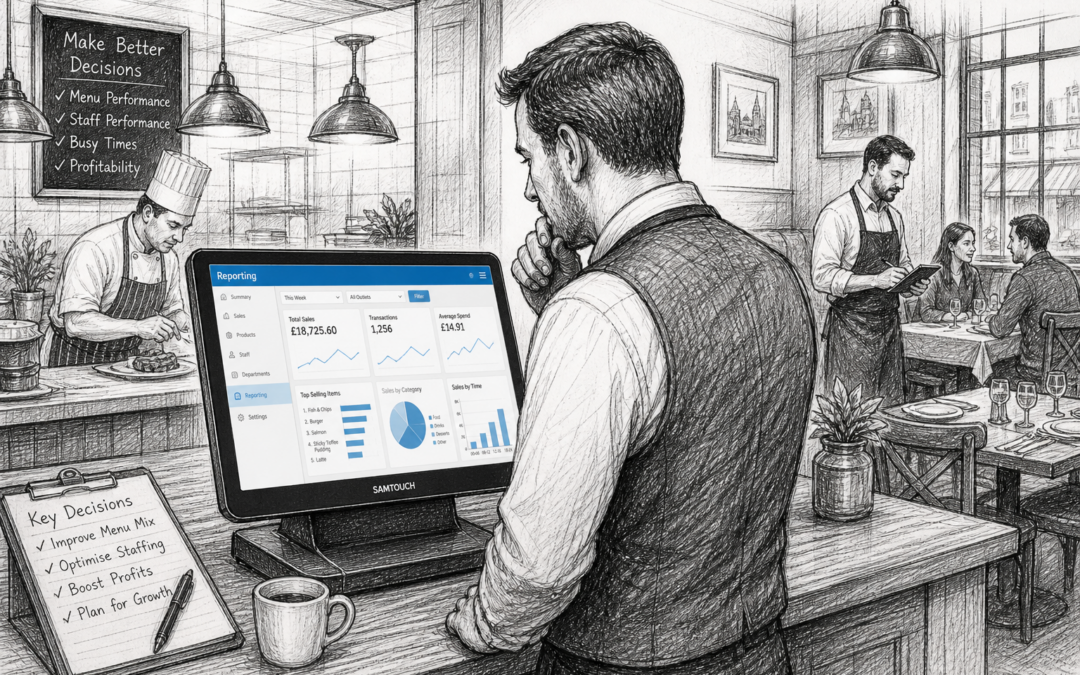
For many restaurants, day-to-day decisions are made quickly. Which dishes are selling best? Are lunchtime covers holding steady? Is staff cover right for the quieter midweek sessions? A good EPOS system can help answer these questions without relying on guesswork.
EPOS reporting is not just about having numbers on a screen. Used properly, it gives restaurant owners a clearer view of how the business is performing, so they can make better decisions about menus, staffing, pricing and service. For independent UK restaurants, that can make a real difference to how smoothly the business runs.
Why reporting matters in a busy restaurant
In a restaurant environment, there is often little time to stop and review performance during service. Sales might look strong one week and softer the next, but the reasons are not always obvious. EPOS reports help turn day-to-day activity into useful information that can be reviewed after service or at the end of the week.
With the right setup, a restaurant can see patterns such as:
- which menu items sell most often
- the busiest times of day and day of week
- which payment methods customers use
- average spend per table or order
- how trading changes during promotions or seasonal periods
That kind of insight is more useful than simply knowing the till total at the end of the shift. It helps managers understand what is really happening inside the business.
What restaurant EPOS reports can tell you
Menu performance
Menu reports can show which dishes are consistent sellers and which items are underperforming. This is helpful when reviewing a menu, planning specials or deciding whether a dish still deserves its place. For example, if a particular starter is rarely ordered, it may be worth replacing it with something that better fits customer demand.
Trading patterns
Restaurant owners often know their busy periods by instinct, but reporting makes that picture much clearer. You may see that Fridays are busy earlier than expected, or that Sundays perform well after lunch rather than in the evening. This can help with rota planning, table management and kitchen preparation.
Sales by category
Category reporting can break sales into starters, mains, desserts, drinks or other groups. This is useful when reviewing the balance of the menu. If drinks are performing well but desserts are weak, the business may want to adjust the offer or improve presentation.
Staff performance insights
Some EPOS reports can also help managers understand service patterns by employee or by shift. This is not about micromanaging staff. It is about spotting training needs, identifying strong service periods and helping teams work more effectively.
How reporting helps with better decisions
One of the biggest strengths of EPOS reporting is that it supports practical decisions rather than broad assumptions. A restaurant owner may think a menu item is popular because it gets mentioned often, but the reports may show a different picture. Likewise, a shift that feels quiet during service may still be delivering strong sales overall.
That insight can help with:
- menu planning and recipe review
- staffing levels for busy and quiet periods
- understanding peak trading times
- reviewing offers and promotions
- spotting changes in customer habits
For smaller restaurants especially, this can make planning much easier. Instead of relying on memory or paper records, owners can review accurate sales information in a more structured way.
Why local EPOS support still matters
Even with good reporting tools, many restaurant businesses still want support they can rely on when they need it. Local EPOS support can be especially valuable when setting up reports, changing menu categories or training staff to use the system properly.
For UK restaurants, having a practical support team that understands local trading patterns, service pressures and business expectations can save time. It also means you are less likely to be left figuring things out on your own when you want to get more from your reporting.
That is one reason businesses look for a UK-focused EPOS partner such as Samtouch. A system like Samtouch at www.samtouch.co.uk can be used to support day-to-day restaurant trading while also helping owners make sense of their sales data in a straightforward way.
Making reports part of your routine
To get real value from EPOS reporting, it helps to build it into the normal routine of running the business. You do not need to study every report every day, but a steady habit of checking key figures can highlight useful trends over time.
A simple weekly review might include:
- top-selling dishes and drinks
- busiest service periods
- average spend per customer or table
- sales changes compared with the previous week
- any items or shifts that need attention
That approach keeps reporting practical. It becomes a business tool, not just a back-office feature.
Choosing an EPOS system that suits your restaurant
Not every EPOS system gives restaurant owners the same level of clarity. If reporting is important to your business, look for software that presents information in a way that is easy to understand and quick to review. The system should support the way your restaurant works, whether you run a casual dining venue, an independent bistro or a small busy neighbourhood restaurant.
For many UK businesses, Samtouch offers a practical approach to EPOS software, with features that can support both service and management. It is worth choosing a system that fits your daily operations, not one that adds more work to an already busy shift.
Contact YCR Distribution at sales@samtouch.co.uk 01924 438238 or visit www.samtouch.co.uk to find out more about Samtouch EPOS for UK restaurants and hospitality businesses.
Recent Comments