
When customers sit down in a restaurant or café, they expect a smooth experience from the moment they are greeted to the moment they pay. In busy UK hospitality businesses, table service speed is not just about being quick. It is about keeping orders accurate, reducing friction for staff and making sure customers feel looked after.
A well-set-up EPOS system can make a real difference here. Instead of relying on handwritten notes, memory or repeated trips back to the counter, staff can take orders quickly, send them to the right place and keep track of each table with far less effort. That saves time during busy periods and helps front-of-house teams stay focused on guests.
Why table service speed matters more than ever
In cafés, restaurants, pubs and other hospitality venues, service speed affects the whole customer journey. If customers wait too long to order, wait too long for their food or have to ask several times for the bill, the experience can quickly feel disjointed.
For business owners, the impact is practical as well as reputational. Faster table service can help reduce queues at peak times, support higher table turnover and make it easier to handle staff shortages or sudden spikes in demand. Just as importantly, it gives staff a clearer workflow, which can reduce stress on busy shifts.
How EPOS supports faster table service
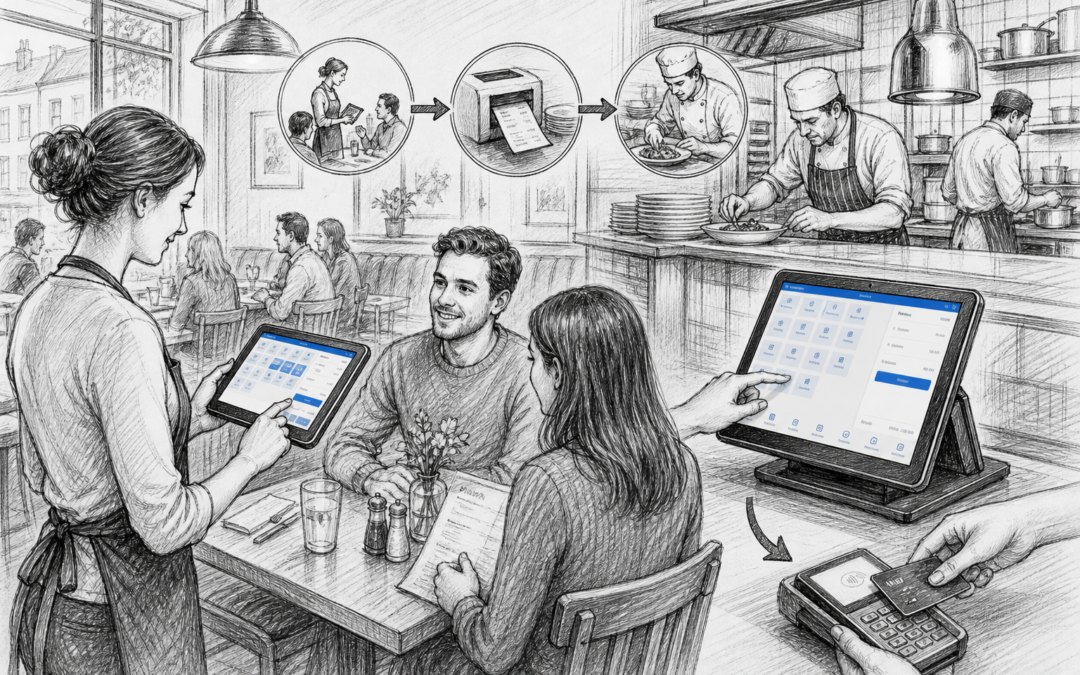
A good EPOS system brings the main parts of table service together in one place. That means staff can take orders at the table, send them directly to the kitchen or bar and keep track of what each guest has ordered without a clutter of paper tickets or manual checks.
Order taking becomes simpler
When orders are entered straight into the EPOS, servers do not need to return to a till before every item is passed on. This can save time on every round of drinks, lunches or dinner service. It also makes it easier to add notes, modifiers and special requests clearly, which helps the kitchen or drinks station prepare the right order first time.
Tables are easier to manage
Table numbers, open bills and order status can all be tracked more clearly through an EPOS. That makes it easier for staff to know which tables are waiting, which are nearly ready and which are ready to pay. In a busy venue, that kind of clarity helps prevent delays and confusion.
Billing is quicker at the end of the meal
One of the most common bottlenecks in table service is payment. If staff have to walk back and forth to a central till, the final stage of the visit can become slow, especially during lunch rushes or evening peaks. EPOS systems that support quicker bill presentation and payment handling can help reduce that wait and keep tables turning efficiently.
Better service without rushing the customer
Speed should never mean poor service. The aim is to make the process smoother, not more impersonal. In fact, when the system works well in the background, staff can spend more time speaking to customers, checking on tables and handling requests properly.
This is especially useful in independent restaurants and cafés, where personal service is often one of the biggest strengths. The right EPOS helps staff stay organised so they can focus on the human side of hospitality.
Practical benefits for UK hospitality businesses
For many UK businesses, the most noticeable benefits of better table service speed include:
- shorter waits for ordering and payment
- fewer mistakes caused by unclear notes or missed details
- better visibility of table status throughout service
- less walking back and forth between tables, kitchen and till
- more confident service during busy lunch and evening periods
These small improvements can add up over a day, a weekend or a full trading week. For restaurants and cafés working with limited staff, even modest time savings can make service feel far more manageable.
Why local EPOS support still matters
When table service is busy, support matters. Hospitality businesses do not always have time to wait for distant call centres or generic online help when there is a problem with an order, printer or terminal.
That is why local EPOS support still matters for UK restaurants and cafés. A provider that understands local trading patterns, peak service times and the realities of independent hospitality can be easier to work with when you need help quickly. It also makes it simpler to get practical advice on setting up table service in a way that suits your venue, team and workflow.
Samtouch is designed with UK retail and hospitality businesses in mind, giving owners a practical EPOS option that supports day-to-day service without unnecessary complexity. If your team wants a system that can help keep orders moving and reduce delays at the table, it is worth looking at a solution built for real service environments.
Choosing the right setup for your venue
Not every café or restaurant needs the same features. A small coffee shop may only need fast till access and clear table handling, while a larger dining room may benefit from more detailed table management and payment options. The key is to choose an EPOS setup that matches your service style rather than forcing your business to fit the software.
Before making a decision, it is worth thinking about your busiest times, where delays currently happen and how your staff prefer to work. A system that is simple to use and easy to train on can support faster service from the start.
If you would like to explore a UK EPOS option for restaurants and cafés, visit www.samtouch.co.uk or contact YCR Distribution at sales@samtouch.co.uk 01924 438238 for more information.
Recent Comments